
人乳头瘤病毒(HPV)-16/18 AS04佐剂疫苗与HPV-6/11/16/18疫苗在18至45岁健康女性中的体液和细胞免疫原性及安全性比较:一项III期随机研究中至第48个月的随访
Comparative humoral and cellular immunogenicity and safety of human papillomavirus (HPV)-16/18 AS04-adjuvanted vaccine and HPV-6/11/16/18 vaccine in healthy women aged 18-45 years: follow-up through Month 48 in a Phase III randomized study.
作者信息
Einstein Mark H, Levin Myron J, Chatterjee Archana, Chakhtoura Nahida, Takacs Peter, Catteau Grégory, Dessy Francis J, Moris Philippe, Lin Lan, Struyf Frank, Dubin Gary
机构信息
a Montefiore Medical Center; Albert Einstein College of Medicine; Department of Obstetrics & Gynecology and Women's Health ; Bronx , NY USA.
出版信息
Hum Vaccin Immunother. 2014;10(12):3455-65. doi: 10.4161/hv.36117.
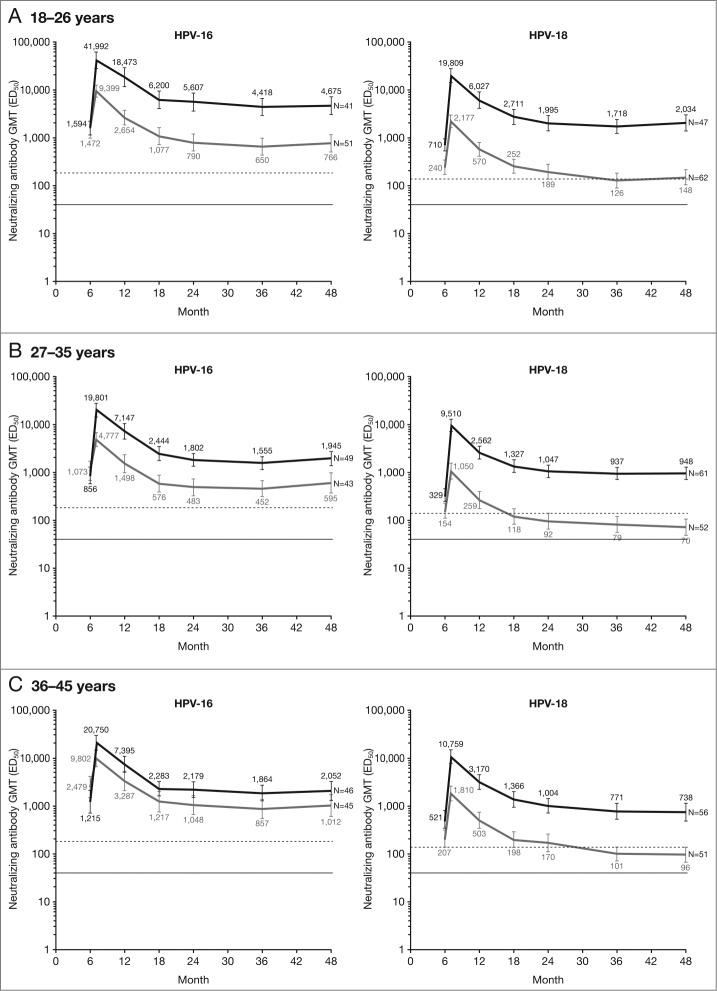
We previously reported higher anti-HPV-16 and -18 immune responses induced by HPV-16/18 vaccine compared with HPV-6/11/16/18 vaccine at Month 7 (one month after completion of full vaccination series) in women aged 18-45 y in an observer-blind study NCT00423046; the differences of immune response magnitudes were maintained up to Month 24. Here we report follow-up data through Month 48. At Month 48, in according-to-protocol cohort for immunogenicity (seronegative and DNA-negative for HPV type analyzed at baseline), geometric mean titers of serum neutralizing antibodies were 2.0- to 5.2-fold higher (HPV-16) and 8.6- to 12.8-fold higher (HPV-18) in HPV-16/18 vaccine group than in HPV-6/11/16/18 vaccine group. The majority of women in both vaccine groups remained seropositive for HPV-16. The same trend was observed for HPV-18 in HPV-16/18 vaccine group; however, seropositivity rates in HPV-6/11/16/18 vaccine group decreased considerably, particularly in the older age groups. In the total vaccinated cohort (regardless of baseline serological and HPV-DNA status), anti-HPV-16 and -18 neutralizing antibody levels induced by HPV-16/18 vaccine were higher than those induced by HPV-6/11/16/18 vaccine. CD4+ T-cell response for HPV-16 and HPV-18 was higher in HPV-16/18 vaccine group than in HPV-6/11/16/18 vaccine group. Memory B-cell responses appeared similar between vaccine groups. Both vaccines were generally well tolerated. Overall, the higher immune response observed with the HPV-16/18 vaccine was maintained up to Month 48. A head-to-head study incorporating clinical endpoints would be required to confirm whether the observed differences in immune response between the vaccines influence the duration of protection they provided.
在一项观察者盲法研究(NCT00423046)中,我们先前报告称,在18至45岁的女性中,与HPV-6/11/16/18疫苗相比,HPV-16/18疫苗在第7个月(完成全程疫苗接种系列后1个月)诱导出更高的抗HPV-16和-18免疫反应;免疫反应强度的差异一直维持到第24个月。在此,我们报告了截至第48个月的随访数据。在第48个月时,在免疫原性按方案队列(基线时针对所分析HPV型别的血清学阴性和DNA阴性)中,HPV-16/18疫苗组血清中和抗体的几何平均滴度比HPV-6/11/16/18疫苗组高2.0至5.2倍(HPV-16)和8.6至12.8倍(HPV-18)。两个疫苗组中的大多数女性HPV-16仍保持血清阳性。HPV-16/18疫苗组中HPV-18也观察到相同趋势;然而,HPV-6/11/16/18疫苗组的血清阳性率大幅下降,尤其是在年龄较大的组中。在整个接种疫苗队列中(无论基线血清学和HPV-DNA状态如何),HPV-16/18疫苗诱导的抗HPV-16和-18中和抗体水平高于HPV-6/11/16/18疫苗诱导的水平。HPV-16/18疫苗组中针对HPV-16和HPV-18的CD4 + T细胞反应高于HPV-6/11/16/18疫苗组。两个疫苗组之间的记忆B细胞反应似乎相似。两种疫苗总体耐受性良好。总体而言,HPV-16/18疫苗观察到的较高免疫反应一直维持到第48个月。需要进行一项纳入临床终点的直接比较研究,以确认疫苗之间观察到的免疫反应差异是否会影响它们提供的保护持续时间。

 Zotero 插件