Department of Biochemistry, University of Cambridge, Cambridge, United Kingdom.
Department of Biochemistry, University of Cambridge, Cambridge, United Kingdom Department of Traumatology and Critical Care Medicine, National Defense Medical College, Saitama, Japan.
J Bacteriol. 2015 Feb 15;197(4):762-73. doi: 10.1128/JB.02404-14. Epub 2014 Dec 8.
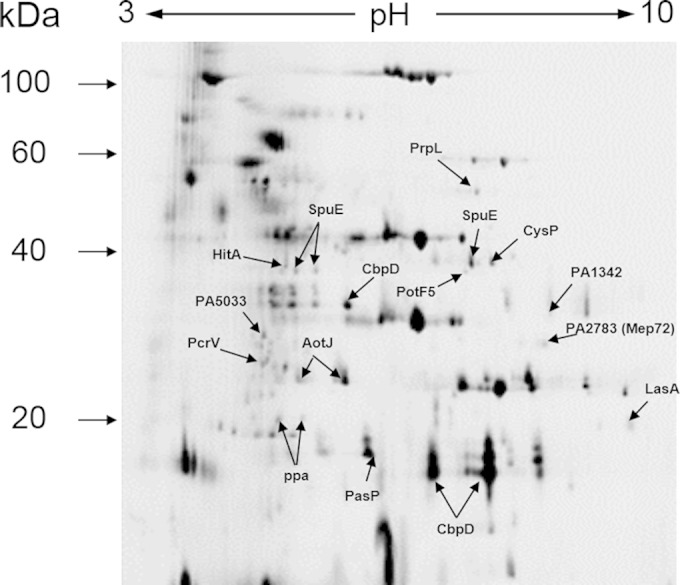
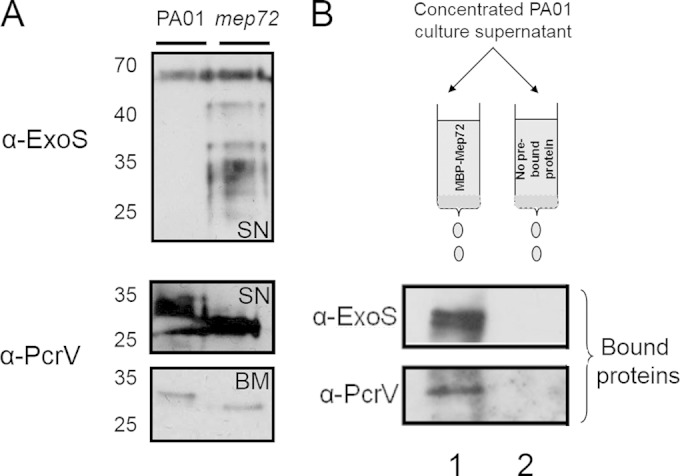
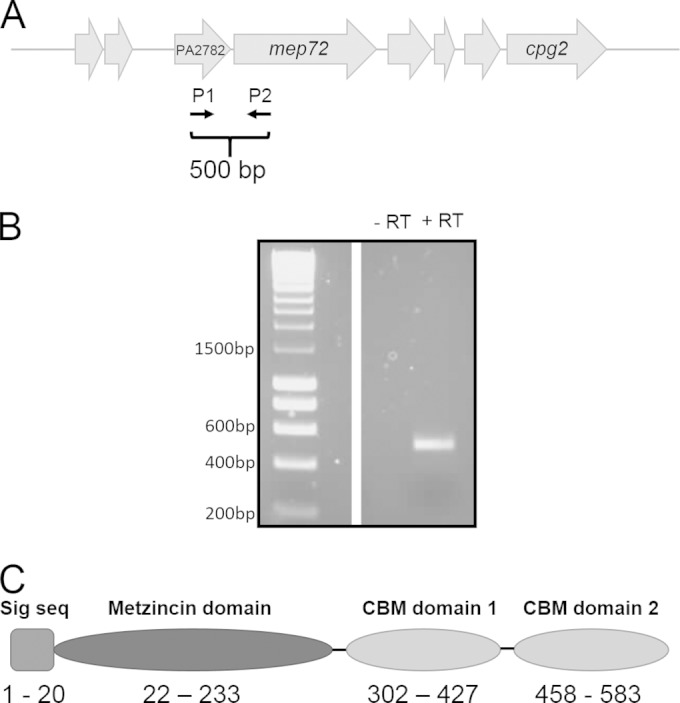
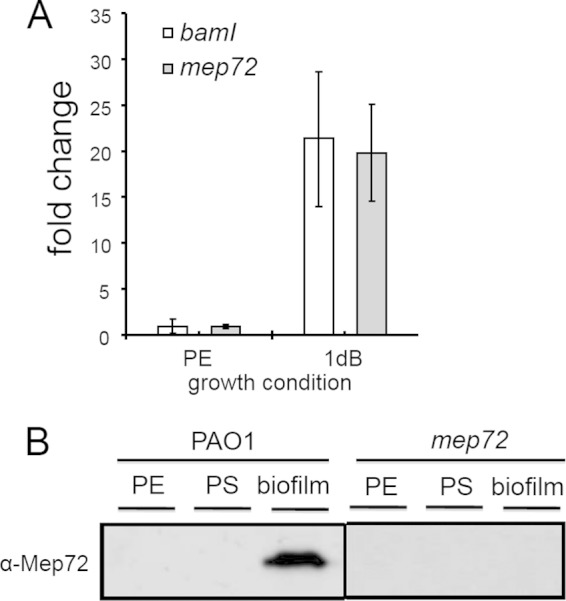
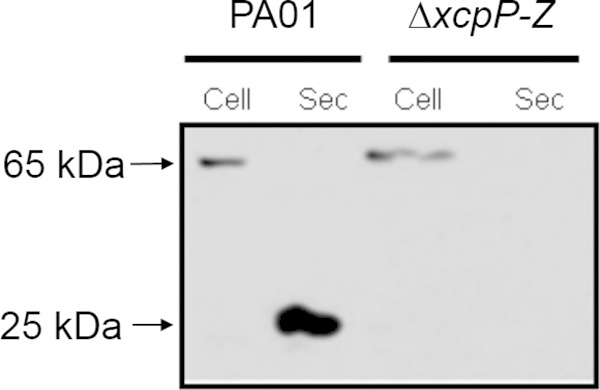
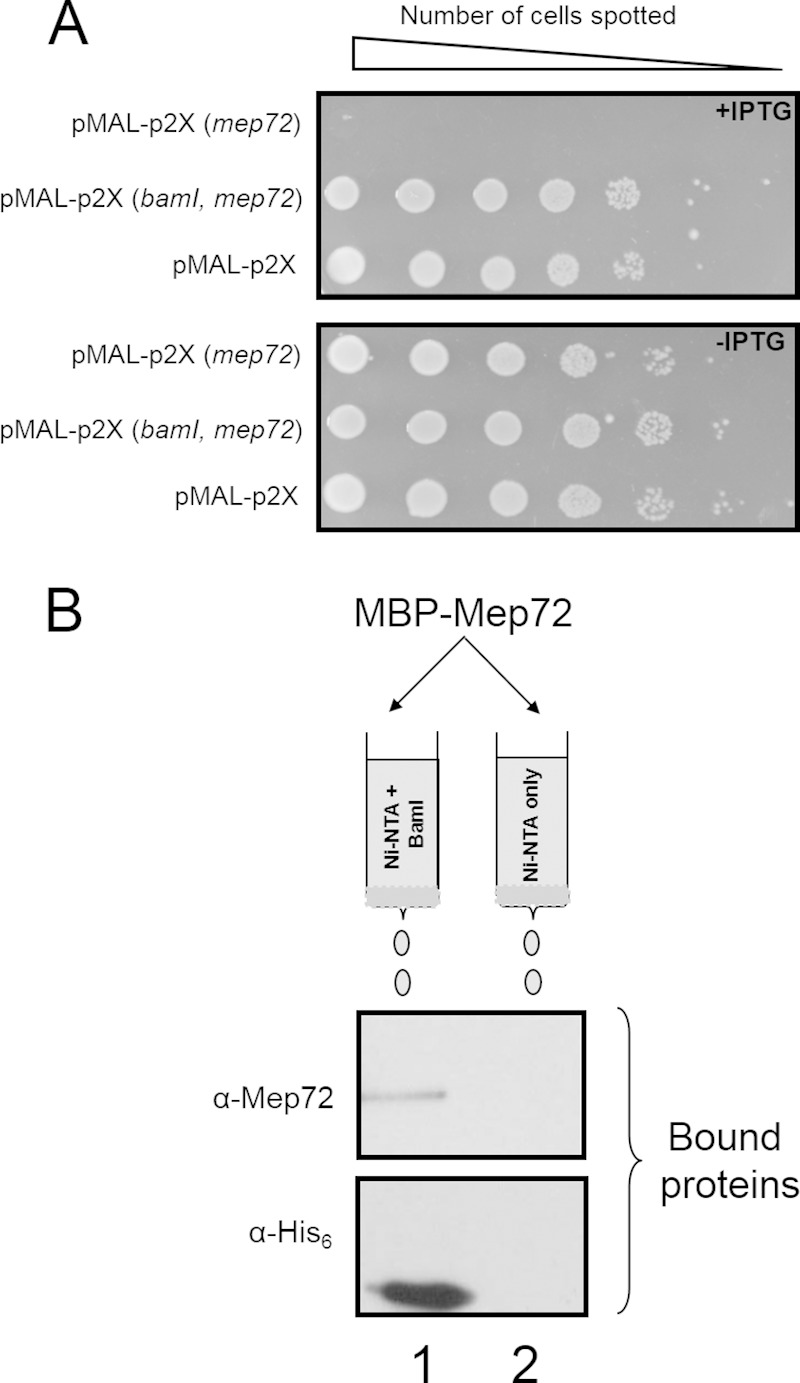
In this work, we compared the profile of proteins secreted by planktonic and biofilm cultures of Pseudomonas aeruginosa using two-dimensional difference gel electrophoresis (2D-DiGE). This revealed that a novel metzincin protease, Mep72, was secreted during biofilm growth. Subsequent Western blotting and reverse transcription-PCR (RT-PCR) analyses demonstrated that Mep72 was expressed only during biofilm growth. Mep72 has a tridomain structure comprised of a metzincin protease-like domain and two tandem carbohydrate-binding domains. Unlike the only other metzincin (alkaline protease; AprA) in P. aeruginosa, Mep72 is secreted through the type II pathway and undergoes processing during export. During this processing, the metzincin domain is liberated from the carbohydrate-binding domains. This processing may be self-catalyzed, since purified Mep72 autodegraded in vitro. This autodegradation was retarded in the presence of alginate (an extracellular matrix component of many P. aeruginosa biofilms). The expression of full-length mep72 in Escherichia coli was toxic. However, this toxicity could be alleviated by coexpression of mep72 with the adjacent gene, bamI. Mep72 and BamI were found to form a protein-protein complex in vitro. 2D-DiGE revealed that the electrophoretic mobility of several discrete protein spots was altered in the biofilm secretome of an mep72 mutant, including type III secretion proteins (PopD, PcrV, and ExoS) and a flagellum-associated protein (FliD). Mep72 was found to bind directly to ExoS and PcrV and to affect the processing of these proteins in the biofilm secretome. We conclude that Mep72 is a secreted biofilm-specific regulator that affects the processing of a very specific subset of virulence factors.
在这项工作中,我们使用二维差异凝胶电泳(2D-DiGE)比较了铜绿假单胞菌浮游和生物膜培养物分泌的蛋白质谱。这表明一种新型的金属蛋白酶 Mep72 在生物膜生长过程中被分泌。随后的 Western 印迹和逆转录-PCR(RT-PCR)分析表明,Mep72 仅在生物膜生长过程中表达。Mep72 具有三结构域结构,由金属蛋白酶样结构域和两个串联的糖结合结构域组成。与铜绿假单胞菌中唯一的另一种金属蛋白酶(碱性蛋白酶;AprA)不同,Mep72 通过 II 型途径分泌,并在出口过程中进行加工。在此加工过程中,金属蛋白酶结构域从糖结合结构域中释放出来。这种加工可能是自我催化的,因为纯化的 Mep72 在体外自发降解。这种自降解在藻酸盐(许多铜绿假单胞菌生物膜的细胞外基质成分)存在下被延迟。全长 mep72 在大肠杆菌中的表达是有毒的。然而,这种毒性可以通过 mep72 与相邻基因 bamI 的共表达来缓解。发现 Mep72 和 BamI 在体外形成蛋白质-蛋白质复合物。2D-DiGE 显示,mep72 突变体生物膜分泌物中几个离散蛋白质斑点的电泳迁移率发生改变,包括 III 型分泌蛋白(PopD、PcrV 和 ExoS)和鞭毛相关蛋白(FliD)。发现 Mep72 直接结合 ExoS 和 PcrV,并影响生物膜分泌物中这些蛋白质的加工。我们得出结论,Mep72 是一种分泌的生物膜特异性调节剂,影响特定子集毒力因子的加工。