Miccoli Laura, Delgado Rafael, Rodríguez-Ruiz Sonia, Guerra Pedro, García-Mármol Eduardo, Fernández-Santaella M Carmen
Department of Personality, University of Granada, Granada, Spain.
Department of Physical Education and Sports, University of Granada, Granada, Spain.
PLoS One. 2014 Dec 9;9(12):e114515. doi: 10.1371/journal.pone.0114515. eCollection 2014.
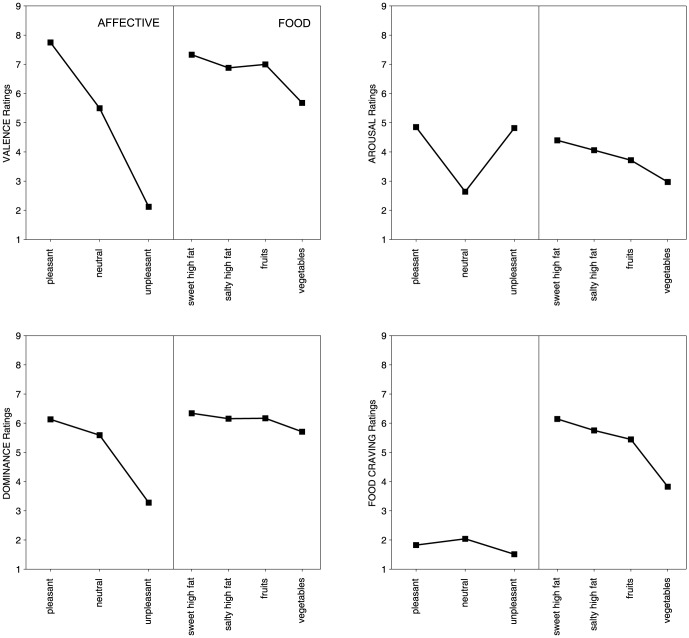
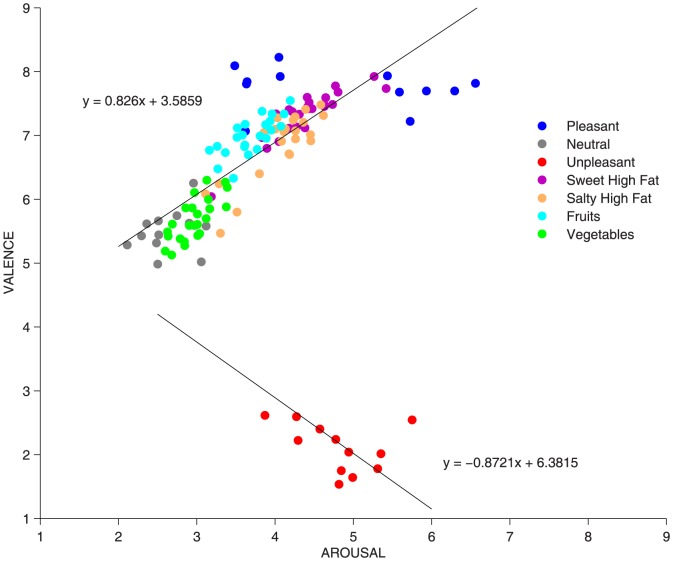
In the last decades, food pictures have been repeatedly employed to investigate the emotional impact of food on healthy participants as well as individuals who suffer from eating disorders and obesity. However, despite their widespread use, food pictures are typically selected according to each researcher's personal criteria, which make it difficult to reliably select food images and to compare results across different studies and laboratories. Therefore, to study affective reactions to food, it becomes pivotal to identify the emotional impact of specific food images based on wider samples of individuals. In the present paper we introduce the Open Library of Affective Foods (OLAF), which is a set of original food pictures created to reliably select food pictures based on the emotions they prompt, as indicated by affective ratings of valence, arousal, and dominance and by an additional food craving scale. OLAF images were designed to allow simultaneous use with affective images from the International Affective Picture System (IAPS), which is a well-known instrument to investigate emotional reactions in the laboratory. The ultimate goal of the OLAF is to contribute to understanding how food is emotionally processed in healthy individuals and in patients who suffer from eating and weight-related disorders. The present normative data, which was based on a large sample of an adolescent population, indicate that when viewing affective non-food IAPS images, valence, arousal, and dominance ratings were in line with expected patterns based on previous emotion research. Moreover, when viewing food pictures, affective and food craving ratings were consistent with research on food cue processing. As a whole, the data supported the methodological and theoretical reliability of the OLAF ratings, therefore providing researchers with a standardized tool to reliably investigate the emotional and motivational significance of food. The OLAF database is publicly available at zenodo.org.
在过去几十年里,食物图片被反复用于研究食物对健康参与者以及患有饮食失调和肥胖症个体的情感影响。然而,尽管其被广泛使用,但食物图片通常是根据每位研究者的个人标准来选择的,这使得难以可靠地选择食物图片并比较不同研究和实验室的结果。因此,为了研究对食物的情感反应,基于更广泛的个体样本确定特定食物图片的情感影响变得至关重要。在本文中,我们介绍了情感食物开放库(OLAF),它是一组原始食物图片,旨在根据它们引发的情感可靠地选择食物图片,这些情感由效价、唤醒度和支配度的情感评分以及额外的食物渴望量表来表示。OLAF图片的设计允许与国际情感图片系统(IAPS)中的情感图片同时使用,IAPS是一种在实验室中研究情感反应的知名工具。OLAF的最终目标是有助于理解健康个体以及患有饮食和体重相关疾病的患者如何对食物进行情感加工。基于大量青少年样本的当前规范数据表明,在观看情感非食物IAPS图片时,效价、唤醒度和支配度评分与基于先前情感研究的预期模式一致。此外,在观看食物图片时,情感和食物渴望评分与食物线索加工的研究一致。总体而言,这些数据支持了OLAF评分在方法和理论上的可靠性,从而为研究人员提供了一个标准化工具,以可靠地研究食物的情感和动机意义。OLAF数据库可在zenodo.org上公开获取。