An Hyun-Kyu, Kim Kyoung-Sook, Lee Ji-Won, Park Mi-Hyun, Moon Hyung-In, Park Shin-Ji, Baik Ji-Sue, Kim Cheorl-Ho, Lee Young-Choon
College of Natural Resources and Life Science, Dong-A University, Busan, 604-714, South Korea.
Molecular and Cellular Glycobiology Unit, Department of Biological Sciences, SungKyunKwan University, Kyunggi-Do, 440-746, South Korea.
PLoS One. 2014 Dec 9;9(12):e114607. doi: 10.1371/journal.pone.0114607. eCollection 2014.
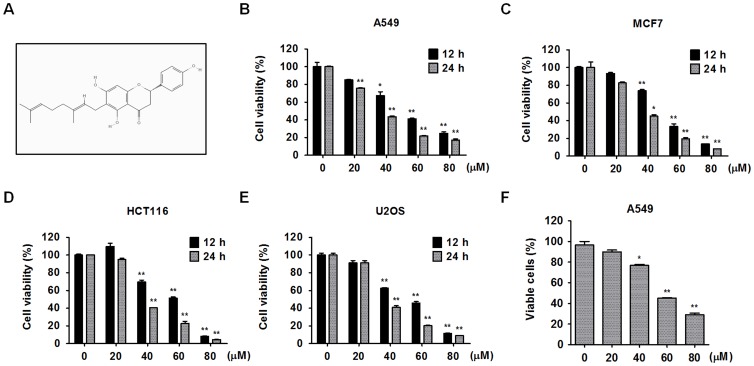
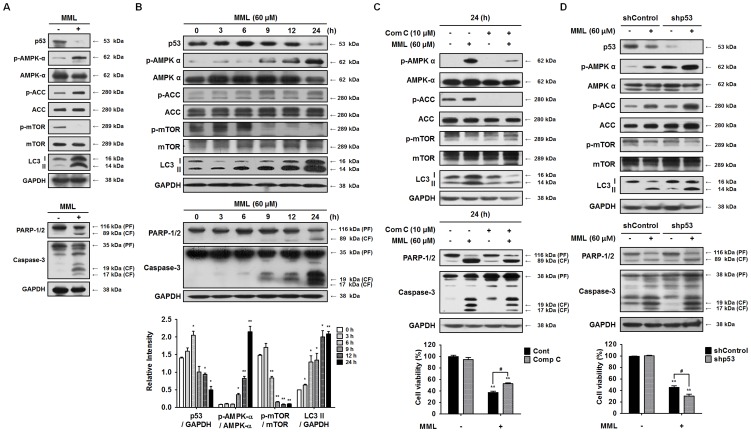
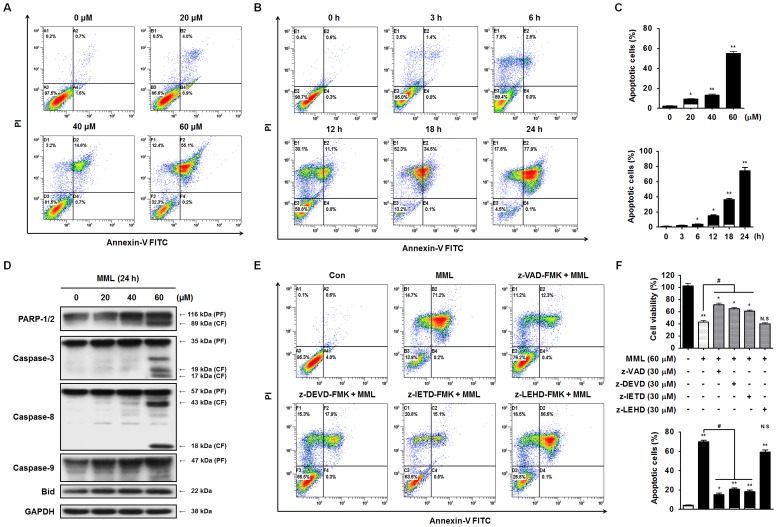
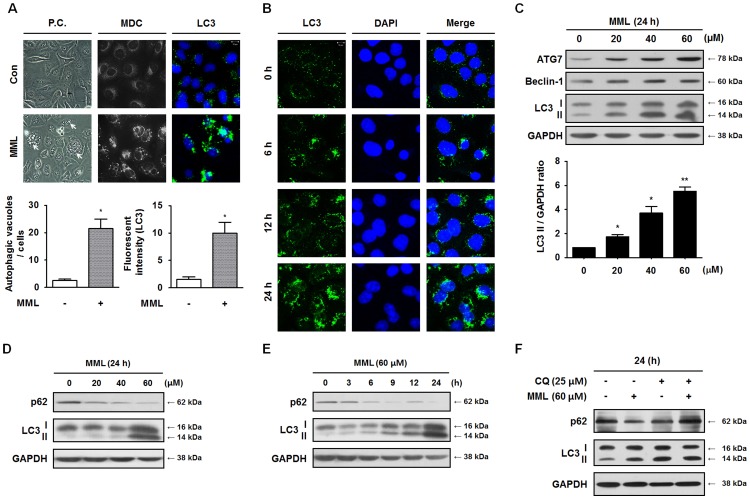
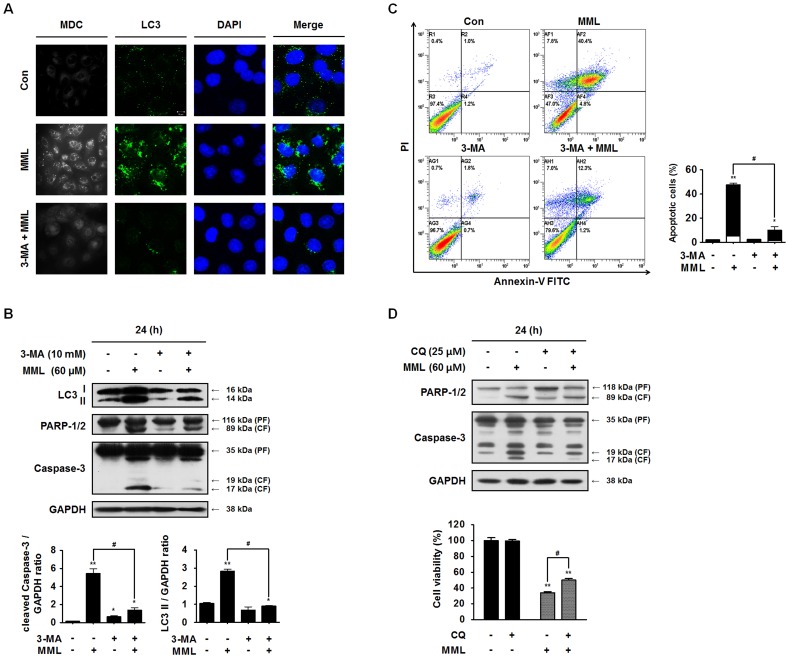
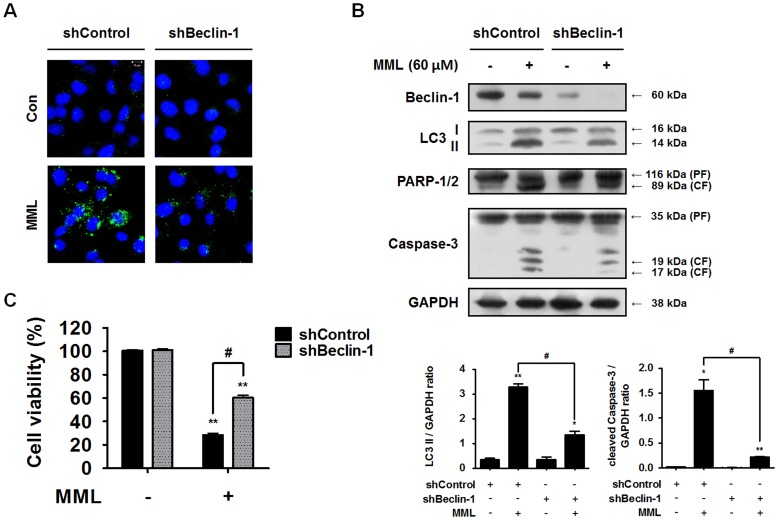
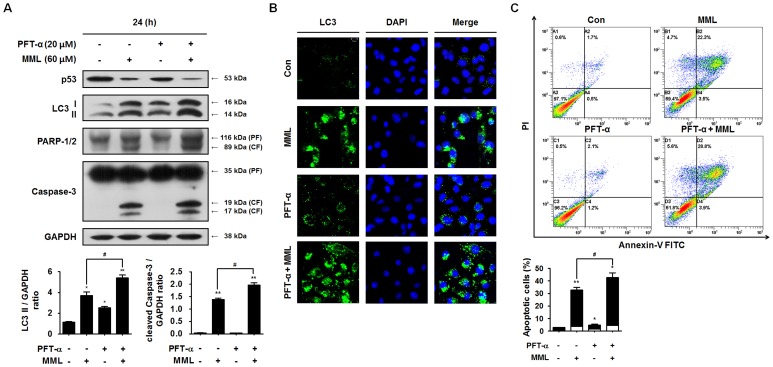
Anticancer properties and mechanisms of mimulone (MML), C-geranylflavonoid isolated from the Paulownia tomentosa fruits, were firstly elucidated in this study. MML prevented cell proliferation in a dose- and time-dependent way and triggered apoptosis through the extrinsic pathway in A549 human lung adenocarcinoma cells. Furthermore, MML-treated cells displayed autophagic features, such as the formation of autophagic vacuoles, a primary morphological feature of autophagy, and the accumulation of microtubule-associated protein 1 light chain 3 (LC3) puncta, another typical maker of autophagy, as determined by FITC-conjugated immunostaining and monodansylcadaverine (MDC) staining, respectively. The expression levels of LC3-I and LC3-II, specific markers of autophagy, were also augmented by MML treatment. Autophagy inhibition by 3-methyladenine (3-MA), pharmacological autophagy inhibitor, and shRNA knockdown of Beclin-1 reduced apoptotic cell death induced by MML. Autophagic flux was not significantly affected by MML treatment and lysosomal inhibitor, chloroquine (CQ) suppressed MML-induced autophagy and apoptosis. MML-induced autophagy was promoted by decreases in p53 and p-mTOR levels and increase of p-AMPK. Moreover, inhibition of p53 transactivation by pifithrin-α (PFT-α) and knockdown of p53 enhanced induction of autophagy and finally promoted apoptotic cell death. Overall, the results demonstrate that autophagy contributes to the cytotoxicity of MML in cancer cells harboring wild-type p53. This study strongly suggests that MML is a potential candidate for an anticancer agent targeting both autophagy and apoptotic cell death in human lung cancer. Moreover, co-treatment of MML and p53 inhibitor would be more effective in human lung cancer therapy.
本研究首次阐明了从毛泡桐果实中分离出的C - 香叶基黄酮类化合物米穆洛宁(MML)的抗癌特性及作用机制。MML以剂量和时间依赖性方式抑制细胞增殖,并通过外源性途径触发A549人肺腺癌细胞凋亡。此外,经MML处理的细胞呈现出自噬特征,如自噬泡的形成(自噬的主要形态学特征)以及微管相关蛋白1轻链3(LC3)斑点的积累(另一个典型的自噬标志物),分别通过异硫氰酸荧光素(FITC)偶联免疫染色和单丹磺酰尸胺(MDC)染色确定。自噬的特异性标志物LC3 - I和LC3 - II的表达水平也因MML处理而升高。药理自噬抑制剂3 - 甲基腺嘌呤(3 - MA)抑制自噬以及Beclin - 1的短发夹RNA(shRNA)敲低可减少MML诱导的凋亡细胞死亡。MML处理对自噬通量无显著影响,溶酶体抑制剂氯喹(CQ)可抑制MML诱导的自噬和凋亡。p53和磷酸化雷帕霉素靶蛋白(p - mTOR)水平降低以及磷酸化腺苷酸活化蛋白激酶(p - AMPK)增加可促进MML诱导的自噬。此外,pifithrin - α(PFT - α)抑制p53反式激活以及p53敲低可增强自噬诱导并最终促进凋亡细胞死亡。总体而言,结果表明自噬有助于MML对具有野生型p53的癌细胞的细胞毒性作用。本研究强烈提示MML是一种潜在的抗癌剂候选物,可靶向人肺癌中的自噬和凋亡细胞死亡。此外,MML与p53抑制剂联合治疗在人肺癌治疗中可能更有效。