Uchida Leo, Espada-Murao Lyre Anni, Takamatsu Yuki, Okamoto Kenta, Hayasaka Daisuke, Yu Fuxun, Nabeshima Takeshi, Buerano Corazon C, Morita Kouichi
1] Department of Virology, Institute of Tropical Medicine (NEKKEN), Nagasaki University, Nagasaki, Japan [2] Graduate School of Biomedical Sciences, Nagasaki University, Nagasaki, Japan.
Department of Virology, Institute of Tropical Medicine (NEKKEN), Nagasaki University, Nagasaki, Japan.
Sci Rep. 2014 Dec 10;4:7395. doi: 10.1038/srep07395.
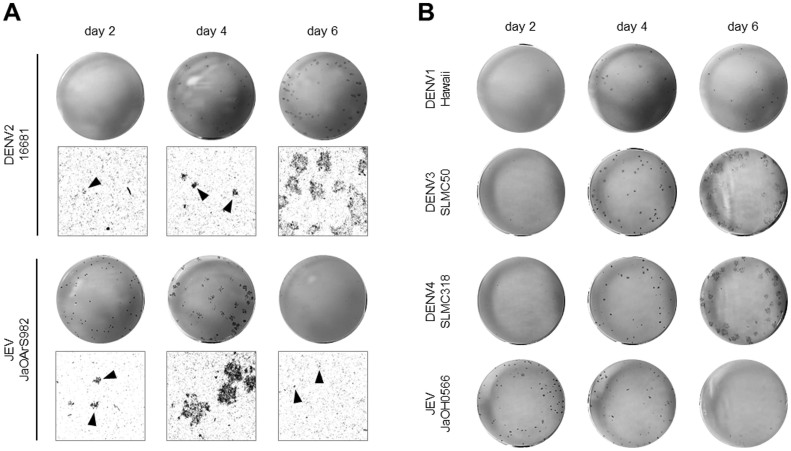
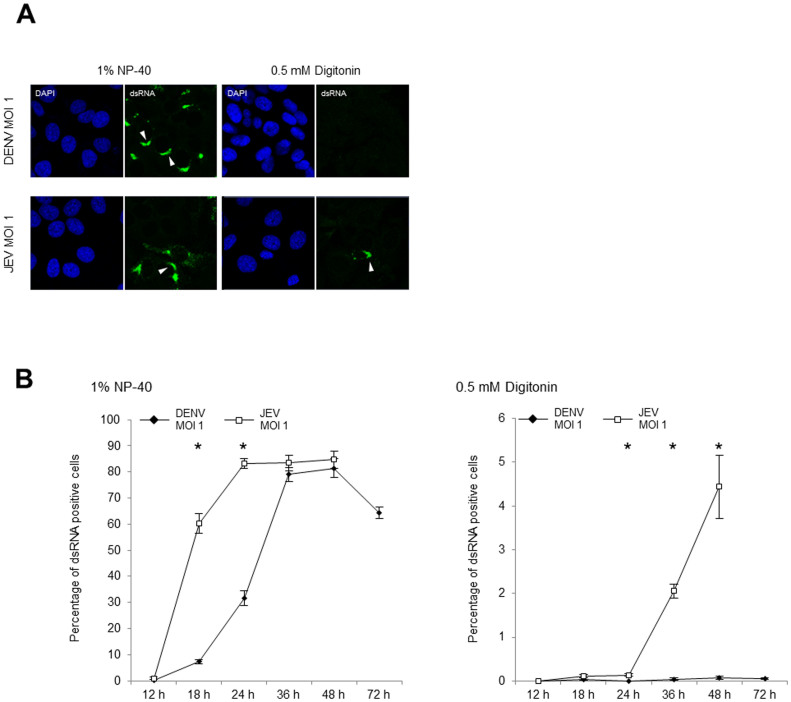
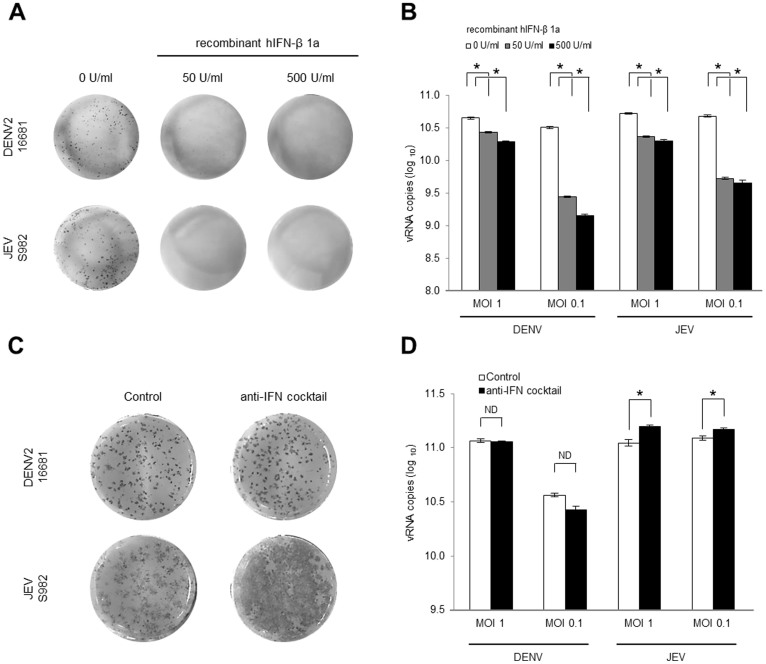
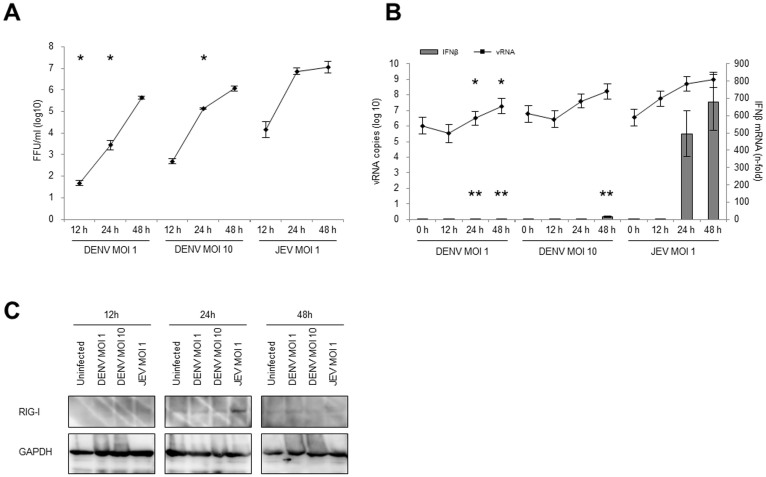
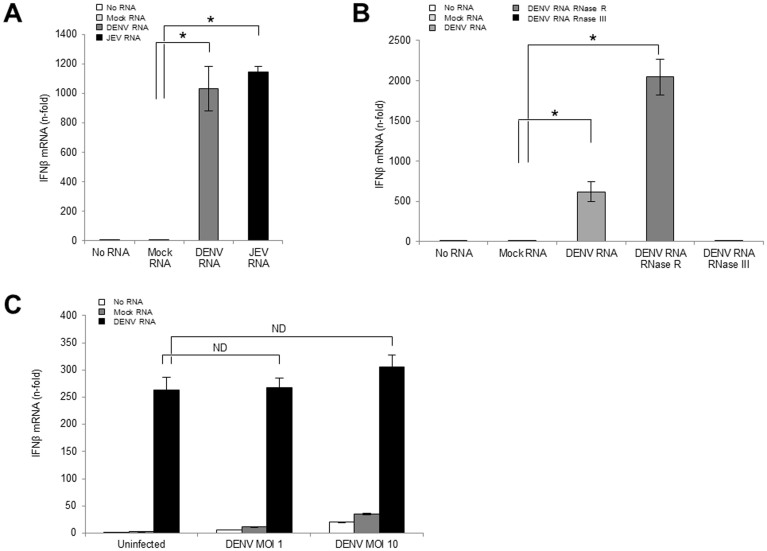
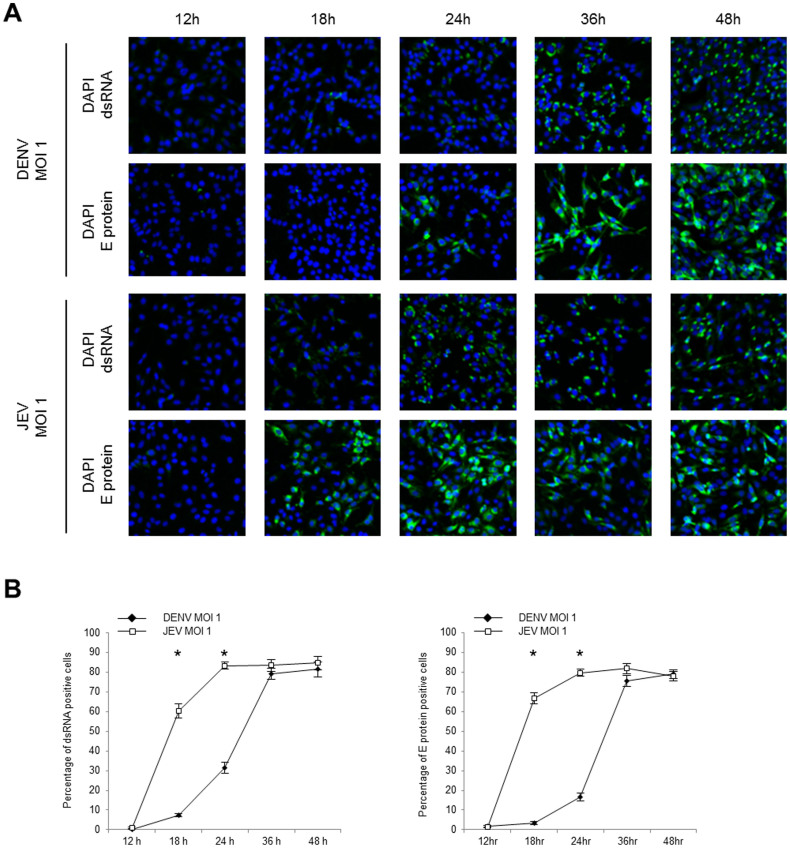
The dengue virus (DENV) circulates between humans and mosquitoes and requires no other mammals or birds for its maintenance in nature. The virus is well-adapted to humans, as reflected by high-level viraemia in patients. To investigate its high adaptability, the DENV induction of host type-I interferon (IFN) was assessed in vitro in human-derived HeLa cells and compared with that induced by the Japanese encephalitis virus (JEV), a closely related arbovirus that generally exhibits low viraemia in humans. A sustained viral spread with a poor IFN induction was observed in the DENV-infected cells, whereas the JEV infection resulted in a self-limiting and abortive infection with a high IFN induction. There was no difference between DENV and JEV double-stranded RNA (dsRNA) as IFN inducers. Instead, the dsRNA was poorly exposed in the cytosol as late as 48 h post-infection (p.i.), despite the high level of DENV replication in the infected cells. In contrast, the JEV-derived dsRNA appeared in the cytosol as early as 24 h p.i. Our results provided evidence for the first time in DENV, that concealing dsRNA in the intracellular membrane diminishes the effect of the host defence mechanism, a strategy that differs from an active suppression of IFN activity.
登革病毒(DENV)在人类和蚊子之间传播,在自然界中维持传播不需要其他哺乳动物或鸟类。该病毒对人类具有良好的适应性,这在患者的高病毒血症中得到体现。为了研究其高度适应性,在人源HeLa细胞中体外评估了DENV对宿主I型干扰素(IFN)的诱导作用,并与日本脑炎病毒(JEV)进行了比较,JEV是一种密切相关的虫媒病毒,在人类中通常表现出低病毒血症。在感染DENV的细胞中观察到病毒持续传播且干扰素诱导作用较弱,而JEV感染导致自我限制的流产性感染且干扰素诱导作用较强。作为干扰素诱导剂,DENV和JEV的双链RNA(dsRNA)没有差异。相反,尽管感染细胞中DENV复制水平很高,但在感染后48小时(p.i.)时,dsRNA在细胞质中仍很少暴露。相比之下,JEV衍生的dsRNA在感染后24小时就出现在细胞质中。我们的结果首次为DENV提供了证据,即在内膜中隐藏dsRNA会削弱宿主防御机制的作用,这是一种不同于主动抑制IFN活性的策略。