Kabatereine Narcis, Fleming Fiona, Thuo Wangechi, Tinkitina Benjamin, Tukahebwa Edridah M, Fenwick Alan
Vector Control Division, Ministry of Health Uganda, Kampala, Uganda.
BMC Res Notes. 2014 Dec 11;7:900. doi: 10.1186/1756-0500-7-900.
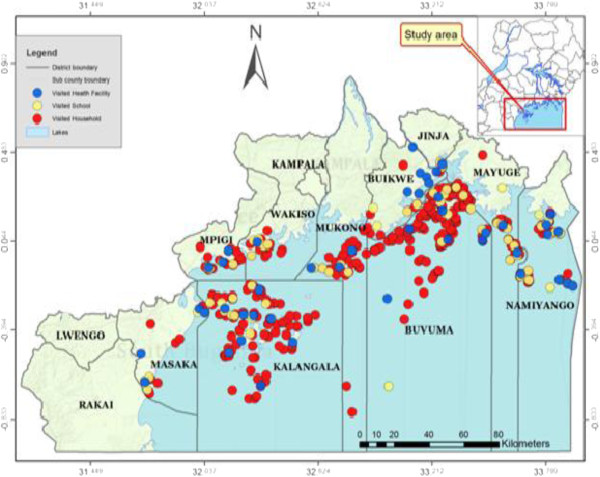
Over 200,000 people, most of them infected with Schistosoma mansoni inhabit 150 islands in Lake Victoria in Uganda. Although a programme to control the disease has been ongoing since 2003, its implementation in islands is inadequate due to high transport costs on water. In 2011 and 2012, the Global Network for Neglected Tropical Diseases (GNNTD) through Schistosomiasis Control Initiative (SCI) provided financial support to ease treatment delivery on the islands and over the period, therapeutic coverage has been increasing. We conducted a study with an objective to assess community awareness of existence of the disease, its signs, symptoms, causes and transmission as well as attitude, practice and health seeking behavior.
This was a cross sectional descriptive study which used pre-tested interviewer administered questionnaire among purposively selected individuals in schools, health facilities and communities. Frequency distribution tables, graphs and cross tabulations were the main forms of data presentation.
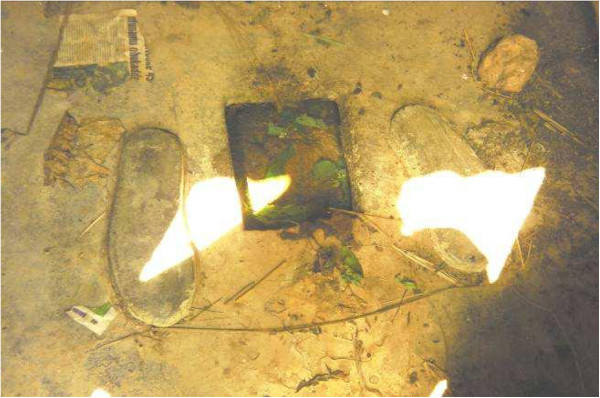
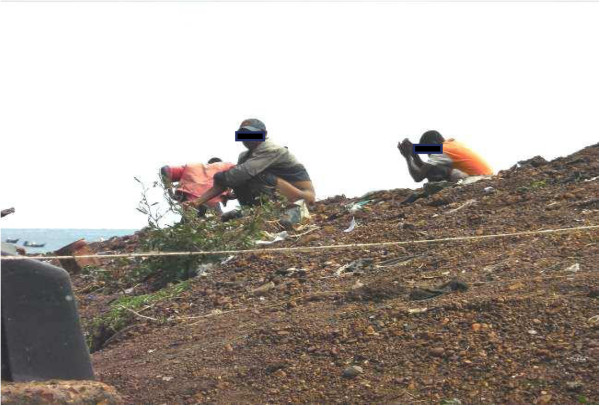
Our results showed that there are numerous challenges that must be overcome to achieve effective control of schistosomiasis in the islands. Many people especially young men are constantly on the move from island to island in search for richer fishing grounds and such groups are commonly known to miss treatment by mass chemotherapy. Unfortunately case management in health facilities is very poor; health facilities are few and understaffed mainly with unskilled personnel who are overburdened by other illnesses such as malaria and HIV and the supply of praziquantel in health facilities is inadequate. Furthermore, sanitation is appalling, no clean water and community knowledge about schistosomiasis is low even among biomedical staff.
Rather than elimination, our results indicate that the programme should continue to target morbidity control beyond the 2020s until preventive measures have been instituted. The government should provide adequate trained health workers and stock praziquantel in all island health facilities.
超过20万人居住在乌干达维多利亚湖的150个岛屿上,其中大多数人感染了曼氏血吸虫。尽管自2003年以来一直在实施一项控制该疾病的计划,但由于水上运输成本高昂,该计划在各岛屿的实施并不充分。2011年和2012年,全球被忽视热带病网络(GNNTD)通过血吸虫病控制倡议(SCI)提供了财政支持,以缓解各岛屿的治疗工作,在此期间,治疗覆盖率一直在提高。我们开展了一项研究,旨在评估社区对该疾病的存在、体征、症状、病因和传播的认识,以及态度、做法和就医行为。
这是一项横断面描述性研究,在学校、卫生设施和社区中经过有目的选择的个体中,使用预先测试过的由访谈员管理的问卷。频率分布表、图表和交叉列表是数据呈现的主要形式。
我们的结果表明,要在各岛屿有效控制血吸虫病,必须克服众多挑战。许多人,尤其是年轻男性,不断在各岛屿间迁徙以寻找更丰富的渔场,这类人群通常会错过群体化疗。不幸的是,卫生设施中的病例管理非常差;卫生设施数量少且人员配备不足,主要是不熟练的工作人员,他们被疟疾和艾滋病毒等其他疾病压得喘不过气来,而且卫生设施中吡喹酮的供应也不足。此外,卫生状况令人震惊,没有清洁水,即使在生物医学工作人员中,社区对血吸虫病的了解也很低。
我们的结果表明,该计划不应以消除为目标,而应在21世纪20年代以后继续以控制发病率为目标,直到采取预防措施。政府应提供足够数量经过培训的卫生工作者,并在所有岛屿卫生设施中储备吡喹酮。