National Institute of Health Research, Causeway Harare, Zimbabwe.
BMC Infect Dis. 2011 Jun 13;11:169. doi: 10.1186/1471-2334-11-169.
Helminth infection rates in grade three children are used as proxy indicators of community infection status and to guide treatment strategies in endemic areas. However knowledge, attitudes and practices (KAP) of this target age group (8-10 years) in relation to schistosomiasis, soil transmitted helminthiasis (STHs) and malaria is not known at a time when integrated plasmodium - helminth control strategies are being advocated. This study sought to assess KAP of grade 3 children in relation to schistosomiasis, STHs and malaria in order to establish an effective school based health education for disease transmission control.
Grade 3 children (n = 172) attending four randomly selected primary schools (one in rural and 3 in the commercial farming areas) in Zimbabwe were interviewed using a pre-tested interviewer administered questionnaire. The urine filtration technique was used to determine S. haematobium infection status. Infection with S. mansoni and STHs was determined using a combination of results from the Kato Katz and formol ether concentration techniques. P. falciparum was diagnosed by examination of Giemsa stained thick blood smears.
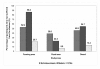
It was observed that 32.0%, 19.2% and 4.1% of the respondents had correct knowledge about the causes of schistosomiasis, malaria and STHs, respectively, whilst 22.1%, 19.2% and 5.8% knew correct measures to control schistosomiasis, malaria and STHs. Sixty-two percent and 44.8% did not use soap to wash hands after toilet and before eating food respectively, whilst 33.1% never wore shoes. There were no functional water points and soap for hand washing after toilet at all schools. There was a high prevalence distribution of all parasites investigated in this study at Msapa primary school - S. haematobium (77.8%), S. mansoni (33.3%) hookworms (29.6%) and P. falciparum (48.1%). Reports that participant had suffered from schistosomiasis and malaria before were significant predictors of these diseases (p = 0.001 and p = 0.042, respectively). Report that participant had blood in urine on the day of examination was a significant predictor of schistosomiasis (p = 0.045).
There is a critical need for targeting health messages through schools in order to reach the most susceptible schoolchildren. This will empower the schoolchildren with the basic knowledge and skills ultimately protecting them from acquiring schistosomiasis, STHs and malaria.
在流行地区,用三年级儿童的寄生虫感染率来作为社区感染状况的替代指标,并指导治疗策略。然而,在提倡整合疟原虫 - 寄生虫控制策略的时候,我们并不了解这个年龄段(8-10 岁)的目标群体在血吸虫病、土壤传播的寄生虫病(STHs)和疟疾方面的知识、态度和实践(KAP)。本研究旨在评估三年级儿童在血吸虫病、STHs 和疟疾方面的 KAP,以便为疾病传播控制建立有效的学校基础健康教育。
对津巴布韦四个随机选定的小学(农村一所,商业农业区三所)的 172 名三年级儿童进行访谈,使用预先测试的访谈员管理问卷。采用尿滤法确定 S. haematobium 感染状况。采用加藤厚涂片法和甲醛乙醚浓缩法联合检测 S. mansoni 和 STHs 的感染情况。用吉氏染色厚血涂片检查疟原虫。
结果表明,分别有 32.0%、19.2%和 4.1%的受访者对血吸虫病、疟疾和 STHs 的病因有正确的认识,而对控制血吸虫病、疟疾和 STHs 的正确措施的了解分别为 22.1%、19.2%和 5.8%。62%和 44.8%的人在如厕后和进食前分别没有用肥皂洗手,而 33.1%的人从不穿鞋。所有学校都没有厕所后用于洗手的功能水点和肥皂。在 Msapa 小学,本研究调查的所有寄生虫的流行分布率都很高 - S. haematobium(77.8%)、S. mansoni(33.3%)钩虫(29.6%)和疟原虫(48.1%)。参与者之前曾患过血吸虫病和疟疾的报告是这些疾病的显著预测因素(p = 0.001 和 p = 0.042)。参与者在检查当天有血尿的报告是血吸虫病的一个显著预测因素(p = 0.045)。
迫切需要通过学校向目标人群传递健康信息,从而使最易受感染的学童受益。这将使学童获得基本知识和技能,最终使他们免受血吸虫病、STHs 和疟疾的侵害。