Hamainza Busiku, Killeen Gerry F, Kamuliwo Mulakwa, Bennett Adam, Yukich Joshua O
Ministry of Health, National Malaria Control Centre, Chainama Hospital College Grounds, off Great East road, P,O, Box 32509, Lusaka, Zambia.
Malar J. 2014 Dec 12;13:489. doi: 10.1186/1475-2875-13-489.
Timeliness, completeness, and accuracy are key requirements for any surveillance system to reliably monitor disease burden and guide efficient resource prioritization. Evidence that electronic reporting of malaria cases by community health workers (CHWs) meet these requirements remains limited.
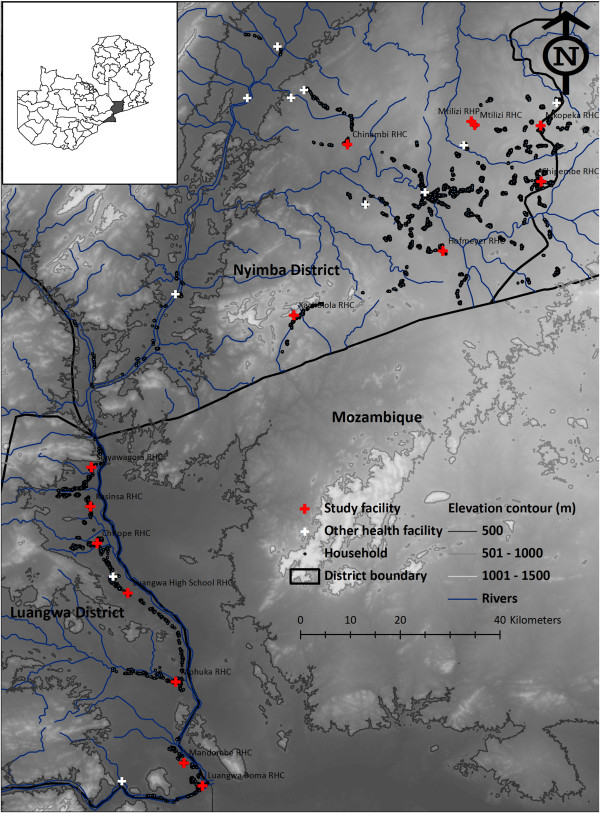
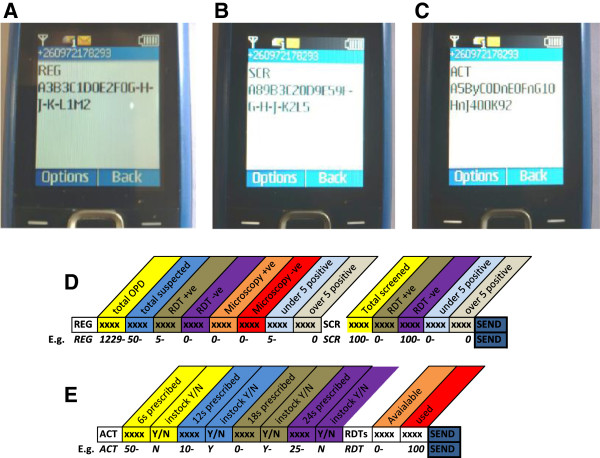
Residents of two adjacent rural districts in Zambia were provided with both passive and active malaria testing and treatment services with malaria rapid diagnostic tests (RDTs) and artemisinin-based combination therapy by 42 CHWs serving 14 population clusters centred around public sector health facilities. Reference data describing total numbers of RDT-detected infections and diagnostic positivity (DP) were extracted from detailed participant register books kept by CHWs. These were compared with equivalent weekly summaries relayed directly by the CHWs themselves through a mobile phone short messaging system (SMS) reporting platform.
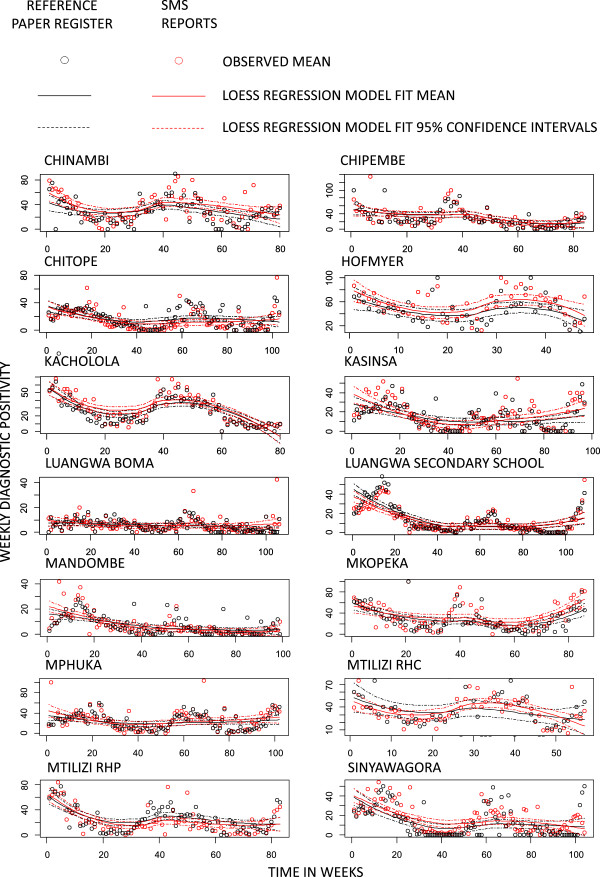
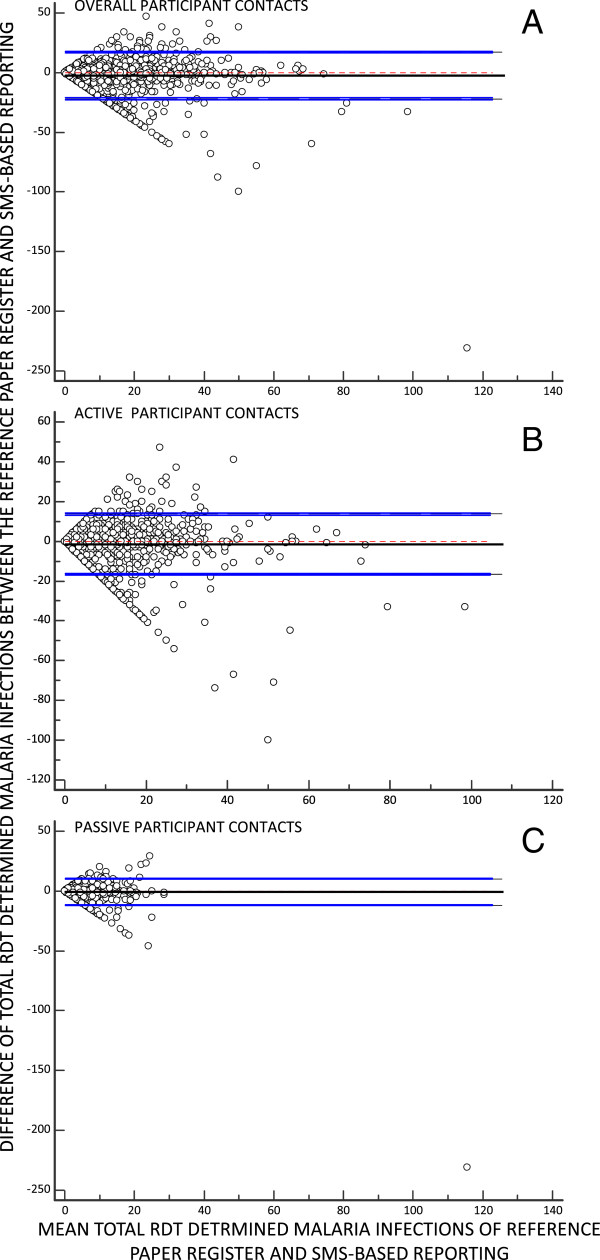
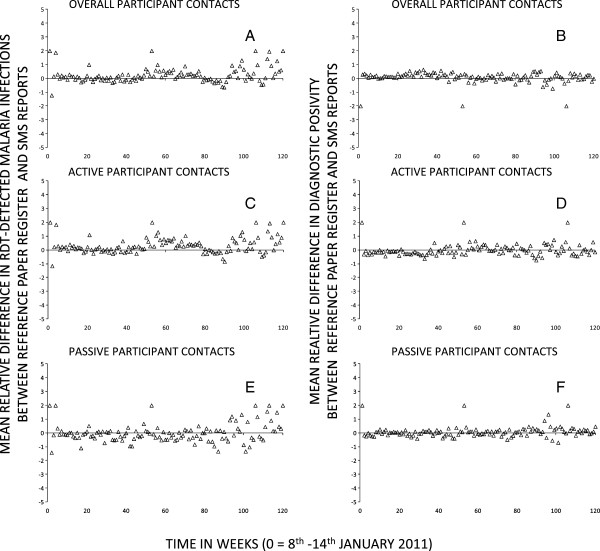
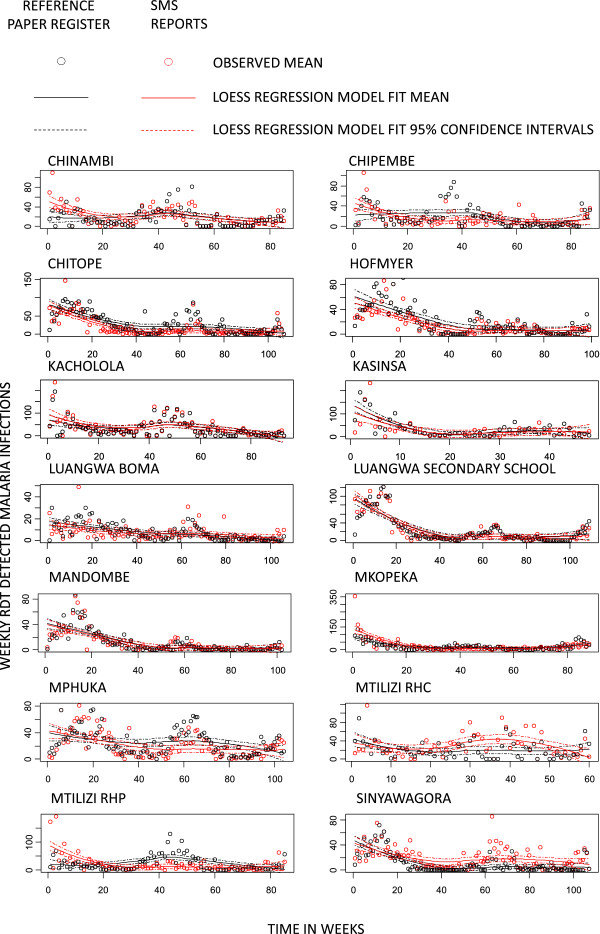
Slightly more RDT-detected malaria infections were recorded in extracted participant registers than were reported in weekly mobile phone summaries but the difference was equivalent to only 19.2% (31,665 versus 25,583, respectively). The majority (81%) of weekly SMS reports were received within one week and the remainder within one month. Overall mean [95% confidence limits] difference between the numbers of register-recorded and SMS-reported RDT-detected malaria infections per CHW per week, as estimated by the Bland Altman method, was only -2.3 [-21.9, 17.2]. The mean [range] for both the number of RDT-detected malaria infections (86 [0, 463] versus 73.6 [0, 519], respectively)) and DP (22.8% [0.0 to 96.3%] versus 23.2% [0.4 to 75.8%], respectively) reported by SMS were generally very consistent with those recorded in the reference paper-based register data and exhibited similar seasonality patterns across all study clusters. Overall, mean relative differences in the SMS reports and reference register data were more consistent with each other for DP than for absolute numbers of RDT-detected infections, presumably because this indicator is robust to variations in patient reporting rates by location, weather, season and calendar event because these are included in both the nominator and denominator.
DISCUSSION/CONCLUSION: The SMS reports captured malaria transmission trends with adequate accuracy and could be used for population-wide, continuous, longitudinal monitoring of malaria transmission.
及时性、完整性和准确性是任何监测系统可靠监测疾病负担并指导有效资源优先分配的关键要求。社区卫生工作者(CHW)进行疟疾病例电子报告是否满足这些要求的证据仍然有限。
在赞比亚两个相邻的农村地区,为居民提供了被动和主动的疟疾检测与治疗服务,由42名社区卫生工作者使用疟疾快速诊断检测(RDT)和青蒿素联合疗法,为以公共部门卫生设施为中心的14个人口集群提供服务。描述RDT检测到的感染总数和诊断阳性率(DP)的参考数据,从社区卫生工作者保存的详细参与者登记簿中提取。将这些数据与社区卫生工作者自己通过手机短信系统(SMS)报告平台直接转发的每周汇总数据进行比较。
提取的参与者登记簿中记录的RDT检测到的疟疾感染略多于每周手机汇总报告中的记录,但差异仅相当于19.2%(分别为31,665例和25,583例)。大多数(81%)的每周短信报告在一周内收到,其余在一个月内收到。根据布兰德-奥特曼方法估计,每位社区卫生工作者每周登记记录和短信报告的RDT检测到的疟疾感染数量之间的总体平均[95%置信区间]差异仅为-2.3[-21.9, 17.2]。短信报告的RDT检测到的疟疾感染数量(分别为86[0, 463]例和73.6[0, 519]例)和DP(分别为22.8%[0.0至96.3%]和23.2%[0.4至75.8%])的平均值[范围],通常与基于纸质登记簿的参考数据记录非常一致,并且在所有研究集群中呈现出相似的季节性模式。总体而言,短信报告和参考登记簿数据之间的平均相对差异在DP方面比在RDT检测到的感染绝对数量方面彼此更一致,大概是因为该指标对不同地点、天气、季节和日历事件的患者报告率变化具有稳健性,因为这些因素同时包含在分子和分母中。
讨论/结论:短信报告能够充分准确地捕捉疟疾传播趋势,可用于对疟疾传播进行全人群、连续、纵向监测。