Wang Yu-Hong, Yang Qiu-Chen, Lin Yuan, Xue Ling, Chen Min-Hu, Chen Jie
From the Department of Gastroenterology, The First Affiliated Hospital of Sun Yat-Sen University, 58 Zhongshan II Road, Guangzhou, China (YHW, QCY, MHC, JC); and Department of Pathology, the First Affiliated Hospital of Sun Yat-sen University, 58 Zhongshan II Road, Guangzhou, China (YL, LX).
Medicine (Baltimore). 2014 Dec;93(27):e247. doi: 10.1097/MD.0000000000000247.
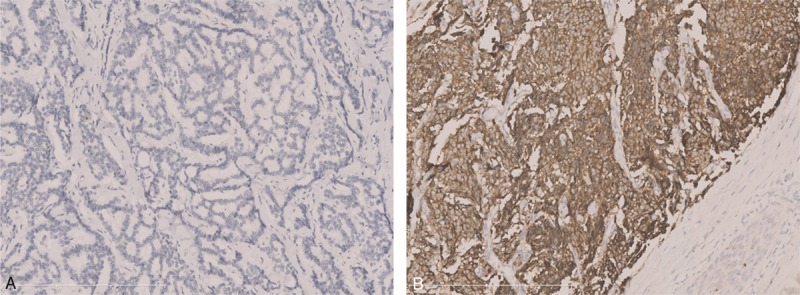
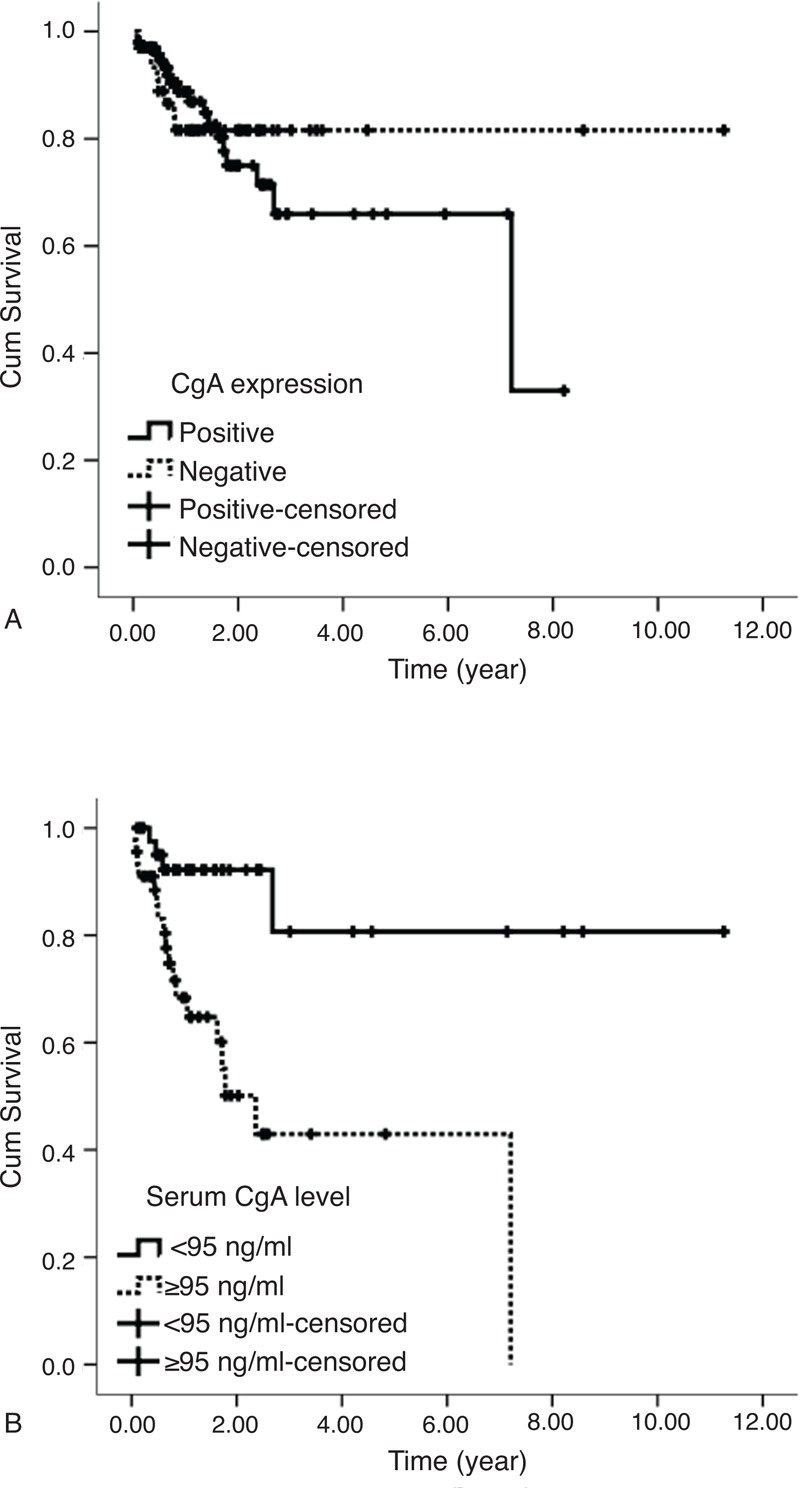
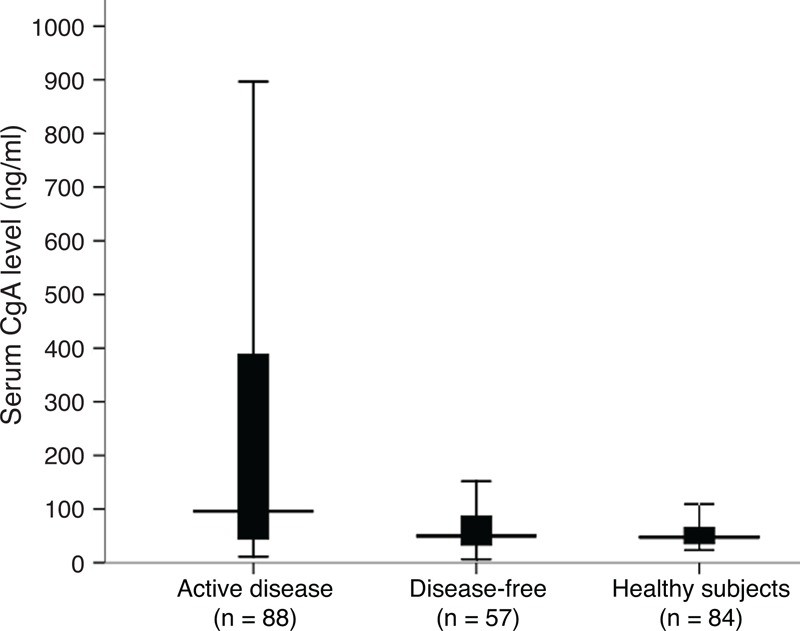
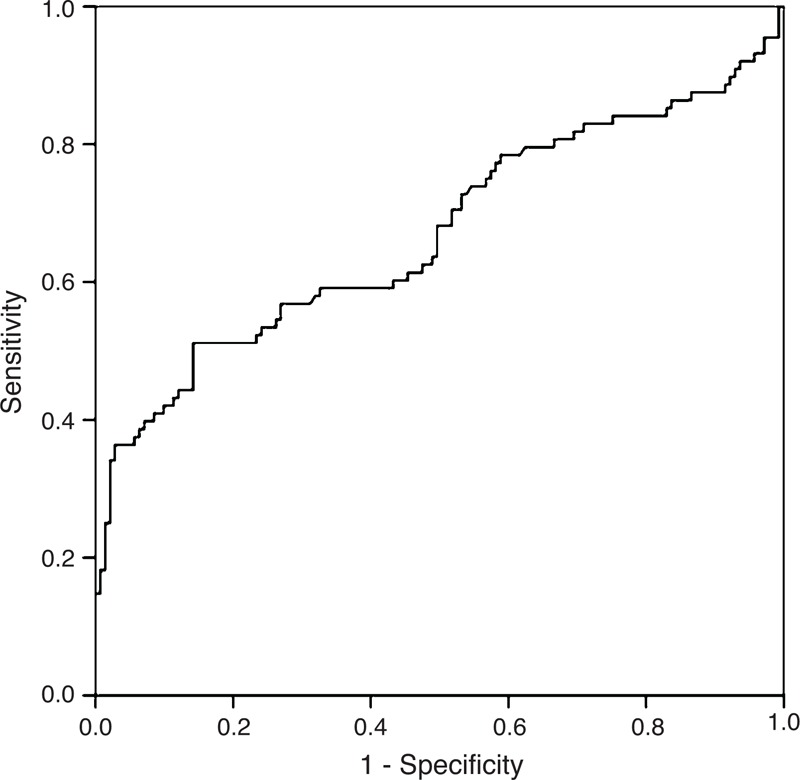
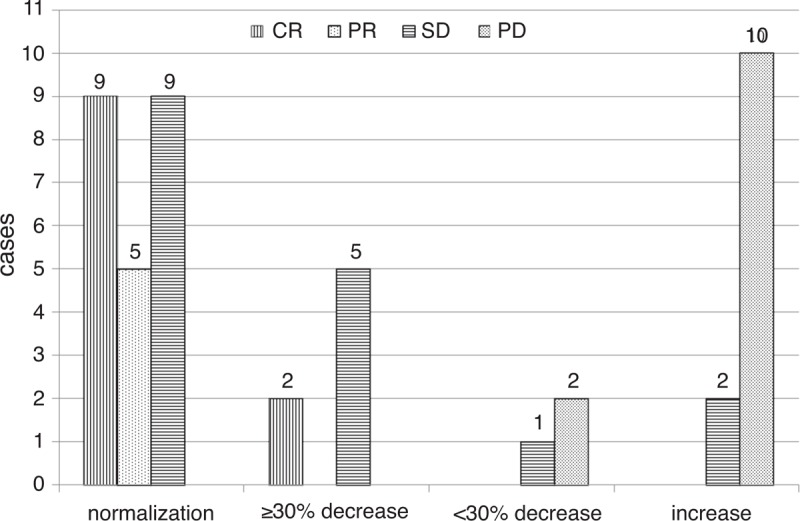
Chromogranin A (CgA) not only plays an important role in pathologic diagnosis, but is also used as a circulating biomarker in patients with gastroenteropancreatic neuroendocrine neoplasm (GEP-NEN). However, the relationship between immunohistochemistry (IHC) expression and serum levels of CgA has not been investigated. The value of CgA for evaluating treatment response and prognosis is still not well understood. We conducted this study to assess the significance of CgA in GEP-NEN in terms of diagnosis, curative effects evaluation and prognosis. One hundred forty-five patients comprising 88 patients with active disease and 57 disease-free patients were enrolled in this study from January 2011 to November 2013. The expression of CgA was assessed by IHC, and serial serum CgA levels were measured by enzyme linked immunosorbent assay. The overall expression rate of CgA was 69.0% (100/145). CgA expression was associated with tumor site and stage (P < 0.05), but not correlated with prognosis (P = 0.07). Serum CgA levels were significantly higher in GEP-NEN patients with active disease when compared with disease-free patients (P = 0.001) or healthy participants (P < 0.001). A CgA cutoff value of 95 ng/ml discriminated between healthy subjects or disease-free patients and patients with active disease (sensitivity 51.2% and specificity 87.5%, respectively). There was a correlation between the CgA IHC expression and high serum CgA levels (R = 0.320, P = 0.002). Serum CgA levels were much higher in patients who classified as neuroendocrine carcinoma, mixed adenoendocrine carcinoma (P = 0.035) and who were on stage IV (P = 0.041). Changes in CgA levels normalization or ≥ 30% decrease suggested that patients had tumor response. Furthermore, patients with serum CgA levels higher than 95 ng/ml had a significantly shorter survival compared with patients with levels lower than 95 ng/ml (P < 0.001). CgA is a reliable pathologic and circulating maker for diagnosis of GEP-NEN. We further confirmed that serial measurement of CgA may be useful for evaluating the efficacy of different kinds of therapies in patients during follow-up, and serum CgA level ≥ 95 ng/ml may serve as a predictor of overall survial.
嗜铬粒蛋白A(CgA)不仅在病理诊断中发挥重要作用,还被用作胃肠胰神经内分泌肿瘤(GEP-NEN)患者的循环生物标志物。然而,免疫组化(IHC)表达与CgA血清水平之间的关系尚未得到研究。CgA在评估治疗反应和预后方面的价值仍未得到充分理解。我们开展这项研究以评估CgA在GEP-NEN的诊断、疗效评估和预后方面的意义。2011年1月至2013年11月,本研究纳入了145例患者,其中88例为疾病活动期患者,57例为无疾病患者。通过免疫组化评估CgA的表达,采用酶联免疫吸附测定法检测系列血清CgA水平。CgA的总体表达率为69.0%(100/145)。CgA表达与肿瘤部位和分期相关(P<0.05),但与预后无关(P=0.07)。与无疾病患者(P=0.001)或健康参与者相比,疾病活动期的GEP-NEN患者血清CgA水平显著更高(P<0.001)。CgA临界值为95 ng/ml可区分健康受试者或无疾病患者与疾病活动期患者(敏感性分别为51.2%,特异性为87.5%)。CgA免疫组化表达与高血清CgA水平之间存在相关性(R=0.320,P=0.002)。归类为神经内分泌癌、混合性腺内分泌癌的患者(P=0.035)以及处于IV期的患者(P=0.041)血清CgA水平更高。CgA水平正常化或降低≥30%的变化表明患者有肿瘤反应。此外,血清CgA水平高于�5 ng/ml的患者与低于95 ng/ml的患者相比生存期显著更短(P<0.001)。CgA是诊断GEP-NEN的可靠病理和循环标志物。我们进一步证实,在随访期间对CgA进行系列检测可能有助于评估不同治疗方法对患者的疗效,血清CgA水平≥95 ng/ml可作为总生存期的预测指标。