Bang Bo Ram, Kim Sang Jick, Yagita Hideo, Croft Michael, Kang Young Jun
Department of Immunology and Microbial Science, The Scripps Research Institute, La Jolla, CA, USA.
Eur J Immunol. 2015 Mar;45(3):886-92. doi: 10.1002/eji.201445174. Epub 2015 Jan 21.
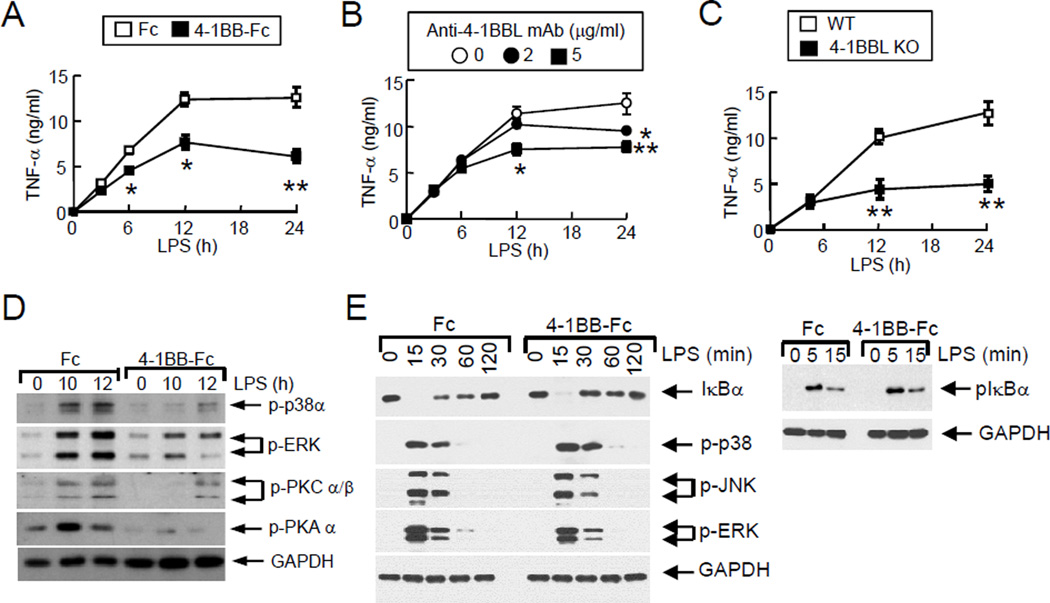
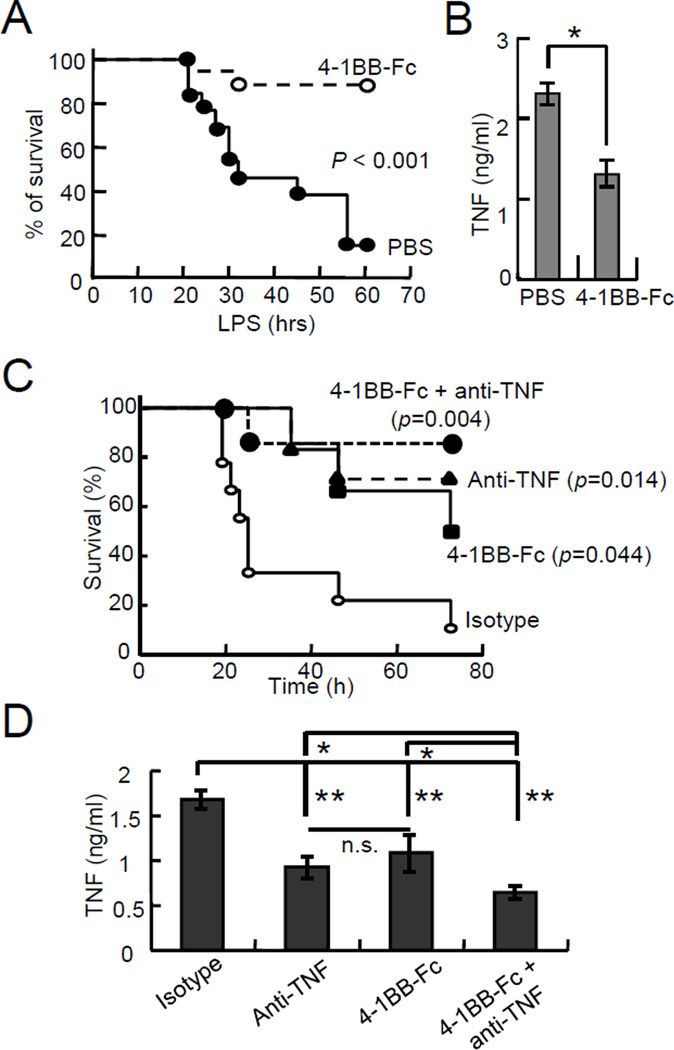
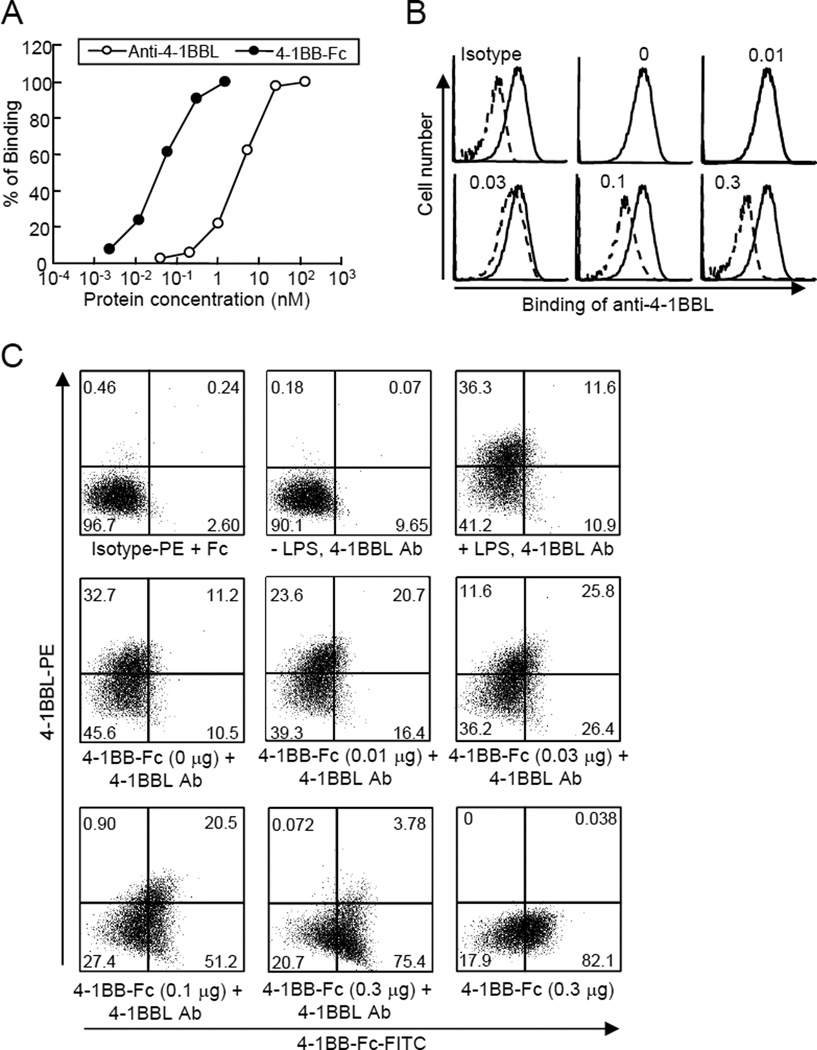
Activation of Toll-like receptor (TLR) signaling rapidly induces the expression of inflammatory genes, which is persistent for a defined period of time. However, uncontrolled and excessive inflammation may lead to the development of diseases. 4-1BB ligand (4-1BBL) plays an essential role in sustaining the expression of inflammatory cytokines by interacting with TLRs during macrophage activation. Here, we show that inhibition of 4-1BBL signaling reduced the inflammatory responses in macrophages and ameliorated endotoxin-induced sepsis in mice. A 4-1BB-Fc fusion protein significantly reduced TNF production in macrophages by blocking the oligomerization of TLR4 and 4-1BBL. Administration of 4-1BB-Fc suppressed LPS-induced sepsis by reducing TNF production, and the coadministration of anti-TNF and 4-1BB-Fc provided better protection against LPS-induced sepsis. Taken together, these observations suggest that inhibition of the TLR/4-1BBL complex formation may be highly efficient in protecting against continued inflammation, and that 4-1BB-Fc could be a potential therapeutic target for the treatment of inflammatory diseases.
Toll样受体(TLR)信号通路的激活会迅速诱导炎症基因的表达,这种表达会在一段特定时间内持续存在。然而,不受控制的过度炎症可能会导致疾病的发展。4-1BB配体(4-1BBL)在巨噬细胞激活过程中通过与TLR相互作用,在维持炎症细胞因子的表达方面发挥着重要作用。在此,我们表明抑制4-1BBL信号通路可降低巨噬细胞中的炎症反应,并改善小鼠内毒素诱导的脓毒症。一种4-1BB-Fc融合蛋白通过阻断TLR4和4-1BBL的寡聚化,显著降低了巨噬细胞中肿瘤坏死因子(TNF)的产生。给予4-1BB-Fc可通过减少TNF的产生来抑制脂多糖(LPS)诱导的脓毒症,联合给予抗TNF和4-1BB-Fc能更好地保护小鼠免受LPS诱导的脓毒症。综上所述,这些观察结果表明,抑制TLR/4-1BBL复合物的形成在预防持续性炎症方面可能非常有效,并且4-1BB-Fc可能是治疗炎症性疾病的一个潜在治疗靶点。