Talbot Nick P, Croft Quentin P, Curtis M Kate, Turner Brandon E, Dorrington Keith L, Robbins Peter A, Smith Thomas G
Department of Physiology, Anatomy and Genetics, University of Oxford, Oxford, U.K.
Department of Physiology, Anatomy and Genetics, University of Oxford, Oxford, U.K Nuffield Division of Anaesthetics, John Radcliffe Hospital, University of Oxford, Oxford, U.K.
Physiol Rep. 2014 Dec 11;2(12). doi: 10.14814/phy2.12220. Print 2014 Dec 1.
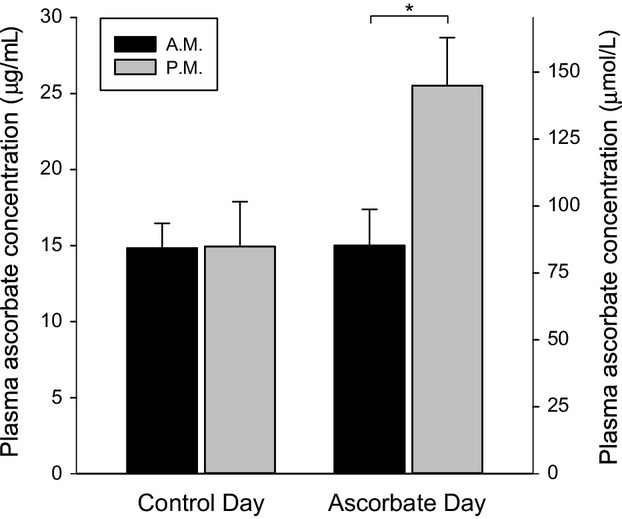
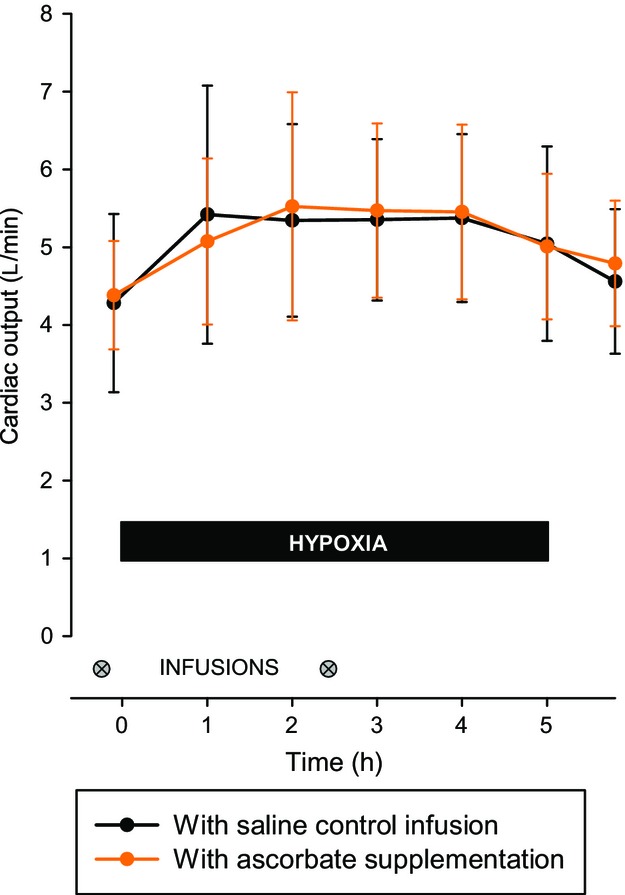
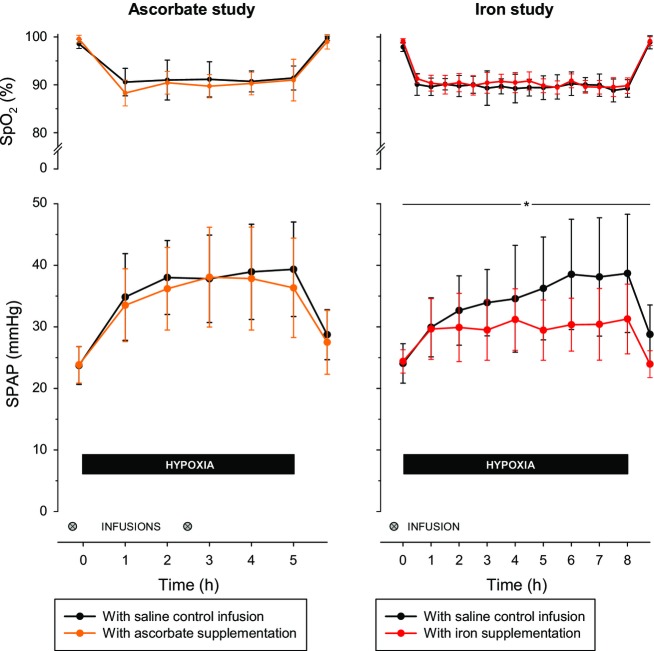
Hypoxia causes an increase in pulmonary artery pressure. Gene expression controlled by the hypoxia-inducible factor (HIF) family of transcription factors plays an important role in the underlying pulmonary vascular responses. The hydroxylase enzymes that regulate HIF are highly sensitive to varying iron availability, and iron status modifies the pulmonary vascular response to hypoxia, possibly through its effects on HIF. Ascorbate (vitamin C) affects HIF hydroxylation in a similar manner to iron and may therefore have similar pulmonary effects. This study investigated the possible contribution of ascorbate availability to hypoxic pulmonary vasoconstriction in humans. Seven healthy volunteers undertook a randomized, controlled, double-blind, crossover protocol which studied the effects of high-dose intravenous ascorbic acid (total 6 g) on the pulmonary vascular response to 5 h of sustained hypoxia. Systolic pulmonary artery pressure (SPAP) was assessed during hypoxia by Doppler echocardiography. Results were compared with corresponding data from a similar study investigating the effect of intravenous iron, in which SPAP was measured in seven healthy volunteers during 8 h of sustained hypoxia. Consistent with other studies, iron supplementation profoundly inhibited hypoxic pulmonary vasoconstriction (P < 0.001). In contrast, supraphysiological supplementation of ascorbate did not affect the increase in pulmonary artery pressure induced by several hours of hypoxia (P = 0.61). We conclude that ascorbate does not interact with hypoxia and the pulmonary circulation in the same manner as iron. Whether the effects of iron are HIF-mediated remains unknown, and the extent to which ascorbate contributes to HIF hydroxylation in vivo is also unclear.
缺氧会导致肺动脉压力升高。由缺氧诱导因子(HIF)家族转录因子控制的基因表达在潜在的肺血管反应中起重要作用。调节HIF的羟化酶对铁的可利用性变化高度敏感,铁状态可能通过其对HIF的影响来改变肺血管对缺氧的反应。抗坏血酸(维生素C)以与铁类似的方式影响HIF羟化,因此可能具有类似的肺部效应。本研究调查了抗坏血酸的可利用性对人类缺氧性肺血管收缩的可能作用。七名健康志愿者采用了一项随机、对照、双盲、交叉方案,研究大剂量静脉注射抗坏血酸(共6 g)对持续5小时缺氧时肺血管反应的影响。在缺氧期间通过多普勒超声心动图评估收缩期肺动脉压(SPAP)。将结果与另一项类似研究的相应数据进行比较,该研究调查了静脉注射铁的作用,其中在七名健康志愿者持续8小时缺氧期间测量了SPAP。与其他研究一致,补充铁可显著抑制缺氧性肺血管收缩(P < 0.001)。相比之下,超生理剂量补充抗坏血酸并未影响数小时缺氧引起的肺动脉压力升高(P = 0.61)。我们得出结论,抗坏血酸与缺氧和肺循环的相互作用方式与铁不同。铁的作用是否由HIF介导尚不清楚,抗坏血酸在体内对HIF羟化的贡献程度也不清楚。