Kim Daniel, Son Seung-Woo, Jeong Hawoong
Department of Physics, Korea Advanced Institute of Science and Technology, Daejeon 305-701, Korea.
Department of Applied Physics, Hanyang University, Ansan 426-791, Korea.
Sci Rep. 2014 Dec 11;4:7370. doi: 10.1038/srep07370.
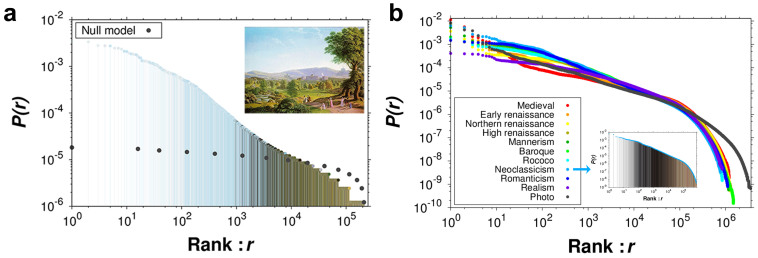
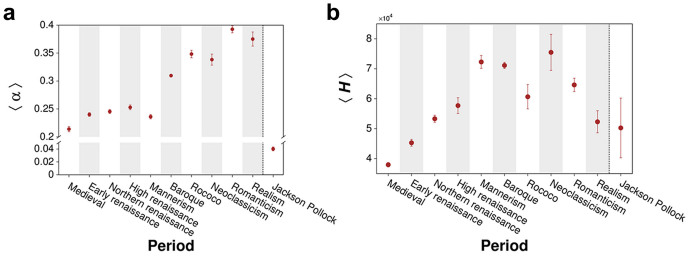
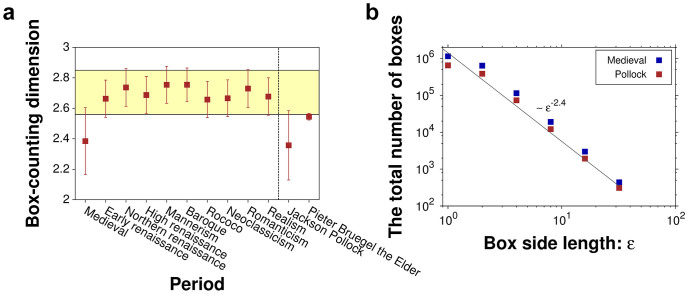
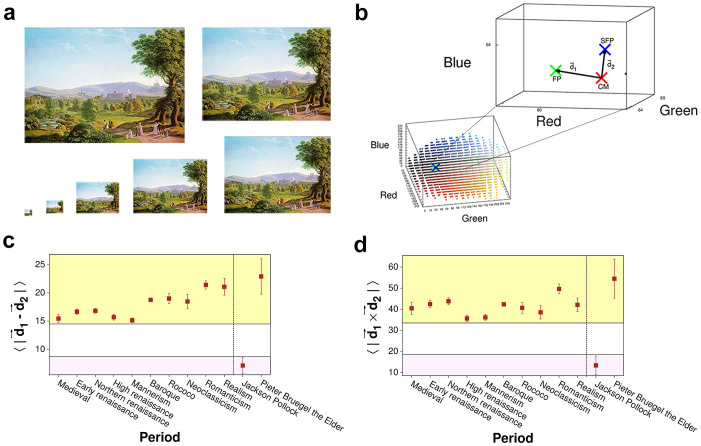
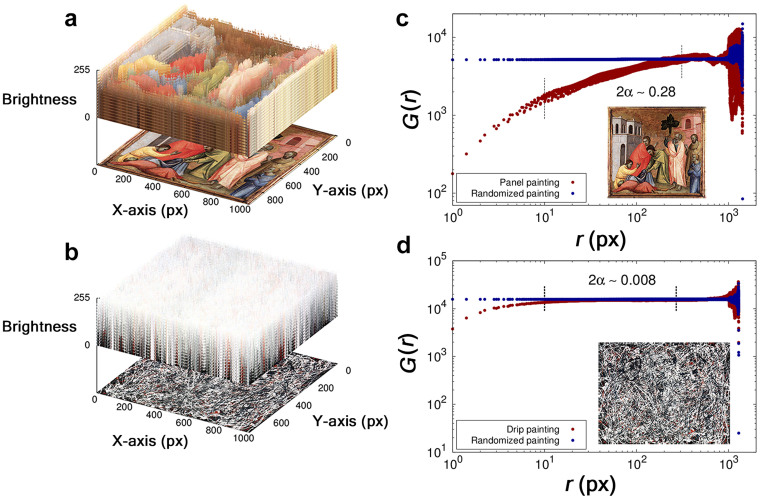
Scientists have made efforts to understand the beauty of painting art in their own languages. As digital image acquisition of painting arts has made rapid progress, researchers have come to a point where it is possible to perform statistical analysis of a large-scale database of artistic paints to make a bridge between art and science. Using digital image processing techniques, we investigate three quantitative measures of images - the usage of individual colors, the variety of colors, and the roughness of the brightness. We found a difference in color usage between classical paintings and photographs, and a significantly low color variety of the medieval period. Interestingly, moreover, the increment of roughness exponent as painting techniques such as chiaroscuro and sfumato have advanced is consistent with historical circumstances.
科学家们一直在努力用他们自己的语言去理解绘画艺术之美。随着绘画艺术数字图像采集技术的飞速发展,研究人员已经达到了这样一个阶段:可以对大规模的艺术画作数据库进行统计分析,从而在艺术与科学之间架起一座桥梁。利用数字图像处理技术,我们研究了图像的三个量化指标——单个颜色的使用情况、颜色的多样性以及亮度的粗糙度。我们发现古典绘画和照片在颜色使用上存在差异,中世纪时期的颜色多样性显著较低。此外,有趣的是,随着明暗对照法和晕涂法等绘画技巧的发展,粗糙度指数的增加与历史情况是一致的。