
外泌体作为一种纳米递送系统:神经医学未来的关键?
Exosomes as a Nanodelivery System: a Key to the Future of Neuromedicine?
作者信息
Aryani Arian, Denecke Bernd
机构信息
Interdisciplinary Center for Clinical Research Aachen (IZKF Aachen), RWTH Aachen University, Pauwelsstrasse 30, 52074, Aachen, Germany.
出版信息
Mol Neurobiol. 2016 Mar;53(2):818-834. doi: 10.1007/s12035-014-9054-5. Epub 2014 Dec 15.
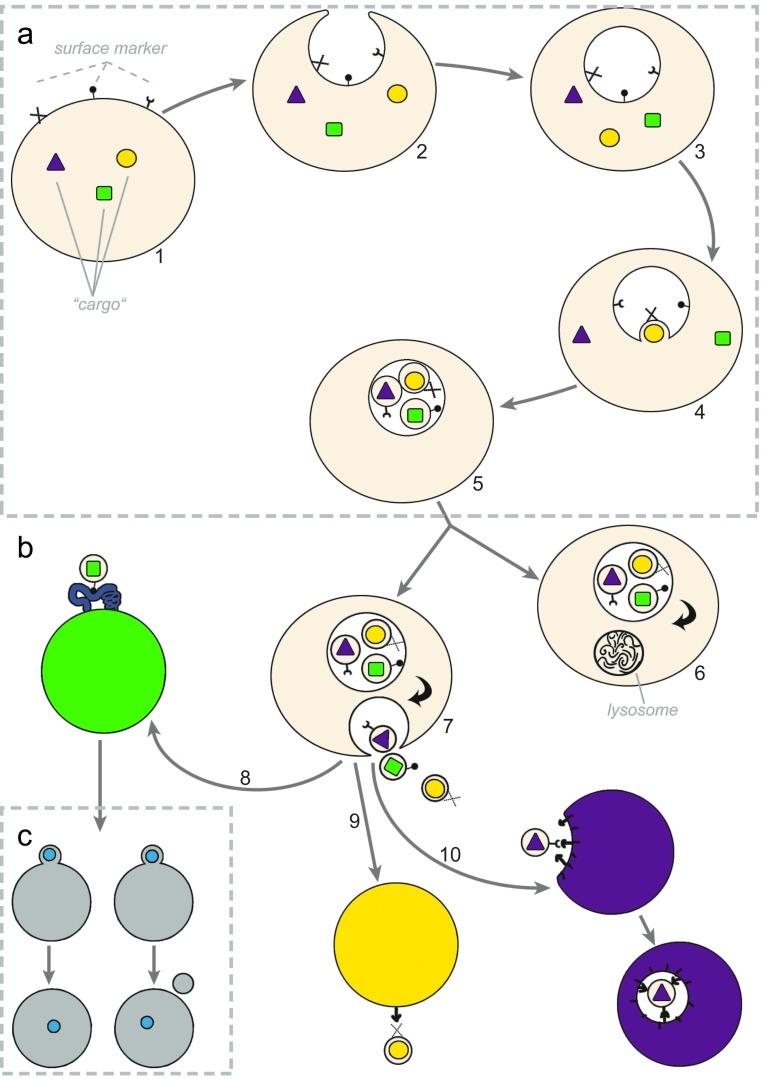
Since the beginning of the last decade, exosomes have been of increased interest in the science community. Exosomes represent a new kind of long distance transfer of biological molecules among cells. This review provides a comprehensive overview about the construction of exosomes, their targeting and their fusion mechanisms to the recipient cells. Complementarily, the current state of research regarding the cargo of exosomes is discussed. A particular focus was placed on the role of exosomes in the central nervous system. An increasing number of physiological processes in the brain could be associated with exosomes. In this context, it is becoming more apparent that exosomes are involved in several neurological and specifically neurodegenerative diseases. The treatment of these kinds of diseases is often difficult not least because of the blood-brain barrier. Exosomes are very stable, can pass the blood-brain barrier and, therefore, reveal bright perspectives towards diagnosis and therapeutic treatments. A prerequisite for clinical applications is a standardised approach. Features necessary for a standardised diagnosis using exosomes are discussed. In therapeutic terms, exosomes represent a promising drug delivery system able to pass the blood-brain barrier. One option to overcome the disadvantages potentially associated with the use of endogenous exosomes is the design of artificial exosomes. The artificial exosomes with a clearly defined therapeutic active cargo and surface marker ensuring the specific targeting to the recipient cells is proposed as a promising approach.
自上一个十年伊始,外泌体在科学界就愈发受到关注。外泌体代表了细胞间生物分子一种新型的长距离传递方式。本文综述对外泌体的构建、其靶向性以及与受体细胞的融合机制进行了全面概述。此外,还讨论了关于外泌体所载物质的研究现状。特别关注了外泌体在中枢神经系统中的作用。大脑中越来越多的生理过程可能与外泌体有关。在这种情况下,外泌体参与多种神经疾病尤其是神经退行性疾病变得愈发明显。治疗这类疾病往往很困难,这至少部分是由于血脑屏障的存在。外泌体非常稳定,能够穿过血脑屏障,因此在诊断和治疗方面展现出光明的前景。临床应用的一个前提是采用标准化方法。文中讨论了使用外泌体进行标准化诊断所需的特征。在治疗方面,外泌体是一种有前景的能够穿过血脑屏障的药物递送系统。克服与使用内源性外泌体潜在相关缺点的一个选择是设计人工外泌体。提出设计具有明确界定的治疗活性所载物质和表面标志物以确保特异性靶向受体细胞的人工外泌体是一种有前景的方法。

 Zotero 插件