Fang Chunshu, Zhang Jingqing, Qi Di, Fan Xiaoqing, Luo Jianchun, Liu Ling, Tan Qunyou
Department of Thoracic Surgery, Institute of Surgery Research, Daping Hospital, Third Military Medical University, Chongqing, People's Republic of China.
Medicine Engineering Research Center, Chongqing Medical University, Chongqing, People's Republic of China.
PLoS One. 2014 Dec 15;9(12):e115204. doi: 10.1371/journal.pone.0115204. eCollection 2014.
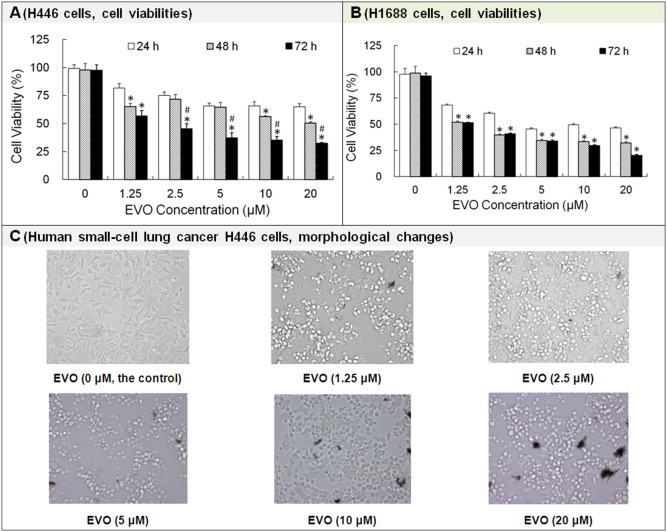
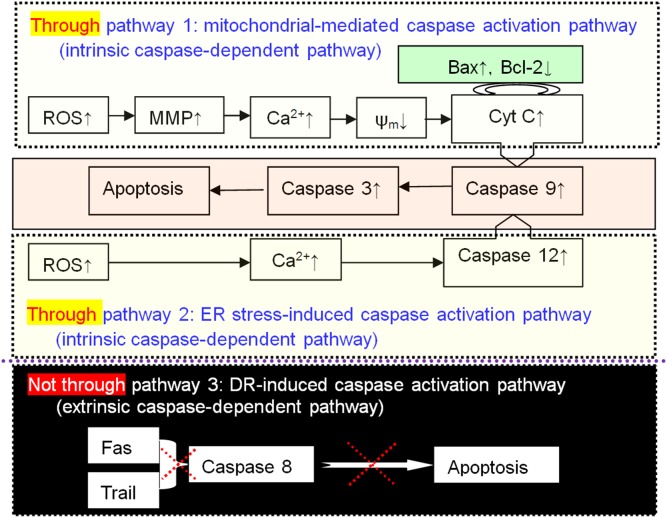
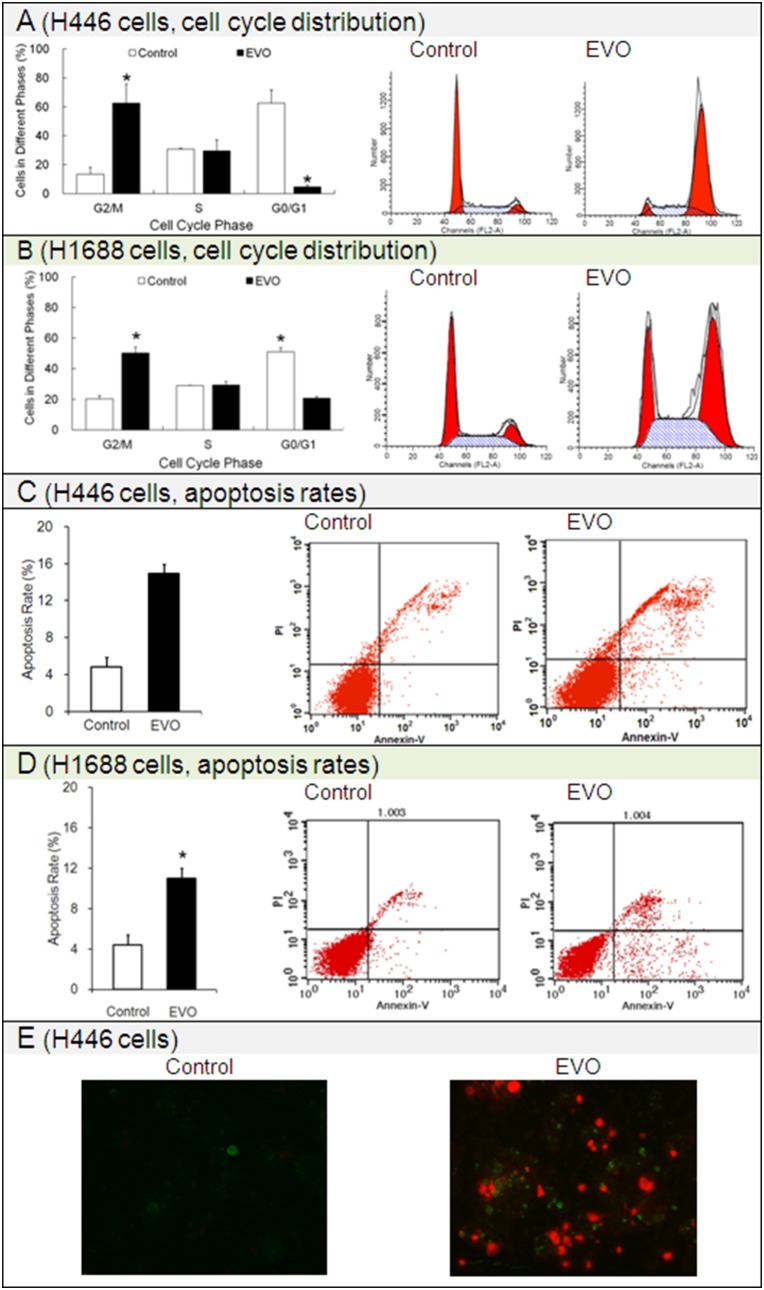
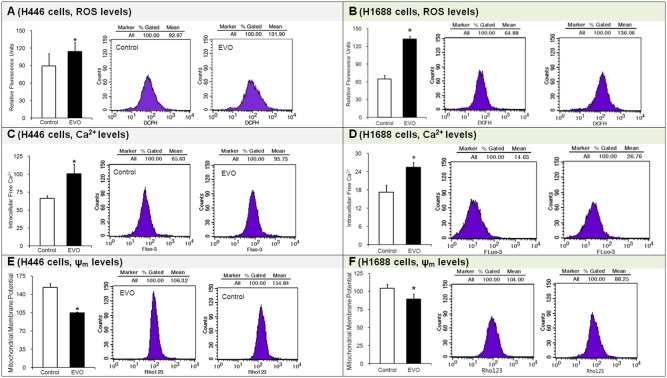
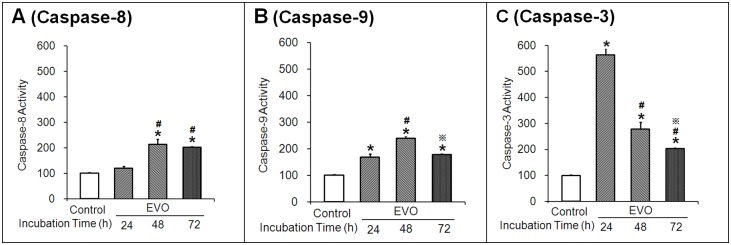
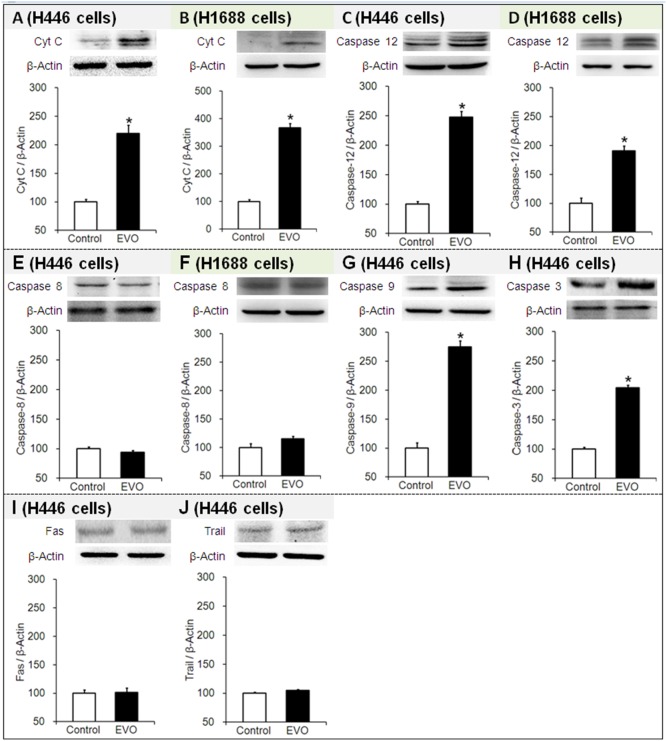
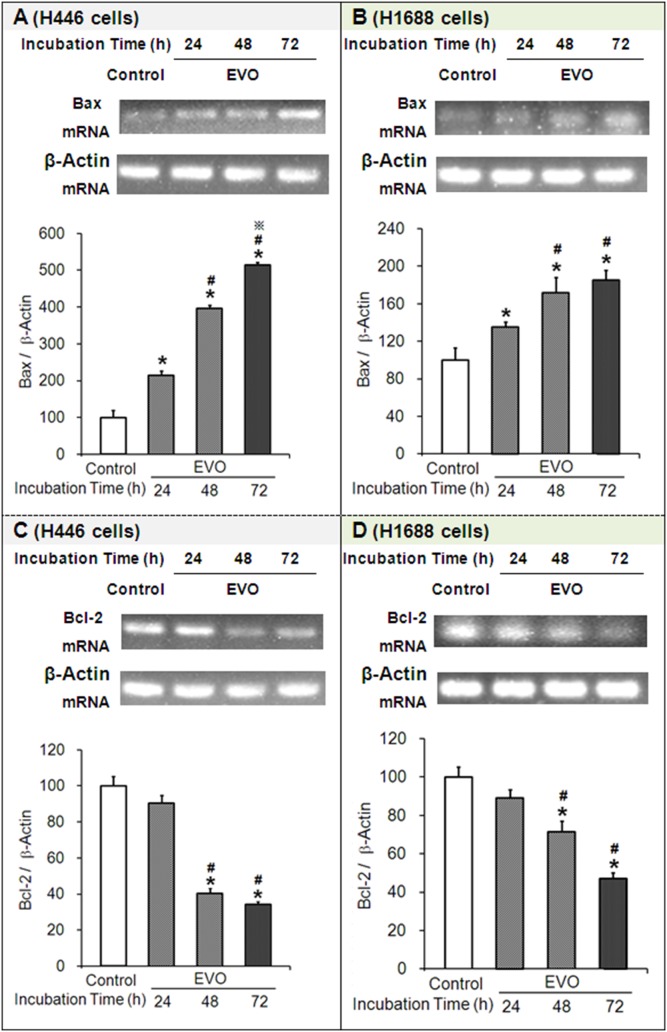
The goal of this study was to evaluate the ability of EVO to decrease cell viability and promote cell cycle arrest and apoptosis in small cell lung cancer (SCLC) cells. Lung cancer has the highest incidence and mortality rates among all cancers. Chemotherapy is the primary treatment for SCLC; however, the drugs that are currently used for SCLC are less effective than those used for non-small cell lung cancer (NSCLC). Therefore, it is necessary to develop new drugs to treat SCLC. In this study, the effects of evodiamine (EVO) on cell growth, cell cycle arrest and apoptosis were investigated in the human SCLC cell lines NCI-H446 and NCI-H1688. The results represent the first report that EVO can significantly inhibit the viability of both H446 and H1688 cells in dose- and time-dependent manners. EVO induced cell cycle arrest at G2/M phase, induced apoptosis by up-regulating the expression of caspase-12 and cytochrome C protein, and induced the expression of Bax mRNA and by down-regulating of the expression of Bcl-2 mRNA in both H446 and H1688 cells. However, there was no effect on the protein expression of caspase-8. Taken together, the inhibitory effects of EVO on the growth of H446 and H1688 cells might be attributable to G2/M arrest and subsequent apoptosis, through mitochondria-dependent and endoplasmic reticulum stress-induced pathways (intrinsic caspase-dependent pathways) but not through the death receptor-induced pathway (extrinsic caspase-dependent pathway). Our findings suggest that EVO is a promising novel and potent antitumor drug candidate for SCLC. Furthermore, the cell cycle, the mitochondria and the ER stress pathways are rational targets for the future development of an EVO delivery system to treat SCLC.
本研究的目的是评估吴茱萸碱(EVO)降低小细胞肺癌(SCLC)细胞活力、促进细胞周期阻滞和凋亡的能力。肺癌在所有癌症中发病率和死亡率最高。化疗是SCLC的主要治疗方法;然而,目前用于SCLC的药物比用于非小细胞肺癌(NSCLC)的药物效果更差。因此,有必要开发新的药物来治疗SCLC。在本研究中,研究了吴茱萸碱(EVO)对人SCLC细胞系NCI-H446和NCI-H1688细胞生长、细胞周期阻滞和凋亡的影响。结果首次表明,EVO能以剂量和时间依赖性方式显著抑制H446和H1688细胞的活力。EVO诱导细胞周期阻滞于G2/M期,通过上调caspase-12和细胞色素C蛋白的表达诱导凋亡,并通过上调H446和H1688细胞中Bax mRNA的表达以及下调Bcl-2 mRNA的表达来诱导凋亡。然而,对caspase-8的蛋白表达没有影响。综上所述,EVO对H446和H1688细胞生长的抑制作用可能归因于G2/M期阻滞和随后的凋亡,通过线粒体依赖性和内质网应激诱导途径(内源性caspase依赖性途径),而不是通过死亡受体诱导途径(外源性caspase依赖性途径)。我们的研究结果表明,EVO是一种有前途的新型强效SCLC抗肿瘤候选药物。此外,细胞周期、线粒体和内质网应激途径是未来开发用于治疗SCLC的EVO递送系统的合理靶点。