Fako Valerie E, Wu Xi, Pflug Beth, Liu Jing-Yuan, Zhang Jian-Ting
Department of Pharmacology and Toxicology, ‡Department of Medicine, and §IU Simon Cancer Center, Indiana University School of Medicine , Indianapolis, Indiana 46202, United States.
J Med Chem. 2015 Jan 22;58(2):778-84. doi: 10.1021/jm501543u. Epub 2014 Dec 29.
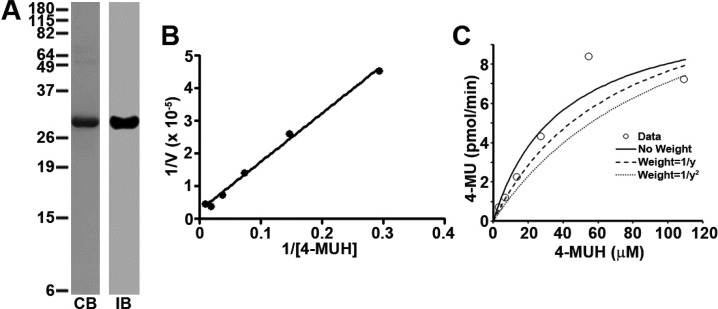
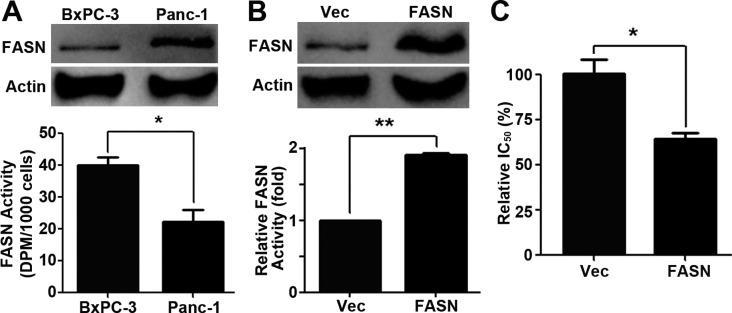
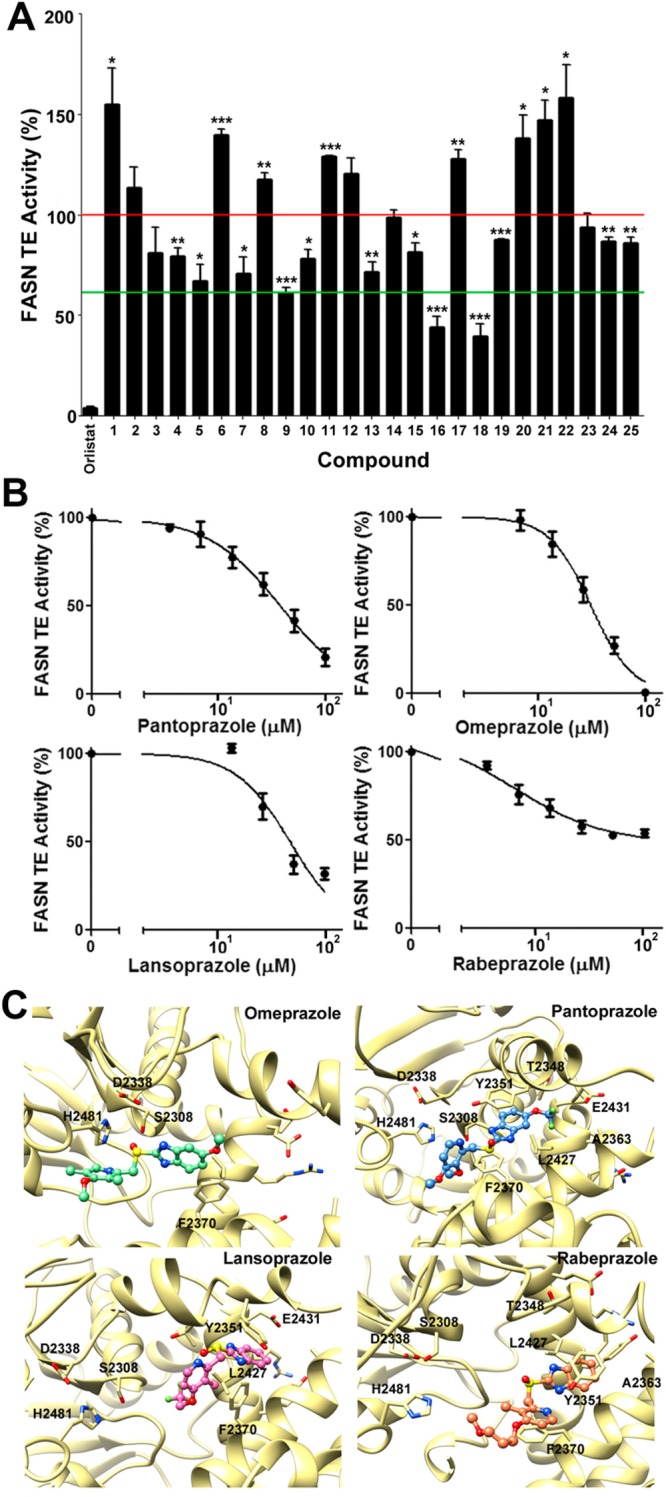
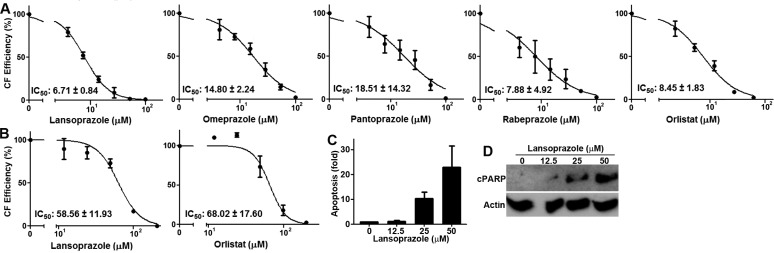
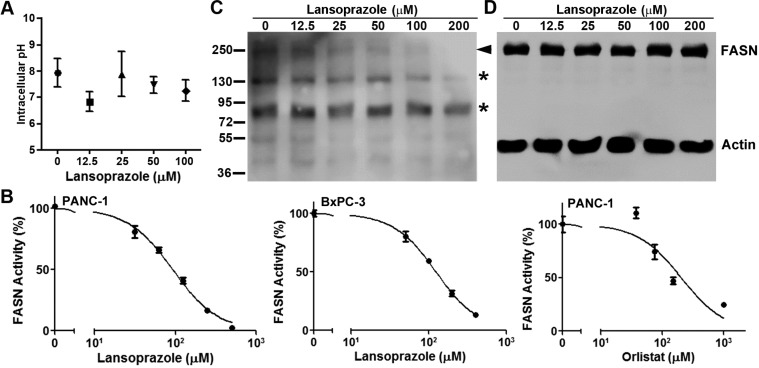
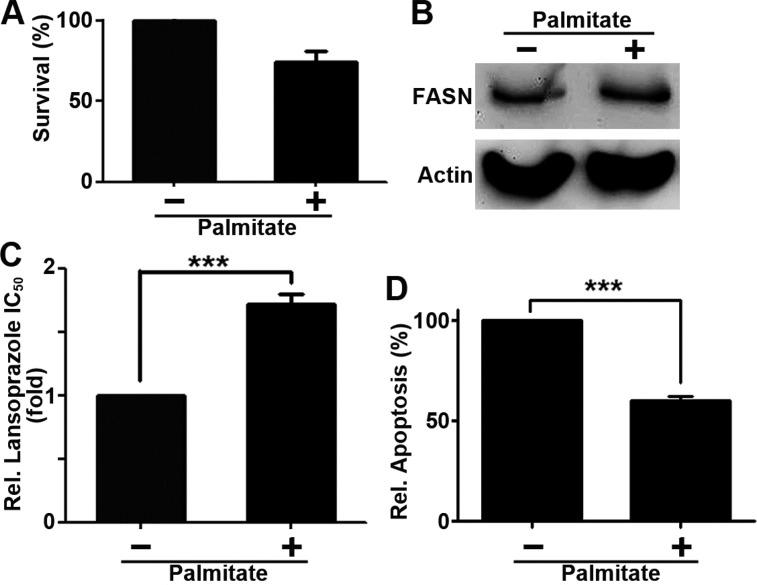
Fatty acid synthase (FASN), the enzyme responsible for de novo synthesis of free fatty acids, is up-regulated in many cancers. FASN is essential for cancer cell survival and contributes to drug resistance and poor prognosis. However, it is not expressed in most nonlipogenic normal tissues. Thus, FASN is a desirable target for drug discovery. Although different FASN inhibitors have been identified, none has successfully moved into clinical use. In this study, using in silico screening of an FDA-approved drug database, we identified proton pump inhibitors (PPIs) as effective inhibitors of the thioesterase activity of human FASN. Further investigation showed that PPIs inhibited proliferation and induced apoptosis of cancer cells. Supplementation of palmitate, the end product of FASN catalysis, rescued cancer cells from PPI-induced cell death. These findings provide new evidence for the mechanism by which this FDA-approved class of compounds may be acting on cancer cells.
脂肪酸合酶(FASN)是负责游离脂肪酸从头合成的酶,在许多癌症中上调。FASN对癌细胞存活至关重要,并导致耐药性和不良预后。然而,它在大多数非脂肪生成性正常组织中不表达。因此,FASN是药物研发的理想靶点。尽管已鉴定出不同的FASN抑制剂,但尚无一种成功进入临床应用。在本研究中,通过对FDA批准的药物数据库进行计算机筛选,我们确定质子泵抑制剂(PPI)是人FASN硫酯酶活性的有效抑制剂。进一步研究表明,PPI抑制癌细胞增殖并诱导其凋亡。补充FASN催化的终产物棕榈酸可使癌细胞免受PPI诱导的细胞死亡。这些发现为这类FDA批准的化合物可能作用于癌细胞的机制提供了新证据。