Brennan Marc A, McCreery Ryan, Kopun Judy, Hoover Brenda, Alexander Joshua, Lewis Dawna, Stelmachowicz Patricia G
Hearing and Amplification Research Laboratory, Boys Town National Research Hospital, Omaha, NE.
Experimental Amplification Research Laboratory, Purdue University, West Lafayette, IN.
J Am Acad Audiol. 2014 Nov-Dec;25(10):983-98. doi: 10.3766/jaaa.25.10.7.
Preference for speech and music processed with nonlinear frequency compression (NFC) and two controls (restricted bandwidth [RBW] and extended bandwidth [EBW] hearing aid processing) was examined in adults and children with hearing loss.
The purpose of this study was to determine if stimulus type (music, sentences), age (children, adults), and degree of hearing loss influence listener preference for NFC, RBW, and EBW.
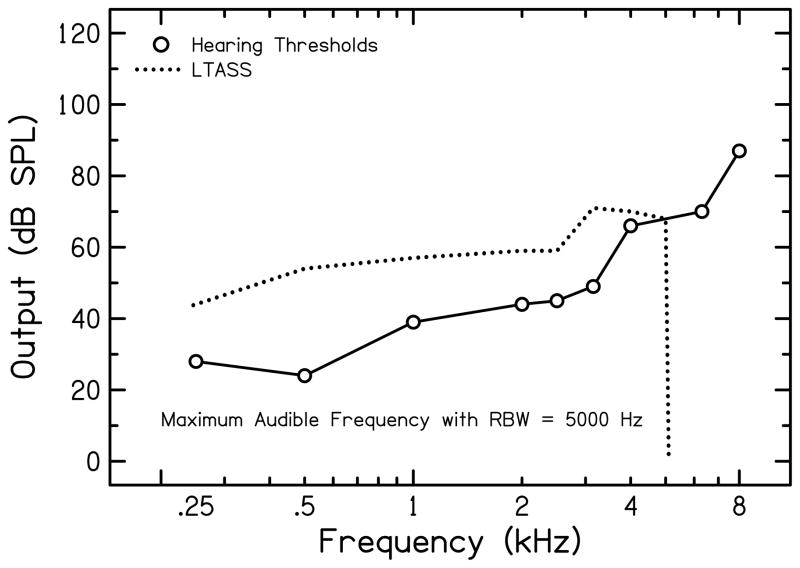
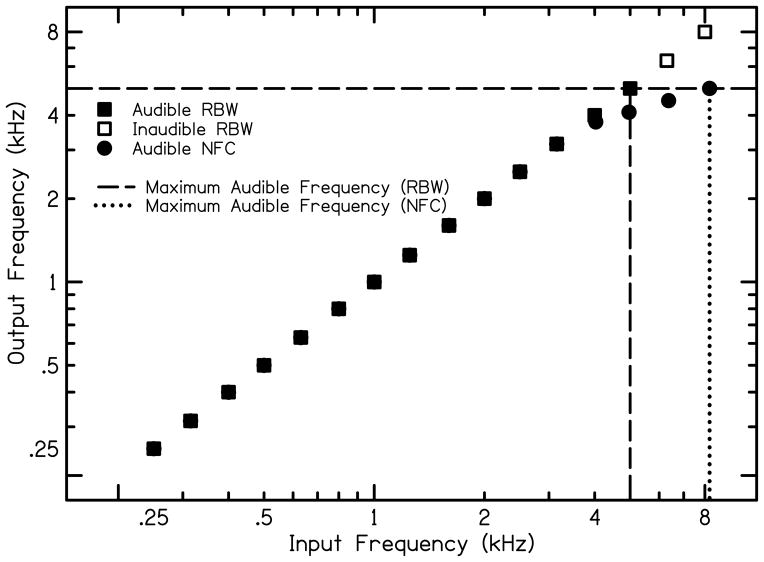
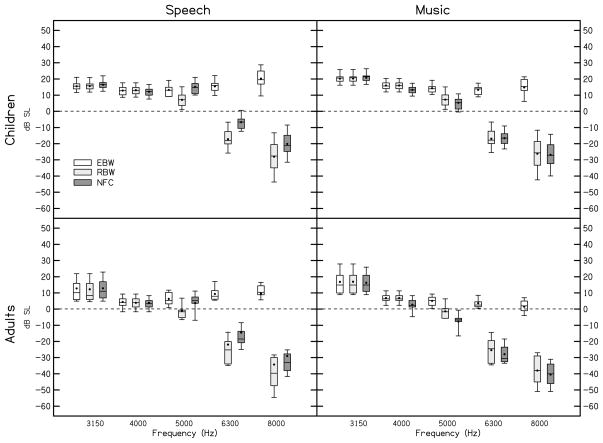
Design was a within-participant, quasi-experimental study. Using a round-robin procedure, participants listened to amplified stimuli that were (1) frequency lowered using NFC, (2) low-pass filtered at 5 kHz to simulate the RBW of conventional hearing aid processing, or (3) low-pass filtered at 11 kHz to simulate EBW amplification. The examiner and participants were blinded to the type of processing. Using a two-alternative forced-choice task, participants selected the preferred music or sentence passage.
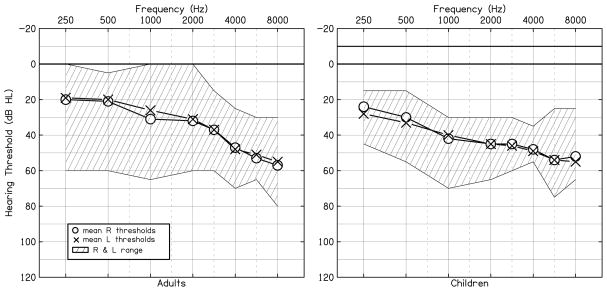
Participants included 16 children (ages 8-16 yr) and 16 adults (ages 19-65 yr) with mild to severe sensorineural hearing loss.
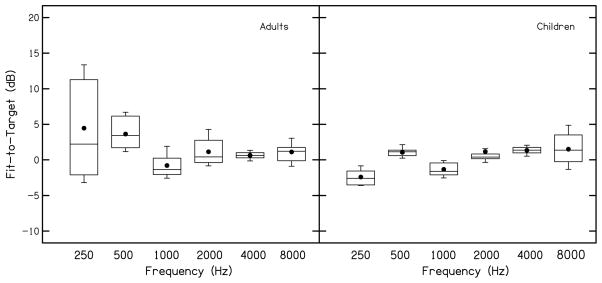
All participants listened to speech and music processed using a hearing aid simulator fit to the Desired Sensation Level algorithm v5.0a.
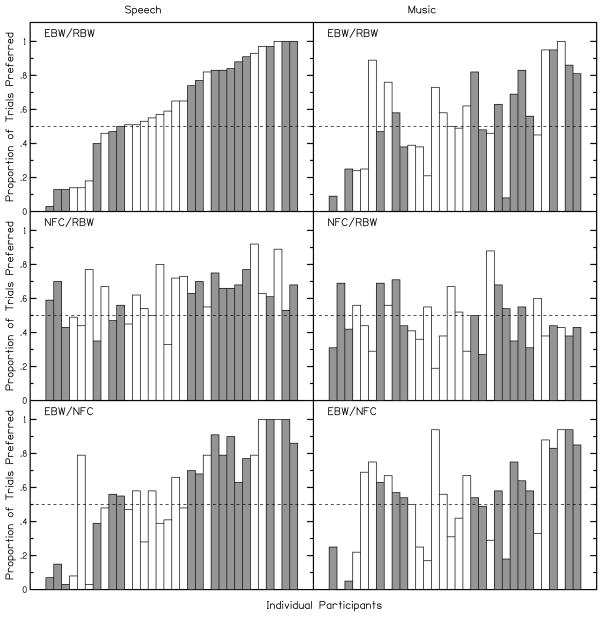
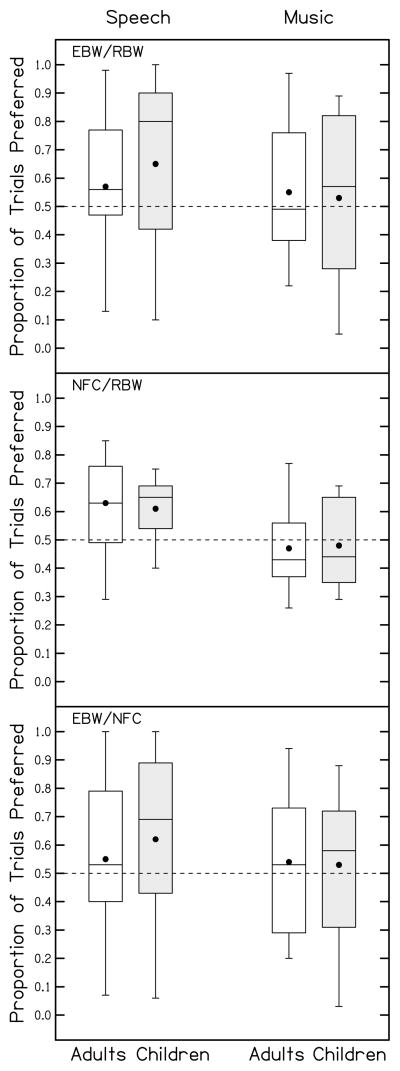
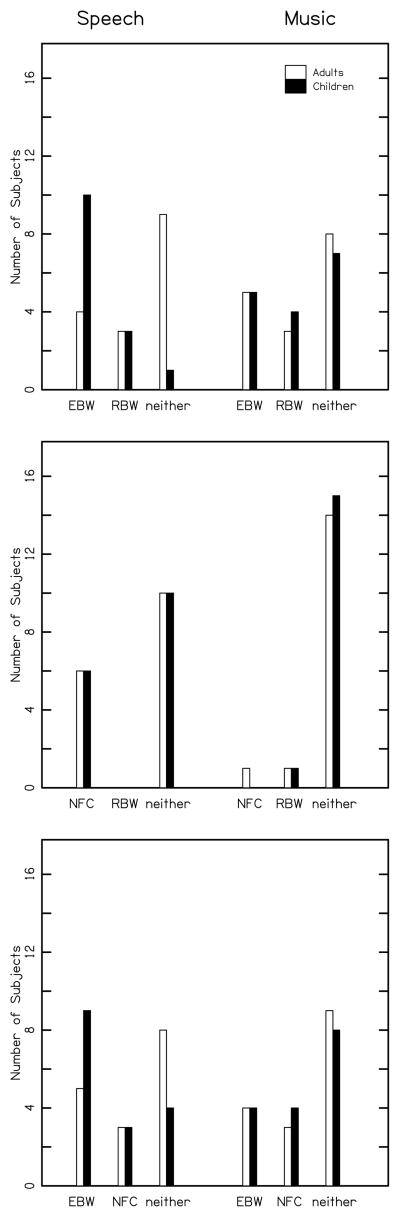
Children and adults did not differ in their preferences. For speech, participants preferred EBW to both NFC and RBW. Participants also preferred NFC to RBW. Preference was not related to the degree of hearing loss. For music, listeners did not show a preference. However, participants with greater hearing loss preferred NFC to RBW more than participants with less hearing loss. Conversely, participants with greater hearing loss were less likely to prefer EBW to RBW.
Both age groups preferred access to high-frequency sounds, as demonstrated by their preference for either the EBW or NFC conditions over the RBW condition. Preference for EBW can be limited for those with greater degrees of hearing loss, but participants with greater hearing loss may be more likely to prefer NFC. Further investigation using participants with more severe hearing loss may be warranted.
对患有听力损失的成人和儿童进行了研究,以考察他们对经非线性频率压缩(NFC)处理的语音和音乐以及两种对照(窄带[RBW]和宽带[EBW]助听器处理)的偏好。
本研究的目的是确定刺激类型(音乐、句子)、年龄(儿童、成人)和听力损失程度是否会影响听众对NFC、RBW和EBW的偏好。
采用参与者内准实验研究设计。采用循环程序,参与者收听经放大的刺激声,这些刺激声分别为:(1)使用NFC进行频率降低处理;(2)在5 kHz处进行低通滤波以模拟传统助听器处理的RBW;或(3)在11 kHz处进行低通滤波以模拟EBW放大。检查者和参与者均不知晓处理类型。采用二选一强制选择任务,参与者选择更喜欢的音乐或句子段落。
参与者包括16名患有轻度至重度感音神经性听力损失的儿童(8至16岁)和16名成人(19至65岁)。
所有参与者收听使用符合期望感觉水平算法v5.0a的助听器模拟器处理的语音和音乐。
儿童和成人在偏好上没有差异。对于语音,参与者更喜欢EBW,而不是NFC和RBW。参与者也更喜欢NFC而不是RBW。偏好与听力损失程度无关。对于音乐,听众没有表现出偏好。然而,听力损失较大的参与者比听力损失较小的参与者更喜欢NFC而不是RBW。相反,听力损失较大的参与者比RBW更喜欢EBW的可能性较小。
两个年龄组都更喜欢获取高频声音,这体现在他们对EBW或NFC条件的偏好高于RBW条件。对于听力损失程度较大的人来说,对EBW的偏好可能会受到限制,但听力损失较大的参与者可能更倾向于选择NFC。可能有必要对听力损失更严重的参与者进行进一步研究。