McCreery Ryan W, Alexander Joshua, Brennan Marc A, Hoover Brenda, Kopun Judy, Stelmachowicz Patricia G
1Hearing and Amplification Research Laboratory, Boys Town National Research Hospital, Omaha, Nebraska, USA; and 2Department of Speech, Language, & Hearing Sciences, Purdue University, West Lafayette, Indiana, USA.
Ear Hear. 2014 Jul-Aug;35(4):440-7. doi: 10.1097/AUD.0000000000000027.
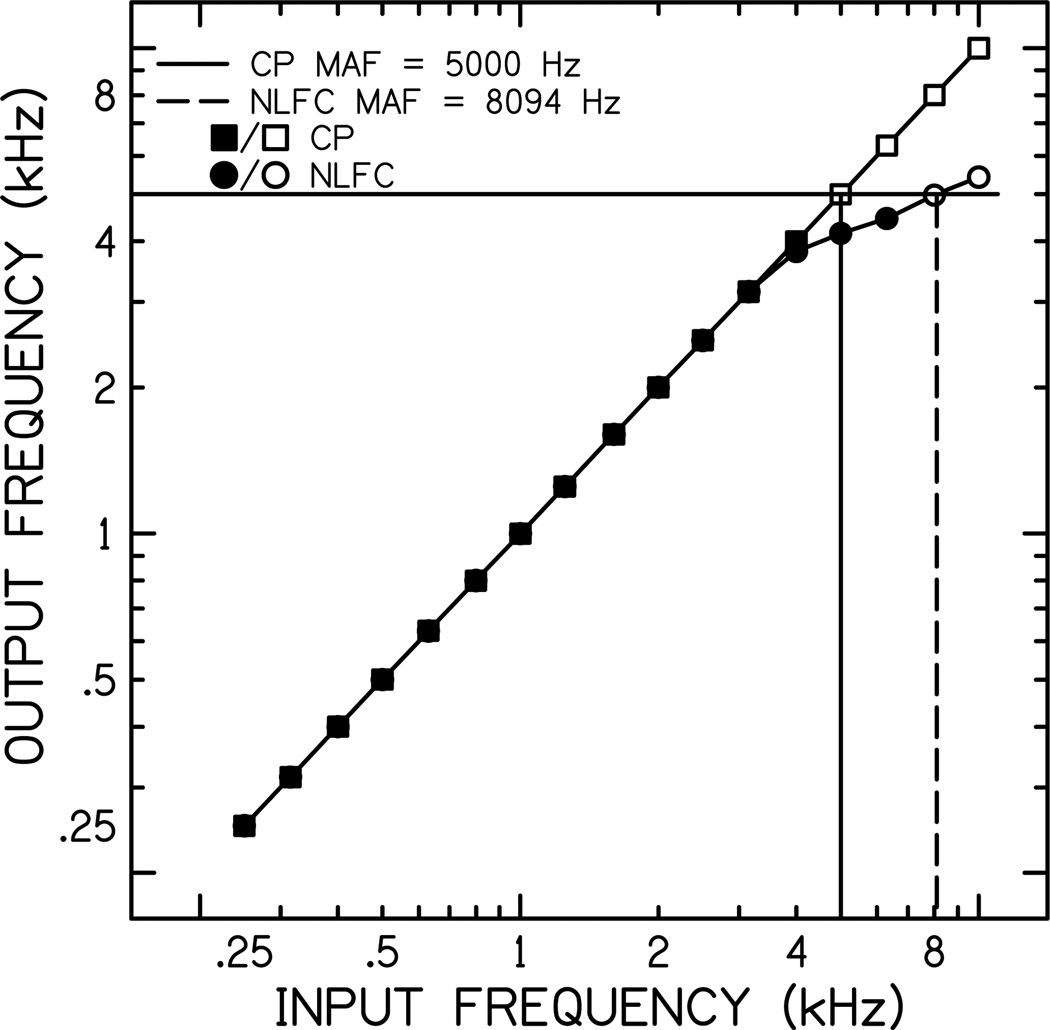
The primary goal of nonlinear frequency compression (NFC) and other frequency-lowering strategies is to increase the audibility of high-frequency sounds that are not otherwise audible with conventional hearing aid (HA) processing due to the degree of hearing loss, limited HA bandwidth, or a combination of both factors. The aim of the present study was to compare estimates of speech audibility processed by NFC with improvements in speech recognition for a group of children and adults with high-frequency hearing loss.
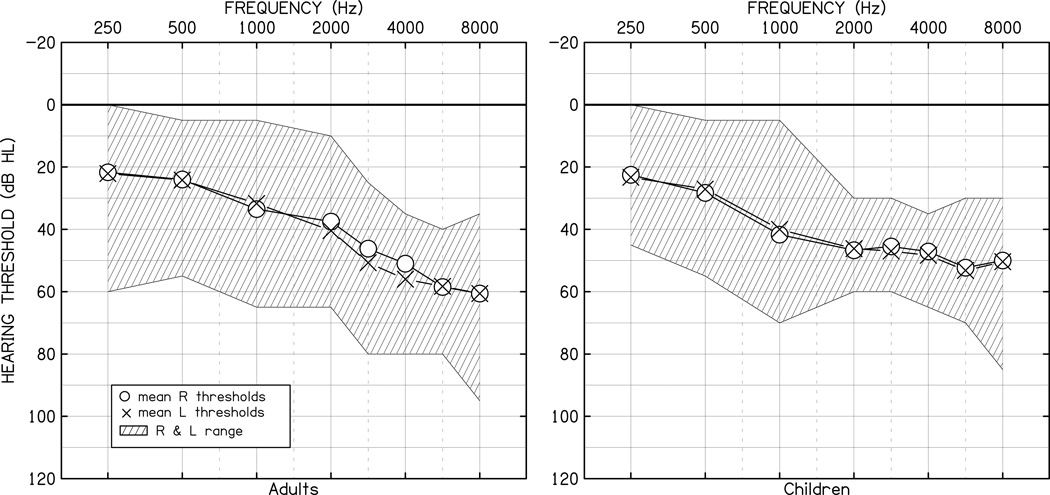
Monosyllabic word recognition was measured in noise for 24 adults and 12 children with mild to severe sensorineural hearing loss. Stimuli were amplified based on each listener's audiogram with conventional processing (CP) with amplitude compression or with NFC and presented under headphones using a software-based HA simulator. A modification of the speech intelligibility index (SII) was used to estimate audibility of information in frequency-lowered bands. The mean improvement in SII was compared with the mean improvement in speech recognition.
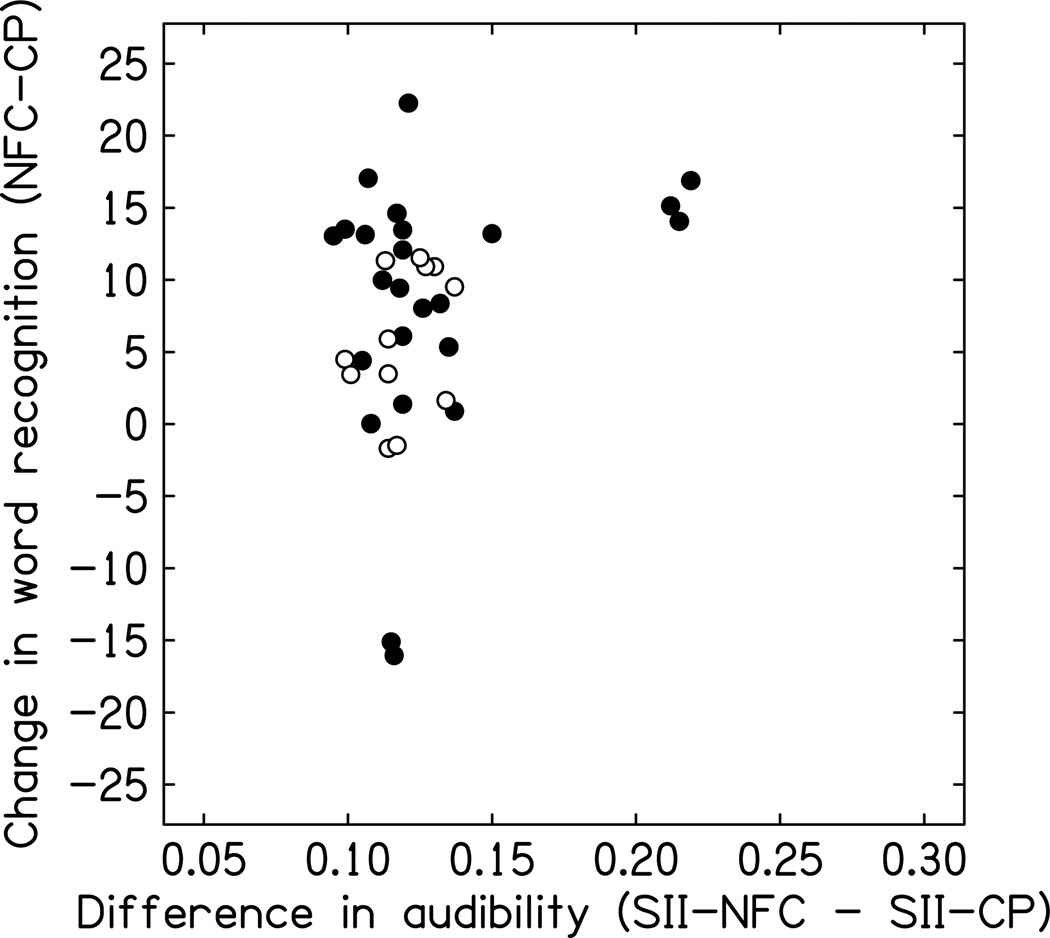
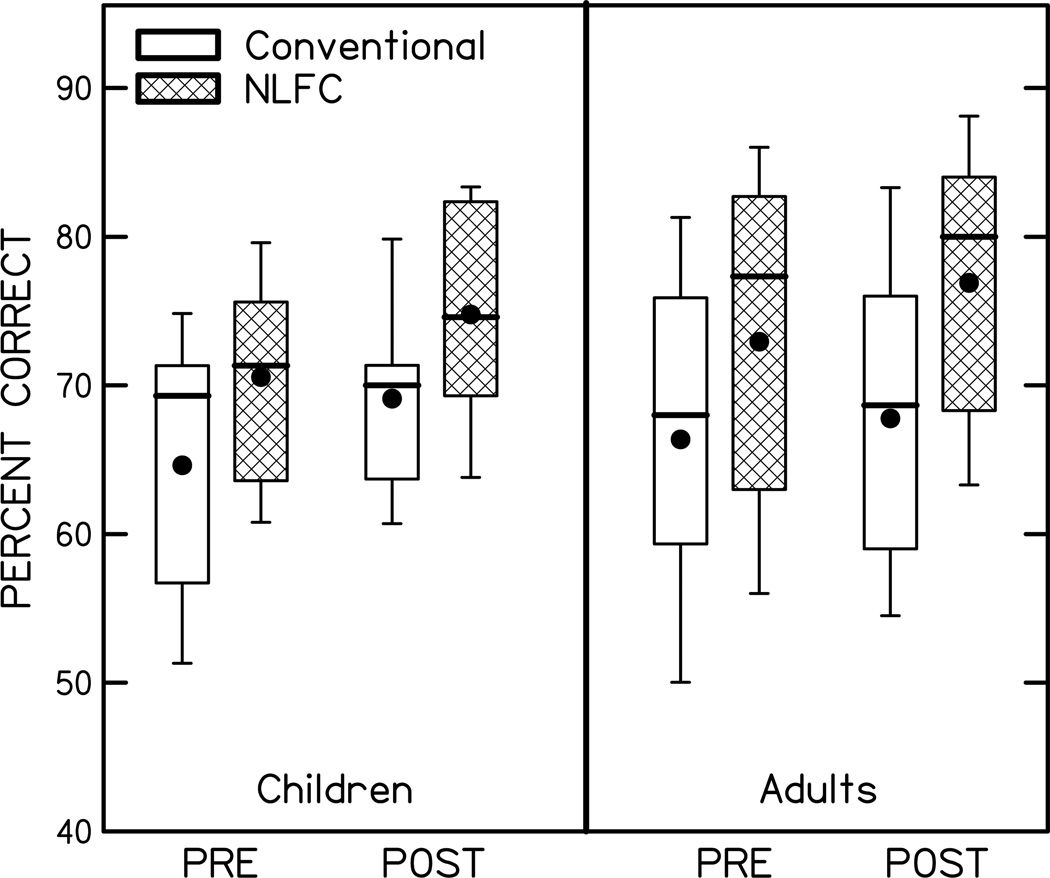
All but 2 listeners experienced improvements in speech recognition with NFC compared with CP, consistent with the small increase in audibility that was estimated using the modification of the SII. Children and adults had similar improvements in speech recognition with NFC.
Word recognition with NFC was higher than CP for children and adults with mild to severe hearing loss. The average improvement in speech recognition with NFC (7%) was consistent with the modified SII, which indicated that listeners experienced an increase in audibility with NFC compared with CP. Further studies are necessary to determine whether changes in audibility with NFC are related to speech recognition with NFC for listeners with greater degrees of hearing loss, with a greater variety of compression settings, and using auditory training.
非线性频率压缩(NFC)及其他降频策略的主要目标是,提高那些因听力损失程度、传统助听器(HA)带宽有限或两者共同作用而无法通过传统HA处理方式听到的高频声音的可听度。本研究的目的是比较NFC处理后的言语可听度估计值与一组高频听力损失儿童和成人的言语识别改善情况。
对24名成人和12名轻度至重度感音神经性听力损失儿童进行了噪声环境下单音节词识别测试。根据每位受试者的听力图,采用传统处理方式(CP)进行幅度压缩或采用NFC对刺激声进行放大,并使用基于软件的HA模拟器通过耳机呈现。使用言语可懂度指数(SII)的一种变体来估计降频频段中信息的可听度。将SII的平均改善情况与言语识别的平均改善情况进行比较。
与CP相比,除2名受试者外,所有受试者使用NFC后言语识别均有改善,这与使用SII变体估计出的可听度小幅增加一致。儿童和成人使用NFC后言语识别的改善情况相似。
对于轻度至重度听力损失的儿童和成人,NFC的单词识别率高于CP。NFC言语识别的平均改善率(7%)与修正后的SII一致,这表明与CP相比,受试者使用NFC后可听度有所提高。有必要进一步开展研究,以确定对于听力损失程度更高、压缩设置更多样化且接受听觉训练的受试者,NFC带来的可听度变化是否与NFC的言语识别有关。