Song Jian, Xu Lin, Xing Ruiqing, Li Qingling, Zhou Chunyang, Liu Dali, Song Hongwei
State Key Laboratory on Integrated Optoelectronics, College of Electronic Science and Engineering, Jilin University, 2699 Qianjin Street, Changchun, 130012, People's Republic of China.
Sci Rep. 2014 Dec 17;4:7515. doi: 10.1038/srep07515.
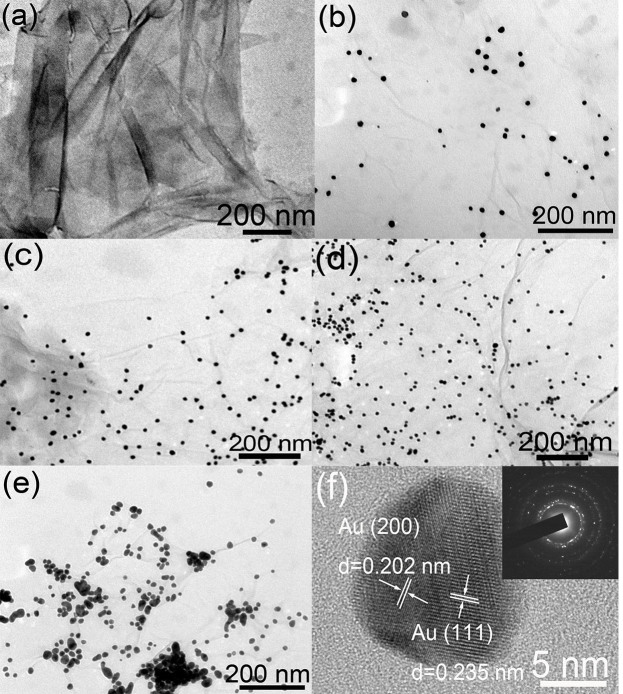
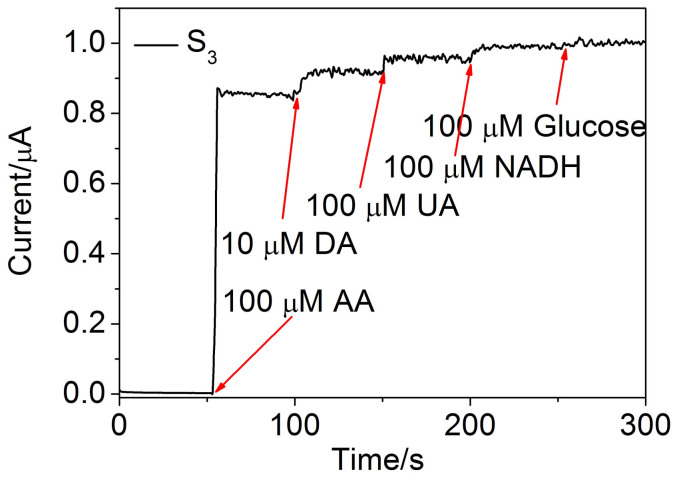
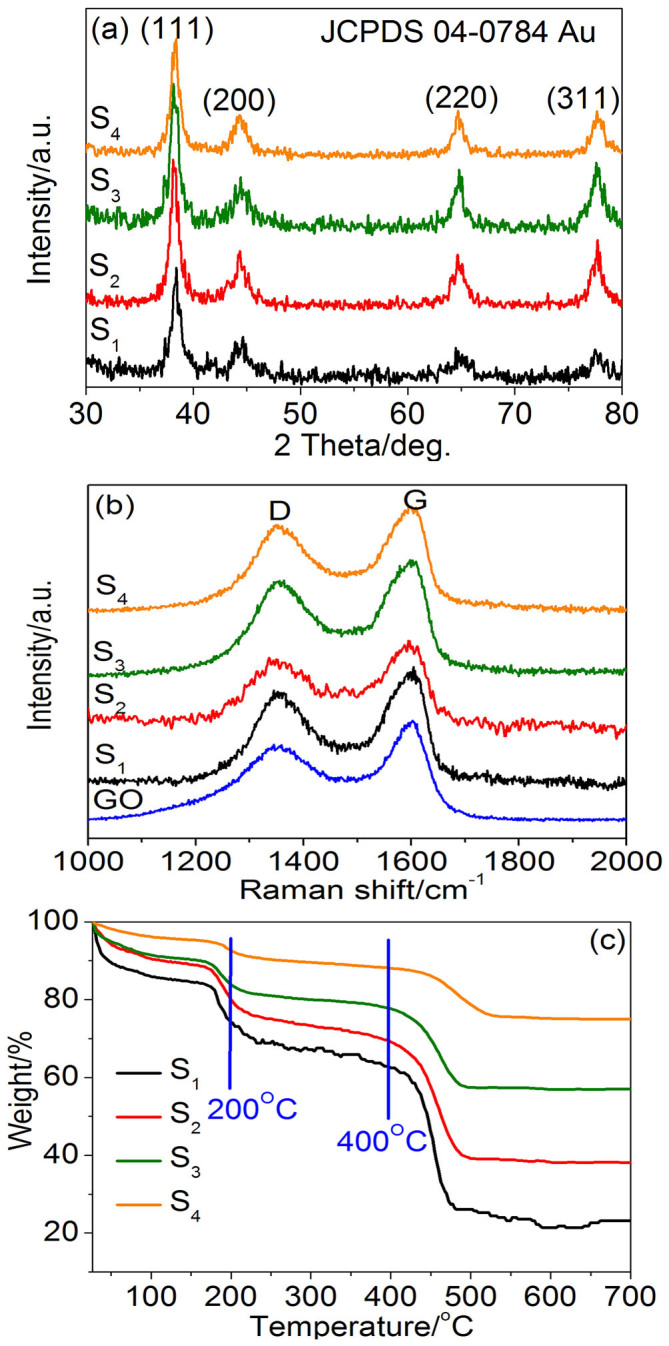
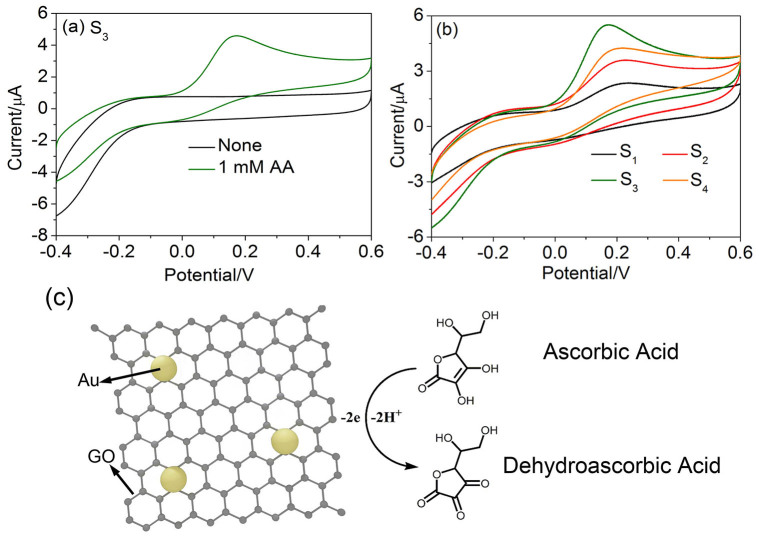
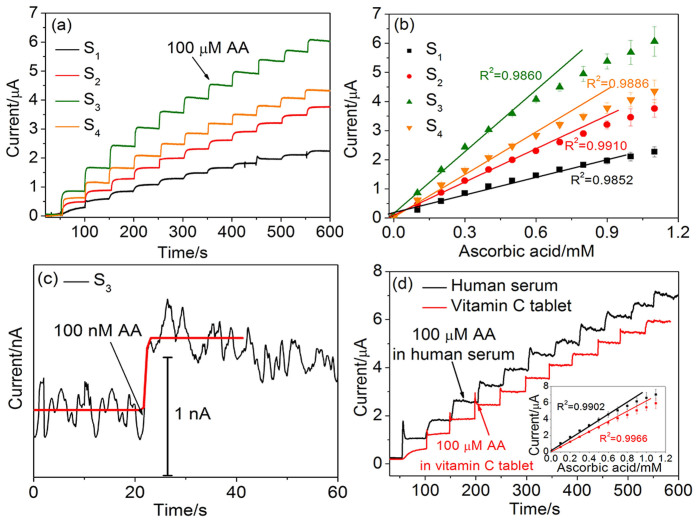
In this work, we present a novel ascorbic acid (AA) sensor applied to the detection of AA in human sera and pharmaceuticals. A series of Au nanoparticles (NPs) and graphene oxide sheets (Au NP/GO) composites were successfully synthesized by reduction of gold (III) using sodium citrate. Then the Au NP/GO composites were used to construct nonenzymatic electrodes in practical AA measurement. The electrode that has the best performance presents attractive analytical features, such as a low working potential of +0.15 V, a high sensitivity of 101.86 μA mM(-1) cm(-2) to AA, a low detection limit of 100 nM, good reproducibility and excellent selectivity. And more,it was also employed to accurately and practically detect AA in human serum and clinical vitamin C tablet with the existence of some food additive. The enhanced AA electrochemical properties of the Au NP/GO modified electrode in our work can be attributed to the improvement of electroactive surface area of Au NPs and the synergistic effect from the combination of Au NPs and GO sheets. This work shows that the Au NP/GO/GCEs hold the prospect for sensitive and selective determination of AA in practical clinical application.
在本工作中,我们展示了一种新型抗坏血酸(AA)传感器,用于检测人血清和药物中的AA。通过柠檬酸钠还原金(III)成功合成了一系列金纳米颗粒(NPs)和氧化石墨烯片(Au NP/GO)复合材料。然后将Au NP/GO复合材料用于实际AA测量中构建非酶电极。性能最佳的电极呈现出吸引人的分析特性,例如工作电位低至+0.15 V,对AA的灵敏度高达101.86 μA mM⁻¹ cm⁻²,检测限低至100 nM,重现性良好且选择性优异。此外,在存在一些食品添加剂的情况下,它还被用于准确实际地检测人血清和临床维生素C片中的AA。我们工作中Au NP/GO修饰电极AA电化学性能的增强可归因于Au NPs电活性表面积的改善以及Au NPs与GO片结合的协同效应。这项工作表明,Au NP/GO修饰玻碳电极在实际临床应用中具有灵敏且选择性测定AA的前景。