Lee Rebecca, Xu Bin, Rame J Eduardo, Felkin Leanne E, Barton Paul, Dries Daniel L
Division of Cardiovascular Medicine, Department of Internal Medicine, Cardiovascular Research Institute, University of Pennsylvania School of Medicine, Philadelphia, PA
J Am Heart Assoc. 2014 Dec;3(6):e001104. doi: 10.1161/JAHA.114.001104.
The compensatory actions of the endogenous natriuretic peptide system require adequate processing of natriuretic peptide pro‐hormones into biologically active, carboxyl‐terminal fragments. Natriuretic peptide pro‐peptide processing is accomplished by corin, a transmembrane serine protease expressed by cardiomyocytes. Brain natriuretic peptide (BNP) processing is inadequate in advanced heart failure and is independently associated with adverse outcomes; however, the molecular mechanisms causing impaired BNP processing are not understood. We hypothesized that the development of endoplasmic reticulum stress in cardiomyocytes in advanced heart failure triggers inositol‐requiring protein 1 (IRE1)‐dependent corin mRNA decay, which would favor a molecular substrate favoring impaired natriuretic peptide pro‐peptide processing.
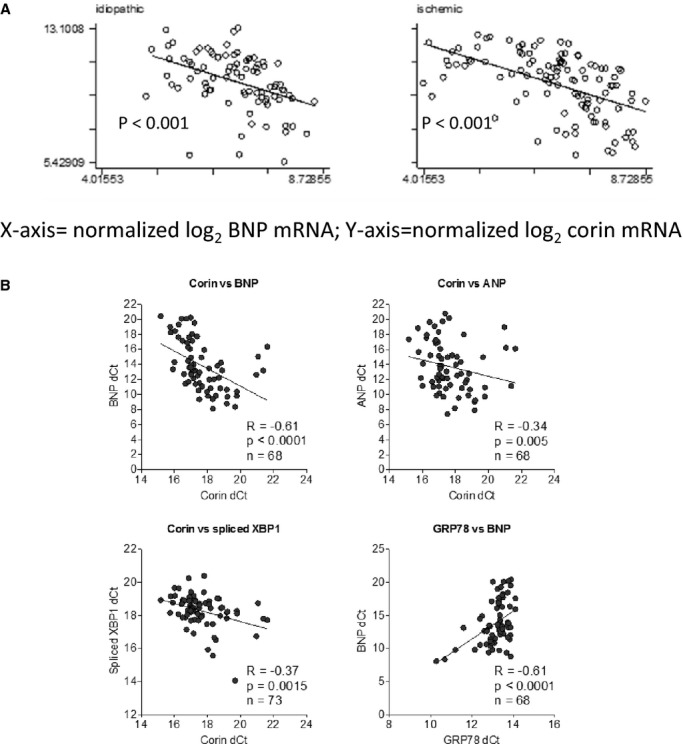
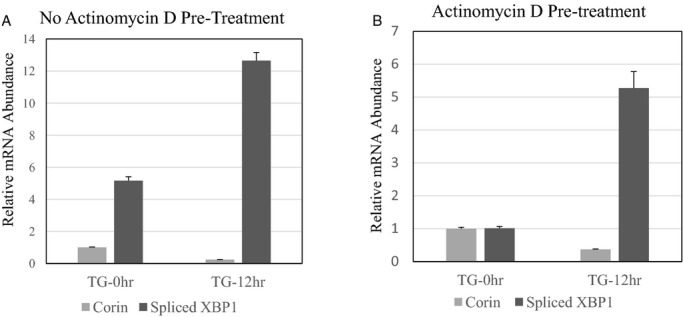
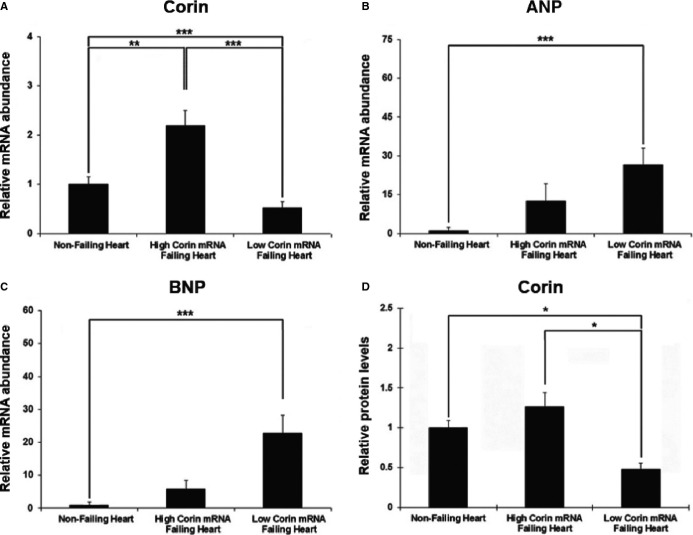
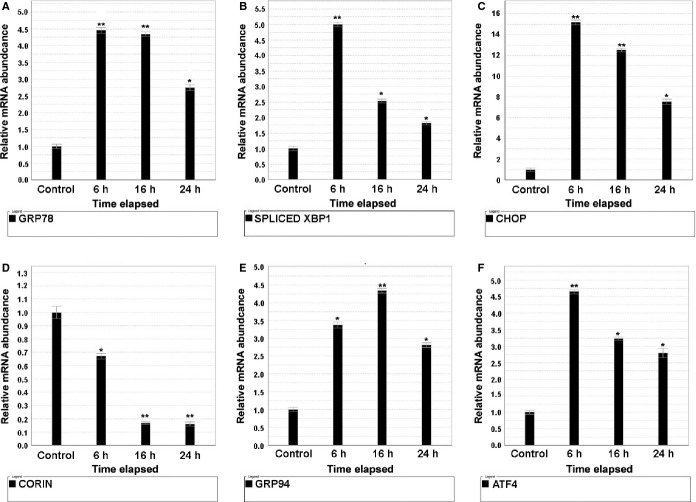
Two independent samples of hearts obtained from patients with advanced heart failure at transplant demonstrated that corin RNA was reduced as Atrial natriuretic peptide (ANP)/BNP RNA increased. Increases in spliced X‐box protein 1, a marker for IRE1‐endoribonuclease activity, were associated with decreased corin RNA. Moreover, ≈50% of the hearts demonstrated significant reductions in corin RNA and protein as compared to the nonfailing control sample. In vitro experiments demonstrated that induction of endoplasmic reticulum stress in cultured cardiomyocytes with thapsigargin activated IRE1's endoribonuclease activity and time‐dependent reductions in corin mRNA. In HL‐1 cells, overexpression of IRE1 activated IRE1 endoribonuclease activity and caused corin mRNA decay, whereas IRE1‐RNA interference with shRNA attenuated corin mRNA decay after induction of endoplasmic reticulum stress with thapsigargin. Pre‐treatment of cells with Actinomycin D to inhibit transcription did not alter the magnitude or time course of thapsigargin‐induced corin mRNA decline, supporting the hypothesis that this was the result of IRE1‐mediated corin mRNA degradation.
These data support the hypothesis that endoplasmic reticulum stress‐mediated, IRE1‐dependent targeted corin mRNA decay is a mechanism leading to corin mRNA resulting in corresponding corin protein deficiency may contribute to the pathophysiology of impaired natriuretic peptide pro‐hormone processing in humans processing in humans with advanced systolic heart failure.
内源性利钠肽系统的代偿作用需要将利钠肽前体激素充分加工成具有生物活性的羧基末端片段。利钠肽前体肽的加工由心肌细胞表达的跨膜丝氨酸蛋白酶corin完成。在晚期心力衰竭中,脑利钠肽(BNP)加工不足,且与不良预后独立相关;然而,导致BNP加工受损的分子机制尚不清楚。我们推测,晚期心力衰竭中心肌细胞内质网应激的发展会触发肌醇需求蛋白1(IRE1)依赖性的corin mRNA降解,这将有利于一种分子底物,导致利钠肽前体肽加工受损。
从晚期心力衰竭患者移植时获取的两个独立心脏样本显示,随着心房利钠肽(ANP)/BNP RNA增加,corin RNA减少。剪接X盒蛋白1(IRE1内切核糖核酸酶活性的标志物)增加与corin RNA减少相关。此外,与非衰竭对照样本相比,约50%的心脏显示corin RNA和蛋白显著减少。体外实验表明,用毒胡萝卜素诱导培养的心肌细胞内质网应激会激活IRE1的内切核糖核酸酶活性,并导致corin mRNA随时间减少。在HL-1细胞中,IRE1的过表达激活了IRE1内切核糖核酸酶活性并导致corin mRNA降解,而用短发夹RNA干扰IRE1可减弱毒胡萝卜素诱导内质网应激后corin mRNA的降解。用放线菌素D预处理细胞以抑制转录,并未改变毒胡萝卜素诱导的corin mRNA下降的幅度或时间进程,支持这是IRE1介导的corin mRNA降解结果的假设。
这些数据支持以下假设,即内质网应激介导的、IRE1依赖性的靶向corin mRNA降解是导致corin mRNA减少从而导致相应corin蛋白缺乏的一种机制,这可能在晚期收缩性心力衰竭患者中促钠肽前体激素加工受损的病理生理过程中发挥作用。