Ali Muhamad, Hidayatullah Tetrawindu A, Alimuddin Zulfikar, Sabrina Yunita
Laboratory of Microbiology and Biotechnology, Faculty of Animal Sciences, Mataram University, Mataram, Indonesia.
Laboratory of Microbiology Faculty of Medical, Mataram University, Mataram, Indonesia.
Iran J Parasitol. 2013 Oct;8(4):522-9.
pfmdr1 and its variants are molecular marker which are responsible for antibiotics resistance in Plasmodium falciparum, a parasitic carrier for malaria disease. A novel strategy to treat malaria disease is by disrupting parasite lactate dehydrogenase (pLDH), a crucial enzyme for Plasmodium survival during their erythrocytic stages. This research was aimed to investigate and characterize the pfmdr1 and pldh genes of P. falciparum isolated from Nusa Tenggara Indonesia.
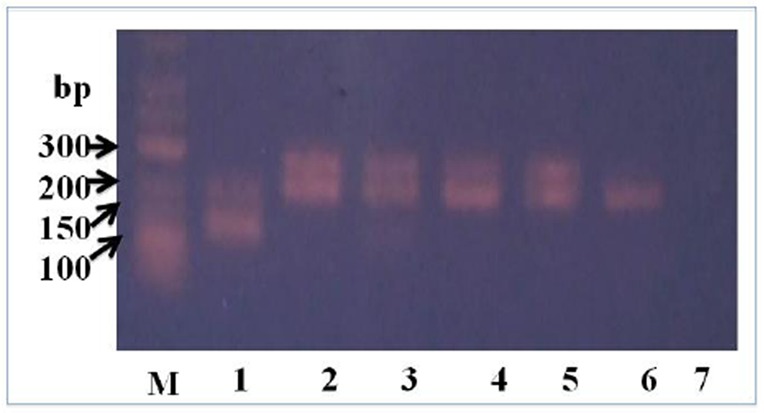
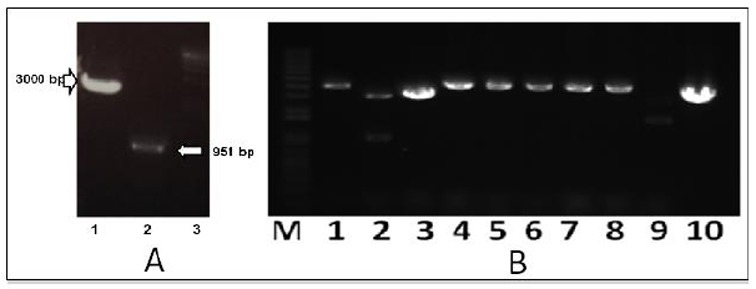
Genomic DNA of P.falciparum was isolated from malaria patients in Nusa Tenggara Indonesia. pfmdr1 was amplified using nested PCR and genotyped using Restriction Fragment Length Polymorphism (RFLP). pldh was amplified, sequenced, and analyzed using NCBI public domain databases and alignment using Clustal W ver. 1.83.
Genotyping of the pfmdr1 revealed that sequence diversity was extremely high among isolates. However, a sequence analysis of pldh indicated that open reading frame of 316 amino acids of the gene showing 100% homology to the P. falciparum 3D7 reference pldh (GeneBank: XM_001349953.1).
This is the first report which confirms the heterologous of pfmdr1 and the homologous sequences of P.falciparum pldh isolated from Nusa Tenggara Islands of Indonesia, indicating that the chloroquine could not be used effectively as antimalarial target in the region and the pLDH-targeted antimalarial compound would have higher chance to be successful than using chloroquine for curbing malaria worldwide.
pfmdr1 及其变体是导致恶性疟原虫产生抗生素耐药性的分子标记,恶性疟原虫是疟疾疾病的寄生载体。一种治疗疟疾的新策略是破坏寄生虫乳酸脱氢酶(pLDH),这是疟原虫在红细胞阶段生存的关键酶。本研究旨在调查和表征从印度尼西亚努沙登加拉分离的恶性疟原虫的 pfmdr1 和 pldh 基因。
从印度尼西亚努沙登加拉的疟疾患者中分离出恶性疟原虫的基因组 DNA。使用巢式 PCR 扩增 pfmdr1,并使用限制性片段长度多态性(RFLP)进行基因分型。扩增 pldh,进行测序,并使用 NCBI 公共领域数据库进行分析,并使用 Clustal W ver. 1.83 进行比对。
pfmdr1 的基因分型显示,分离株之间的序列多样性极高。然而,pldh 的序列分析表明,该基因 316 个氨基酸的开放阅读框与恶性疟原虫 3D7 参考 pldh(基因库:XM_001349953.1)显示 100%同源性。
这是第一份证实从印度尼西亚努沙登加拉群岛分离的 pfmdr1 的异源性和恶性疟原虫 pldh 的同源序列的报告,表明氯喹不能有效地用作该地区的抗疟靶点,并且靶向 pLDH 的抗疟化合物在全球范围内抑制疟疾方面比使用氯喹更有可能成功。