Atroosh Wahib M, Al-Mekhlafi Hesham M, Al-Jasari Adel, Sady Hany, Dawaki Salwa S, Elyana Fatin N, Al-Areeqi Mona A, Nasr Nabil A, Abdulsalam Awatif M, Subramaniam Lahvanya R, Azzani Meram, Ithoi Init, Lau Yee Ling, Surin Johari
Department of Parasitology, Faculty of Medicine, University of Malaya, Kuala Lumpur, Malaysia; Unit of Microbiology and Parasitology, Department of Para-Clinic, Faculty of Medicine and Health Sciences, University of Aden, Khormaksar, Aden, Yemen.
Department of Parasitology, Faculty of Medicine, University of Malaya, Kuala Lumpur, Malaysia; Endemic and Tropical Diseases Unit, Medical Research Centre, Jazan University, Jazan, Kingdom of Saudi Arabia; Department of Parasitology, Faculty of Medicine and Health Sciences, Sana'a University, Sana'a, Yemen.
PeerJ. 2016 Jul 12;4:e2191. doi: 10.7717/peerj.2191. eCollection 2016.
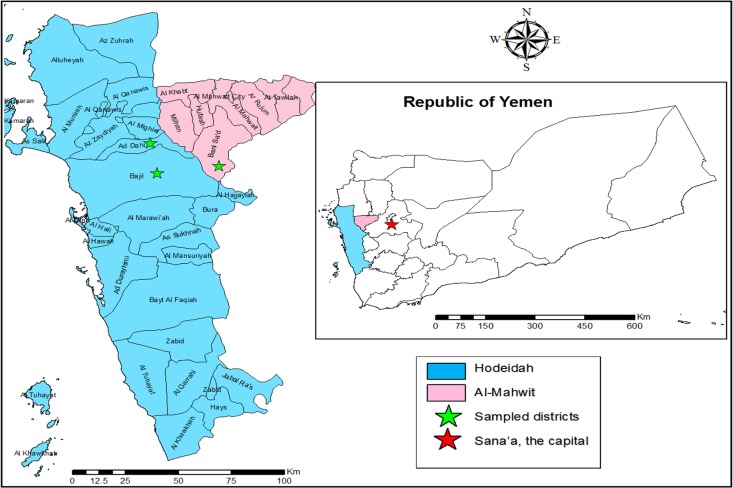
Introduction. Despite the efforts of the malaria control programme, malaria morbidity is still a common health problem in Yemen, with 60% of the population at risk. Plasmodium falciparum is responsible for 99% of malaria cases. The emergence in Yemen of parasite resistance to chloroquine (CQ) prompted the adoption of artemisinin combination therapy (ACT) in 2009, which involves the use of artesunate plus sulphadoxine-pyrimethamine (AS + SP). However, CQ was retained as the drug of choice for vivax malaria. To assess the impact of the change in the malaria treatment policy five years after its introduction, the present study investigated the mutations in the CQ resistance transporter (pfcrt) and multidrug resistance 1 (pfmdr1) genes. Method. A molecular investigation of 10 codons of pfcrt (72-76, 220, 271, 326, 356, and 371) and five codons of pfmdr1 (86, 184, 1034, 1042, and 1246) was conducted on P. falciparum isolates from districts with the highest malaria endemicity in the Hodeidah and Al-Mahwit governorates in Tehama region, Yemen. A total of 86 positive cases of falciparum monoinfection were investigated for the presence of mutations related to CQ and other antimalarials using a PCR-RFLP assay. Results. There was a wide prevalence of pfcrt gene mutations with the pfcrt 76T CQ resistance marker being predominant (97.7%). The prevalence of other pfcrt mutations varied from high (75E: 88%) to moderate (74I: 79.1%, 220S: 69.8%, 271E and 371I: 53.5%) or low (326S: 36%, 72S: 10.5%). Mutated pfcrt 72-76 amino acids haplotypes were highly prevalent (98.8%). Among these, the CVIET classic, old-world African/Southeast Asian haplotype was the most predominant, and was mostly found in the isolates from the Khamis Bani Saad district of Al-Mahwit (93.1%) and the AdDahi district of Hodeidah (88.9%). However, it was only found in 26.3% of the isolates from the Bajil district of Hodeidah. Surprisingly, the SVMNT new-world South American haplotype was exclusively detected in 9.3% of the isolates from the Bajil district of Hodeidah. Mutations at Y184F of pfmdr1 were found in all isolates (100%) from all districts. The mutation for codons 1034C and 86Y were found only in the isolates from the AdDahi and Khamis Bani Saad districts. Overall, the AdDahi and Khamis Bani Saad districts were similar in terms of carrying most of the mutations in the pfcrt and pfmdr1 genes, while there was a lower prevalence of mutation in the isolates from the Bajil district. Conclusion. The high prevalence of mutations in pfcrt 5 years after the official cessation of CQ use against P. falciparum suggests that there is sustained CQ pressure on P. falciparum isolates in the study area. Moreover, the low prevalence of mutations in the pfmdr1 gene could be a good indicator of the high susceptibility of P. falciparum isolates to antimalarials other than CQ. A new strategy to ensure the complete nationwide withdrawal of CQ from the private drug market is recommended.
引言。尽管疟疾控制项目付出了努力,但疟疾发病率在也门仍是一个常见的健康问题,60%的人口面临风险。恶性疟原虫导致了99%的疟疾病例。也门出现对氯喹(CQ)耐药的寄生虫,促使该国于2009年采用青蒿素联合疗法(ACT),即使用青蒿琥酯加磺胺多辛-乙胺嘧啶(AS + SP)。然而,CQ仍被保留为间日疟的首选药物。为评估疟疾治疗政策改变实施五年后的影响,本研究调查了CQ耐药转运蛋白(pfcrt)和多药耐药1(pfmdr1)基因的突变情况。方法。对来自也门提哈马地区荷台达省和迈赫维特省疟疾流行率最高地区的恶性疟原虫分离株,进行了pfcrt的10个密码子(72 - 76、220、271、326、356和371)和pfmdr1的5个密码子(86、184、1034、1042和1246)的分子研究。使用聚合酶链反应 - 限制性片段长度多态性分析(PCR - RFLP),对总共86例恶性疟单感染阳性病例进行与CQ及其他抗疟药相关突变的检测。结果。pfcrt基因突变普遍存在,pfcrt 76T CQ耐药标记最为常见(97.7%)。其他pfcrt突变的发生率从高(75E:88%)到中等(74I:79.1%,220S:69.8%,271E和371I:53.5%)或低(326S:36%,72S:10.5%)不等。pfcrt 72 - 76氨基酸单倍型突变非常普遍(98.8%)。其中,CVIET经典的旧世界非洲/东南亚单倍型最为常见,主要见于迈赫维特省哈米斯·巴尼·萨阿德区(93.1%)和荷台达省阿达希区(88.9%)的分离株。然而,仅在荷台达省巴吉尔区26.3%的分离株中发现。令人惊讶的是,SVMNT新世界南美单倍型仅在荷台达省巴吉尔区9.3%的分离株中检测到。所有地区的所有分离株(100%)均发现pfmdr1的Y184F突变。仅在阿达希区和哈米斯·巴尼·萨阿德区的分离株中发现密码子1034C和86Y的突变。总体而言,阿达希区和哈米斯·巴尼·萨阿德区在携带pfcrt和pfmdr1基因的大多数突变方面相似,而巴吉尔区分离株的突变发生率较低。结论。在官方停止使用CQ治疗恶性疟五年后,pfcrt基因突变的高发生率表明研究区域内的恶性疟原虫分离株持续受到CQ压力。此外,pfmdr1基因突变发生率低可能是恶性疟原虫分离株对CQ以外抗疟药高度敏感的良好指标。建议采取新策略确保在全国范围内从私人药品市场完全停用CQ。