Morel Marion, Vanderstraete Mathieu, Cailliau Katia, Lescuyer Arlette, Lancelot Julien, Dissous Colette
CIIL - Center of Infection and Immunity of Lille, Université Lille Nord de France, Inserm U1019, CNRS-UMR 8204, Institut Pasteur de Lille, 59019 Lille Cedex, France.
Laboratoire de Régulation des Signaux de Division, Université Lille 1 Sciences et Technology, EA 4479, IFR 147, 59655 Villeneuve d'Ascq Cedex, France.
Int J Parasitol Drugs Drug Resist. 2014 Oct 12;4(3):256-66. doi: 10.1016/j.ijpddr.2014.09.004. eCollection 2014 Dec.
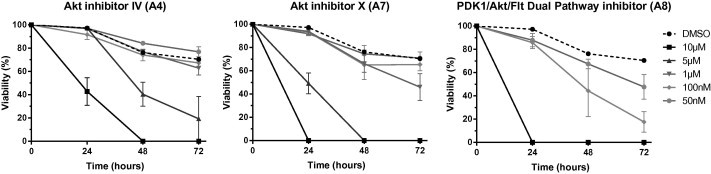
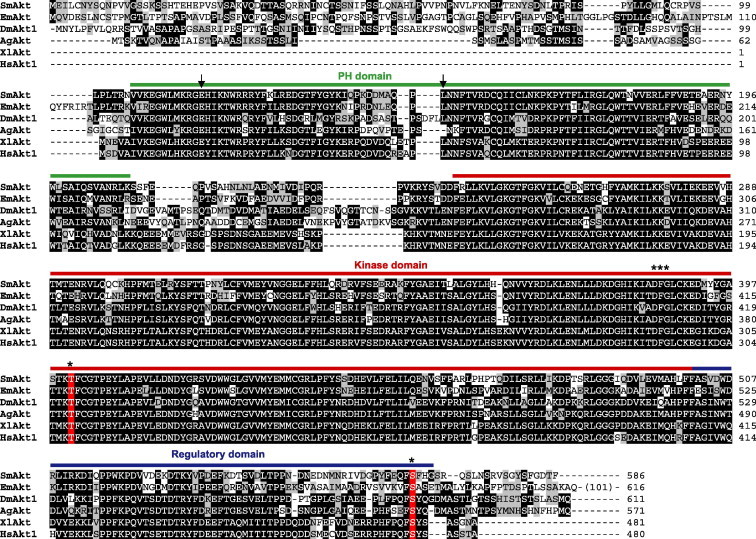
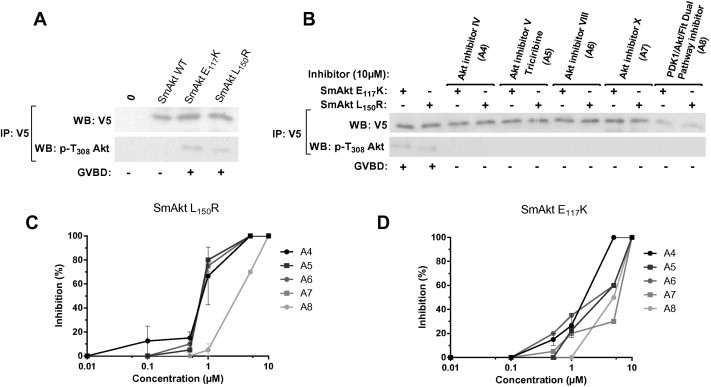
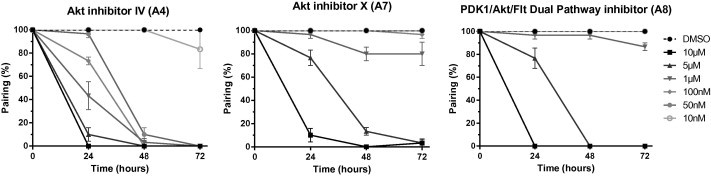
Protein kinases (PKs) are one of the largest protein families in most eukaryotic organisms. These enzymes are involved in the control of cell proliferation, differentiation and metabolism and a large number of the anticancer drugs currently used are directed against PKs. The structure and function of PKs are well conserved throughout evolution. In schistosome parasites, PKs were shown to be involved in essential functions at every stage of the parasite life cycle, making these enzymes promising anti-parasite drug targets. In this study, we tested a panel of commercial inhibitors for various PKs and analyzed their effects on pairing and egg production by schistosomes as well as their toxicity towards schistosomula larvae. Results obtained confirmed the deleterious effect of PK targeting on Schistosoma mansoni physiology and the important function of different tyrosine and serine/threonine kinases in the biology and reproduction of this parasite. They also indicated for the first time that the Protein kinase B (also called Akt) which is a major downstream target of many receptor tyrosine kinases and a central player at the crossroads of signal transduction pathways activated in response to growth factors and insulin, can constitute a novel target for anti-schistosome chemotherapy. Structural and functional studies have shown that SmAkt is a conserved kinase and that its activity can be inhibited by commercially available Akt inhibitors. In treated adult worms, Akt/PKB kinase pathway inhibitors induced profound alterations in pairing and egg laying and they also greatly affected the viability of schistosomula larvae.
蛋白激酶(PKs)是大多数真核生物中最大的蛋白家族之一。这些酶参与细胞增殖、分化和代谢的调控,目前使用的大量抗癌药物都是针对蛋白激酶的。蛋白激酶的结构和功能在整个进化过程中都得到了很好的保守。在血吸虫寄生虫中,蛋白激酶在寄生虫生命周期的每个阶段都参与重要功能,这使得这些酶成为有前景的抗寄生虫药物靶点。在本研究中,我们测试了一组针对各种蛋白激酶的商业抑制剂,并分析了它们对血吸虫配对和产卵的影响以及对血吸虫幼虫的毒性。获得的结果证实了靶向蛋白激酶对曼氏血吸虫生理的有害作用,以及不同酪氨酸和丝氨酸/苏氨酸激酶在该寄生虫生物学和繁殖中的重要功能。它们还首次表明,蛋白激酶B(也称为Akt)是许多受体酪氨酸激酶的主要下游靶点,是响应生长因子和胰岛素而激活的信号转导途径交叉点的核心参与者,可构成抗血吸虫化疗的新靶点。结构和功能研究表明,SmAkt是一种保守激酶,其活性可被市售的Akt抑制剂抑制。在处理过的成虫中,Akt/PKB激酶途径抑制剂诱导配对和产卵发生深刻变化,它们还极大地影响了血吸虫幼虫的活力。