Maléth Jozsef, Choi Seok, Muallem Shmuel, Ahuja Malini
1] Epithelial Signaling and Transport Section, Molecular Physiology and Therapeutics Branch, NIDCR, NIH, Bethesda, Maryland 20892, USA [2] First Department of Medicine, University of Szeged, H-6725 Szeged, Hungary.
1] Epithelial Signaling and Transport Section, Molecular Physiology and Therapeutics Branch, NIDCR, NIH, Bethesda, Maryland 20892, USA [2] Department of Physiology, College of Medicine, Chosun University, Chosun 501-375, South Korea.
Nat Commun. 2014 Dec 17;5:5843. doi: 10.1038/ncomms6843.
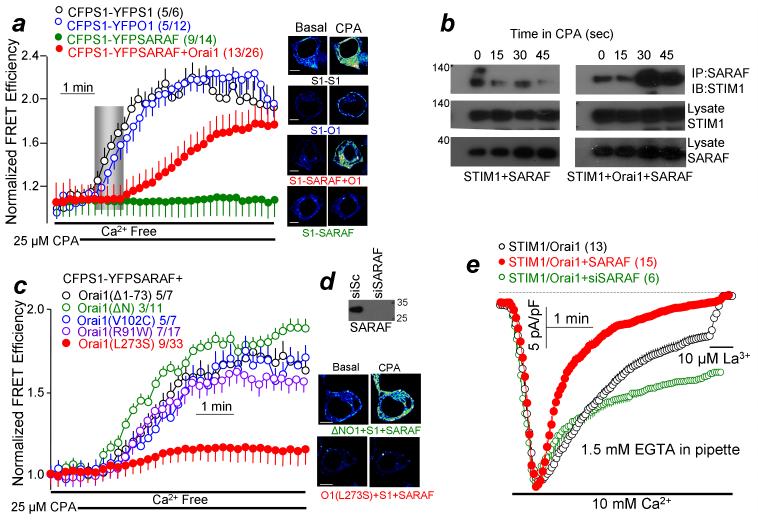
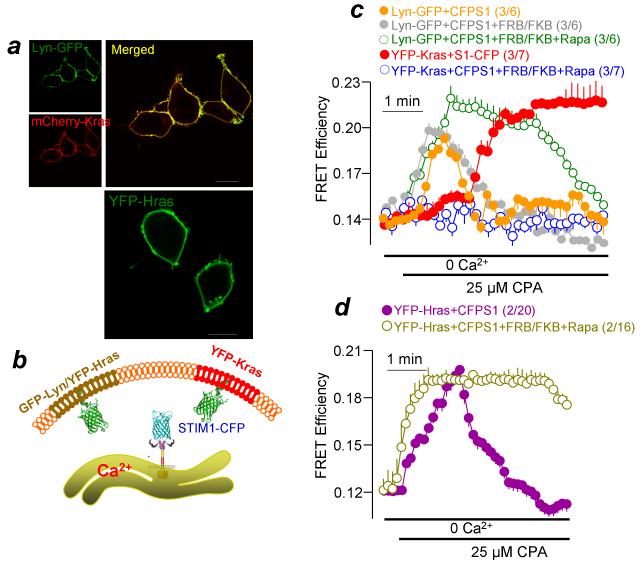
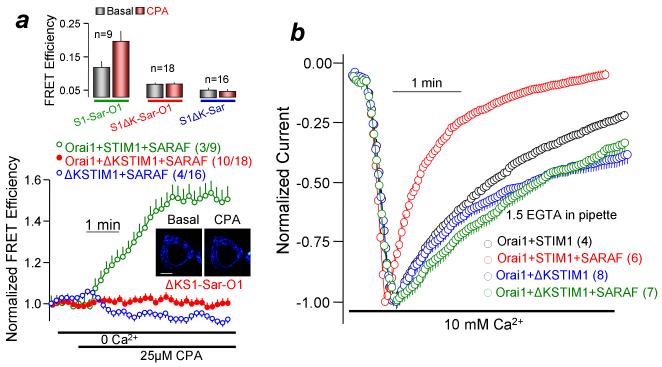
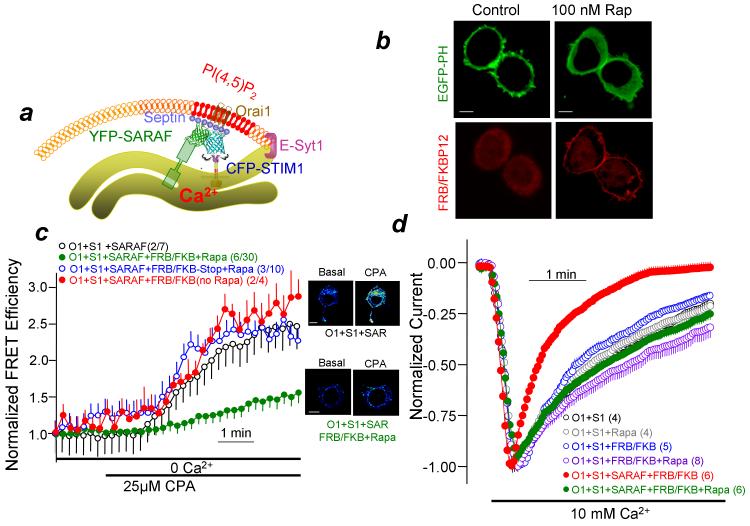
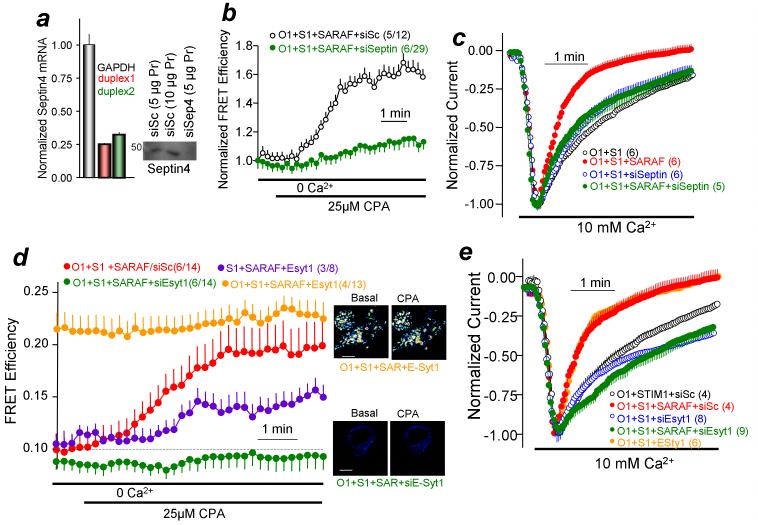
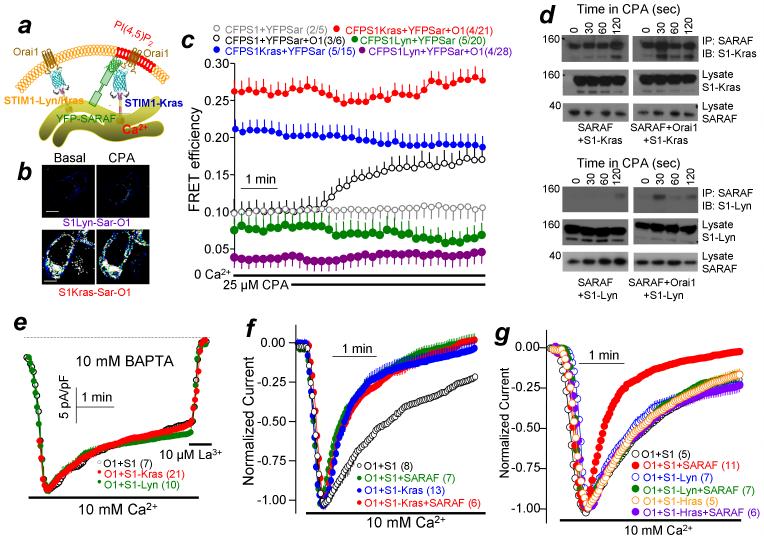
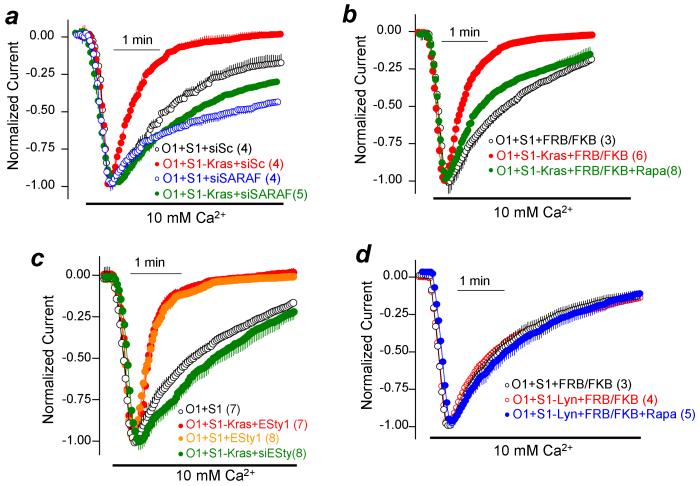
The Orai1-STIM1 current undergoes slow Ca(2+)-dependent inactivation (SCDI) mediated by the binding of SARAF to STIM1. Here we report the use of SCDI by SARAF as a probe of the conformation and microdomain localization of the Orai1-STIM1 complex. We find that the interaction of STIM1 with Orai1 carboxyl terminus (C terminus) and the STIM1 K-domain are required for the interaction of SARAF with STIM1 and SCDI. STIM1-Orai1 must be in a PM/ER microdomain tethered by E-Syt1, stabilized by septin4 and enriched in PI(4,5)P2 for STIM1-SARAF interaction. Targeting STIM1 to PI(4,5)P2-rich and -poor microdomains reveals that SARAF-dependent SCDI is observed only when STIM1-Orai1 are within the PI(4,5)P2-rich microdomain. Notably, store depletion results in transient localization of STIM1-Orai1 in the PI(4,5)P2-poor microdomain, which then translocates to the PI(4,5)P2-rich domain. These findings reveal the role of PM/ER tethers in the regulation of Orai1 function and a mode of regulation by PI(4,5)P2 involving translocation between PI(4,5)P2 microdomains.
Orai1-STIM1电流会经历由SARAF与STIM1结合介导的缓慢的Ca(2+)依赖性失活(SCDI)。在此,我们报告利用SARAF的SCDI作为Orai1-STIM1复合物构象和微区定位的探针。我们发现,SARAF与STIM1的相互作用以及SCDI需要STIM1与Orai1羧基末端(C末端)和STIM1 K结构域相互作用。对于STIM1-SARAF相互作用,STIM1-Orai1必须处于由E-Syt1系留、由septin4稳定并富含PI(4,5)P2的质膜/内质网微区中。将STIM1靶向富含和缺乏PI(4,5)P2的微区表明,只有当STIM1-Orai1处于富含PI(4,5)P2的微区时才会观察到SARAF依赖性SCDI。值得注意的是,储存耗尽导致STIM1-Orai1在缺乏PI(4,5)P2的微区短暂定位,随后转移到富含PI(4,5)P2的区域。这些发现揭示了质膜/内质网系留在Orai1功能调节中的作用以及PI(4,5)P2通过在PI(4,5)P2微区之间转位进行调节的模式。