Ehrich Elliot, Turncliff Ryan, Du Yangchun, Leigh-Pemberton Richard, Fernandez Emilio, Jones Reese, Fava Maurizio
Research and Development, Alkermes, Inc., Waltham, MA, USA.
University of California, San Francisco, CA, USA.
Neuropsychopharmacology. 2015 May;40(6):1448-55. doi: 10.1038/npp.2014.330. Epub 2014 Dec 18.
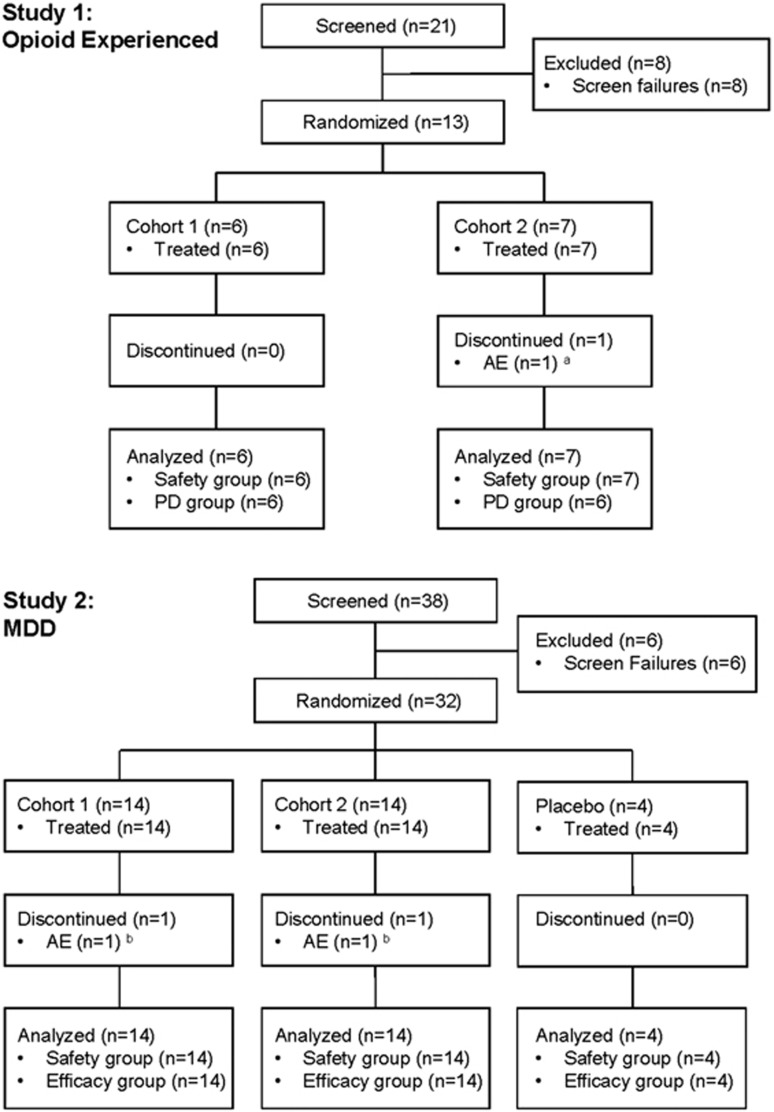
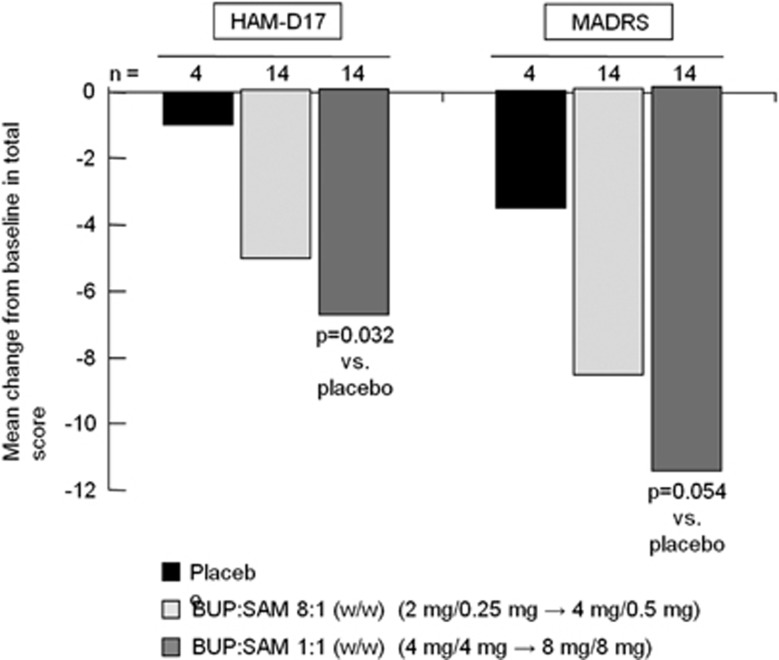
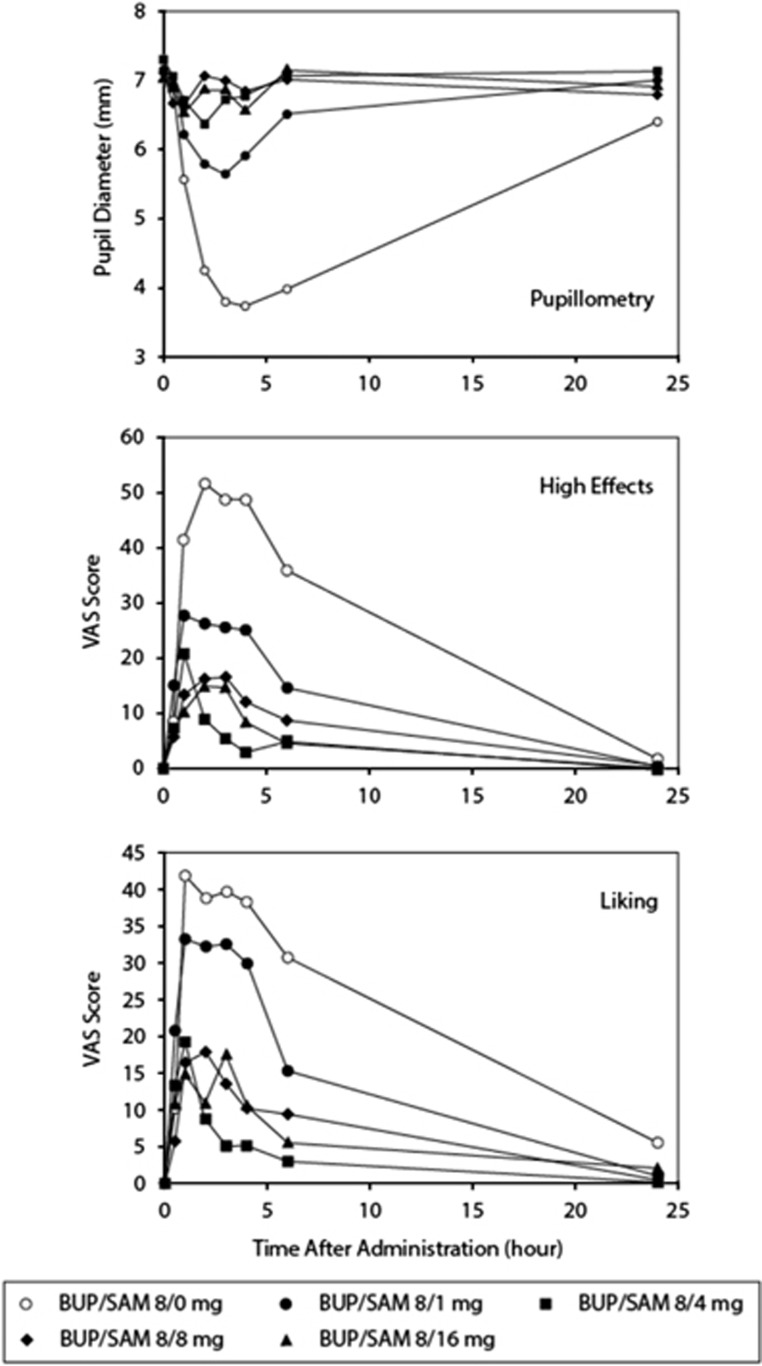
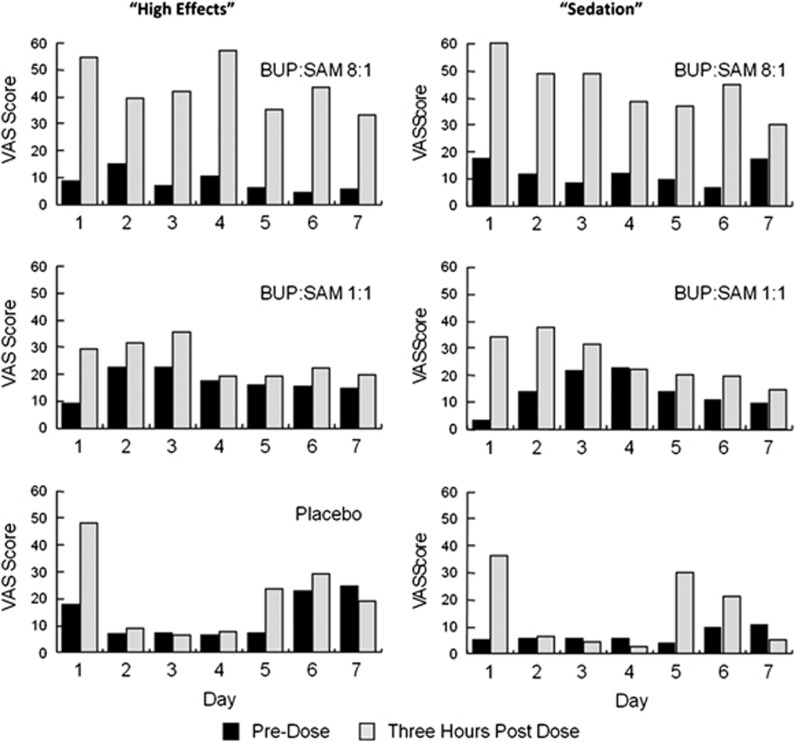
Although opioids have known antidepressant activity, their use in major depressive disorder (MDD) has been greatly limited by risk of abuse and addiction. Our aim was to determine whether opioid modulation achieved through a combination of a μ-opioid partial agonist, buprenorphine (BUP), and a potent μ-opioid antagonist, samidorphan (SAM), would demonstrate antidepressant activity without addictive potential. A placebo-controlled crossover study assessed the opioid pharmacodynamic profile following escalating doses of SAM co-administered with BUP in opioid-experienced adults. A subsequent 1-week, placebo-controlled, parallel-group study was conducted in subjects with MDD and an inadequate response to standard antidepressant therapy. This second study evaluated safety and efficacy of ratios of BUP/SAM that were associated with partial and with maximal blockade of opioid responses in the initial study. Pupillometry, visual analog scale assessments, and self-reported questionnaires demonstrated that increasing amounts of SAM added to a fixed dose of BUP resulted in dose-dependent reductions in objective and subjective opioid effects, including euphoria and drug liking, in opioid-experienced adults. Following 7 days of treatment in subjects with MDD, a 1 : 1 ratio of BUP and SAM, the ratio associated with maximal antagonism of opioid effects, exhibited statistically significant improvement vs placebo in HAM-D17 total score (p=0.032) and nearly significant improvement in Montgomery-Åsberg Depression Rating Scale (MADRS) total score (p=0.054). Overall, BUP/SAM therapy was well tolerated. A combination of BUP and SAM showed antidepressant activity in subjects with MDD. Balanced agonist-antagonist opioid modulation represents a novel and potentially clinically important approach to the treatment of MDD and other psychiatric disorders.
尽管阿片类药物具有已知的抗抑郁活性,但其在重度抑郁症(MDD)中的应用因滥用和成瘾风险而受到极大限制。我们的目的是确定通过μ-阿片受体部分激动剂丁丙诺啡(BUP)和强效μ-阿片受体拮抗剂沙美诺啡(SAM)联合使用实现的阿片类药物调节是否能展现出抗抑郁活性且无成瘾潜力。一项安慰剂对照交叉研究评估了在有阿片类药物使用经验的成年人中,与BUP联合递增剂量的SAM后阿片类药物的药效学特征。随后,对MDD患者且对标准抗抑郁治疗反应不足的受试者进行了一项为期1周的安慰剂对照平行组研究。第二项研究评估了在初始研究中与阿片类反应的部分和最大阻断相关的BUP/SAM比例的安全性和有效性。瞳孔测量、视觉模拟量表评估和自我报告问卷显示,在固定剂量的BUP中添加越来越多的SAM会导致有阿片类药物使用经验的成年人的客观和主观阿片类效应呈剂量依赖性降低,包括欣快感和对药物的喜好。在MDD患者接受7天治疗后,BUP与SAM的1∶1比例(与阿片类效应的最大拮抗相关)在汉密尔顿抑郁量表(HAM-D17)总分上与安慰剂相比有统计学显著改善(p = 0.032),在蒙哥马利-Åsberg抑郁评定量表(MADRS)总分上有接近显著的改善(p = 0.054)。总体而言,BUP/SAM疗法耐受性良好。BUP和SAM的组合在MDD患者中显示出抗抑郁活性。平衡的激动剂-拮抗剂阿片类药物调节代表了一种治疗MDD和其他精神疾病的新的且可能具有临床重要性的方法。