Guo Aitao, Wen Shuang, Ma Yaqi, Wei Lixin, Liu Aijun
1. Department of Pathology, Chinese PLA General Hospital, Beijing, China 100853. ; 2. Department of Pathology, Hainan Branch of PLA General Hospital, Sanya, China 572014.
3. Department of Pathology, Dalian Friendship Hospital of Liaoning Province, Dalian, China 116001.
J Cancer. 2014 Nov 4;5(9):797-803. doi: 10.7150/jca.9388. eCollection 2014.
To explore the clinical and pathological characteristics of small-cell carcinoma (SmCC) of the prostate and applicable treatment methods.
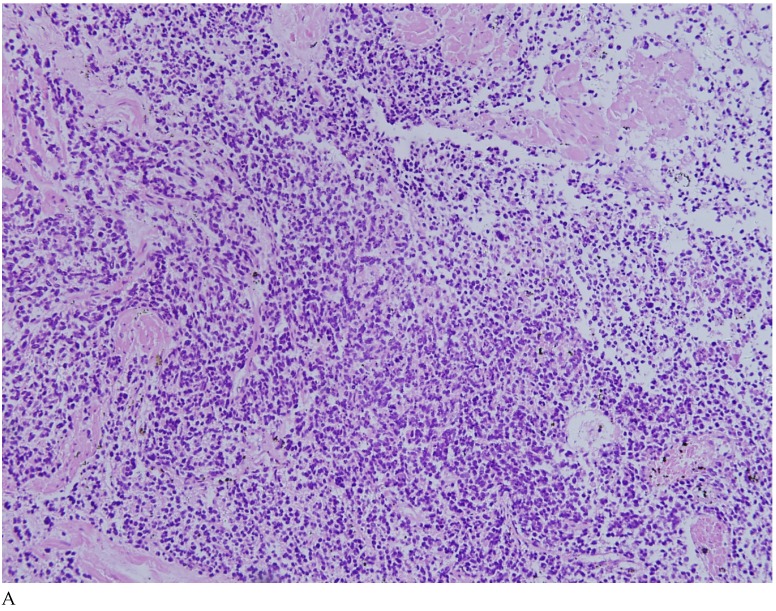
We reported three cases of SmCC of the prostate diagnosed from 1999 to 2011 at the Chinese PLA General Hospital. We also reviewed clinical and pathological data of 26 cases in China reported over the same period.
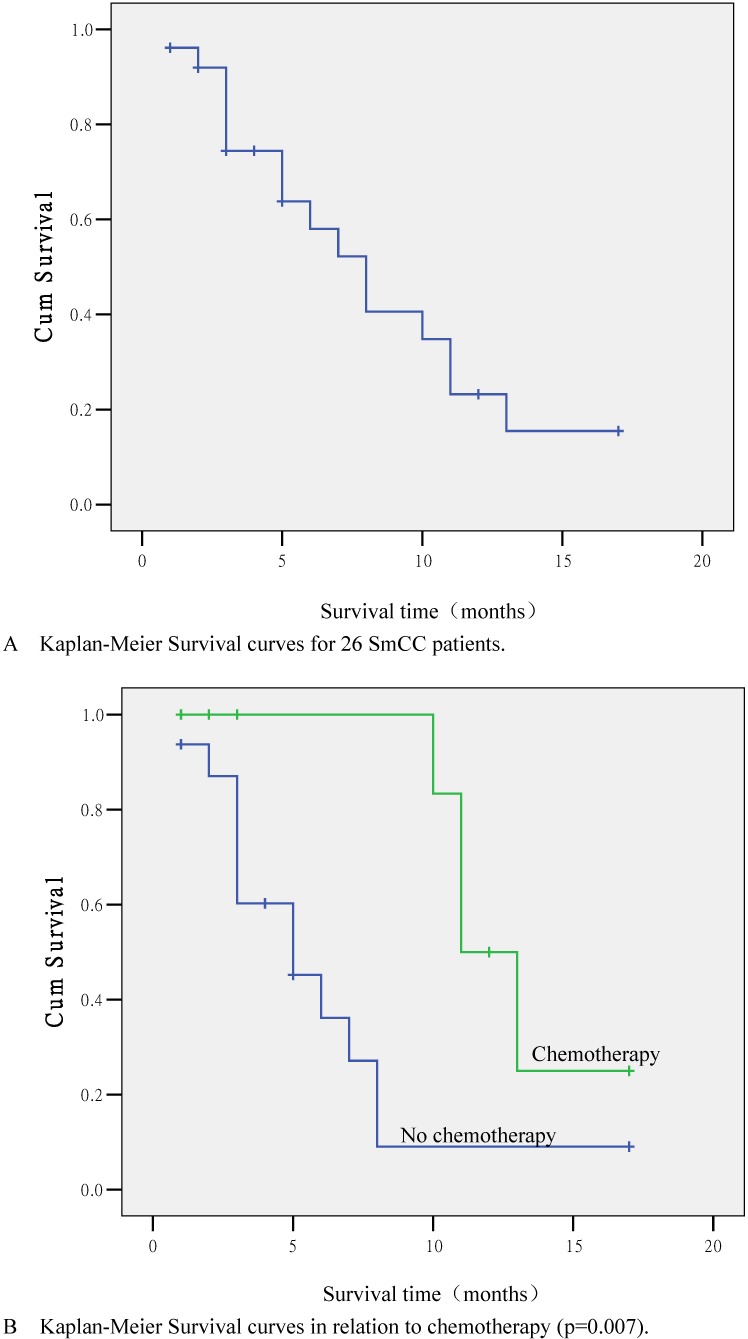
Serum prostate-specific antigen (PSA) levels were normal in 20 cases (76.9%) and elevated in six (23.1%). There was local invasion in 12 cases (46.2%) at the time of diagnosis; lymphatic vessel invasion and distant metastases were detected in eight (30.8%) and nine cases (34.6%) respectively. At the end of follow-up, 16 cases (61.5%) had died, eight (30.8%) survived, and two (7.7%) were missing. The median survival time was 8 months, and the 1-year survival rate was 23.2%. Statistical analysis showed that survival time was significantly correlated with chemotherapy treatment (p<0.05). However, serum PSA levels, surgical approach, pathological type, local invasion, lymphatic vessel invasion, and distant metastasis had no significant relationship with survival (p>0.05).
SmCC of the prostate is a rare neoplasm typified by high malignancy, rapid progress, and poor prognosis. Pathological analysis is an important tool for confirming a diagnosis. Pure SmCC is usually not associated with an increase in serum PSA. Surgery, mixed with acinar adenocarcinoma components, and clinical staging do not correlate with prognosis; and chemotherapy was the only prognostic factor. For patients, diagnosed by preoperative biopsy, administering chemotherapy as the first-line treatment may improve outcomes.
探讨前列腺小细胞癌(SmCC)的临床及病理特征和适用的治疗方法。
我们报告了1999年至2011年在中国人民解放军总医院诊断的3例前列腺SmCC病例。我们还回顾了同期国内报道的26例病例的临床和病理资料。
20例(76.9%)患者血清前列腺特异性抗原(PSA)水平正常,6例(23.1%)升高。诊断时12例(46.2%)存在局部侵犯;分别在8例(30.8%)和9例(34.6%)中检测到淋巴管侵犯和远处转移。随访结束时,16例(61.5%)患者死亡,8例(30.8%)存活,2例(7.7%)失访。中位生存时间为8个月,1年生存率为23.2%。统计分析表明,生存时间与化疗治疗显著相关(p<0.05)。然而,血清PSA水平、手术方式、病理类型、局部侵犯、淋巴管侵犯和远处转移与生存无显著关系(p>0.05)。
前列腺SmCC是一种罕见肿瘤,具有高恶性、进展迅速和预后差的特点。病理分析是确诊的重要手段。单纯SmCC通常与血清PSA升高无关。伴有腺泡腺癌成分的手术及临床分期与预后无关;化疗是唯一的预后因素。对于术前活检确诊的患者,将化疗作为一线治疗可能改善预后。