Melis V, Zabke C, Stamer K, Magbagbeolu M, Schwab K, Marschall P, Veh R W, Bachmann S, Deiana S, Moreau P-H, Davidson K, Harrington K A, Rickard J E, Horsley D, Garman R, Mazurkiewicz M, Niewiadomska G, Wischik C M, Harrington C R, Riedel G, Theuring F
School of Medicine and Dentistry, University of Aberdeen, Aberdeen, Scotland, UK.
Cell Mol Life Sci. 2015 Jun;72(11):2199-222. doi: 10.1007/s00018-014-1804-z. Epub 2014 Dec 19.
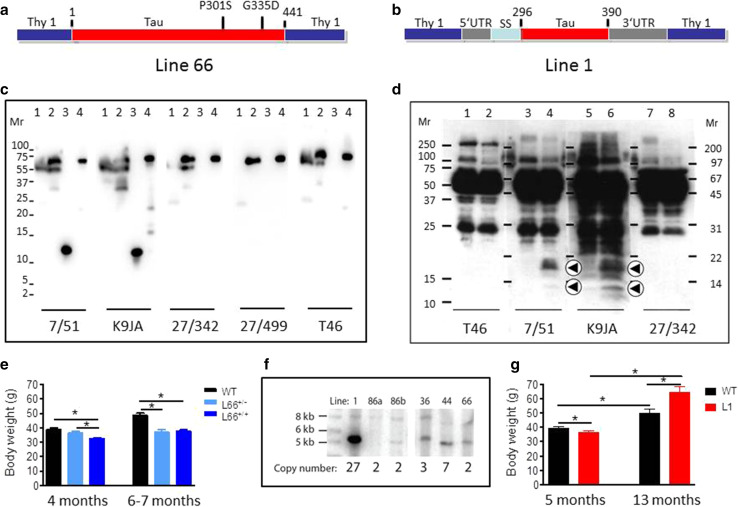
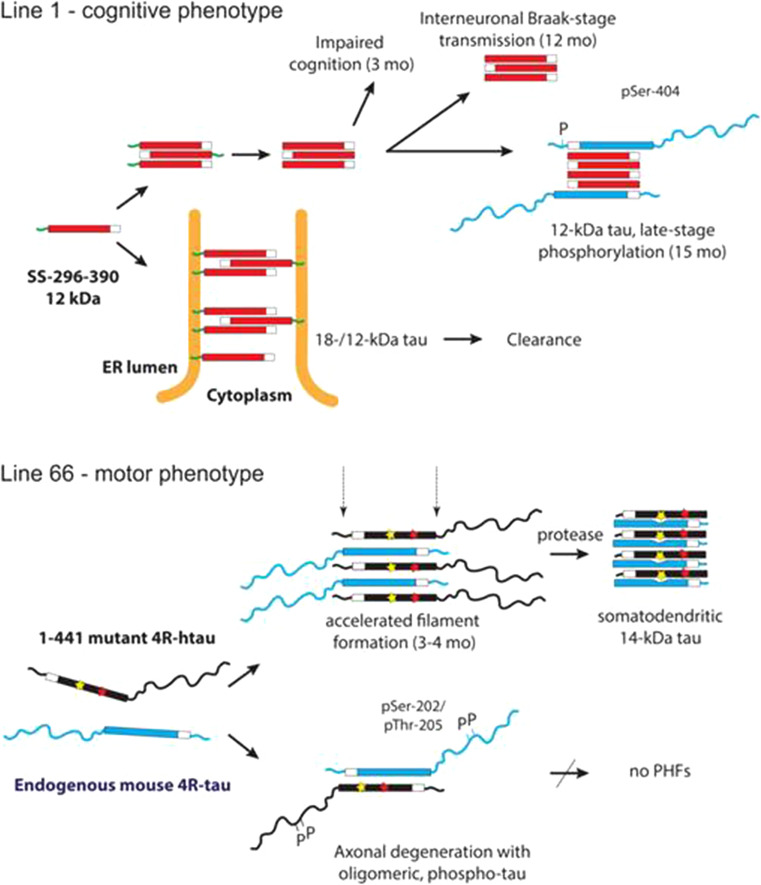
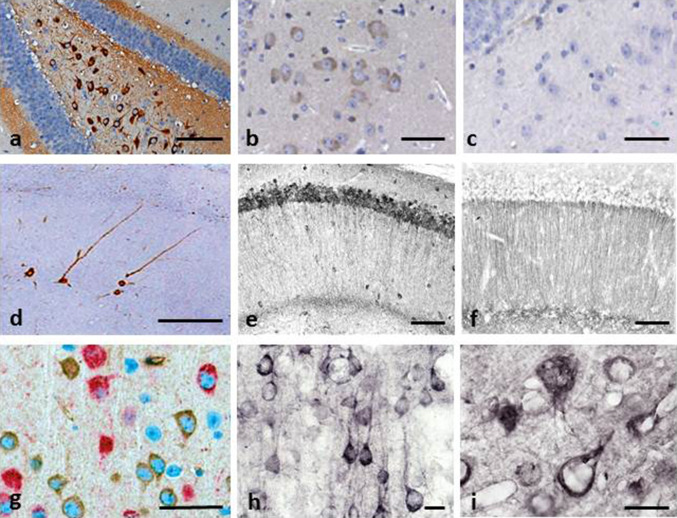
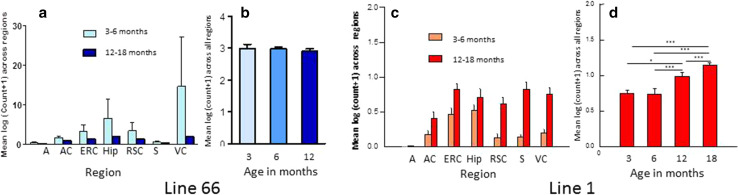
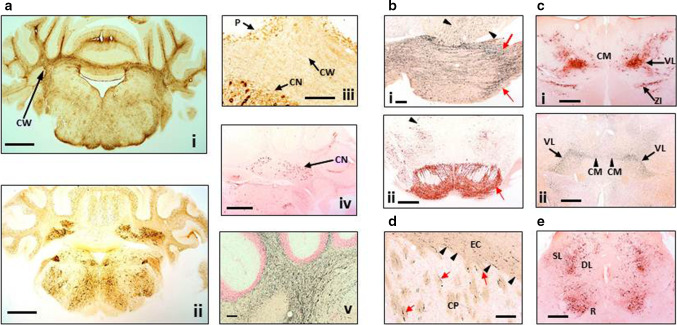
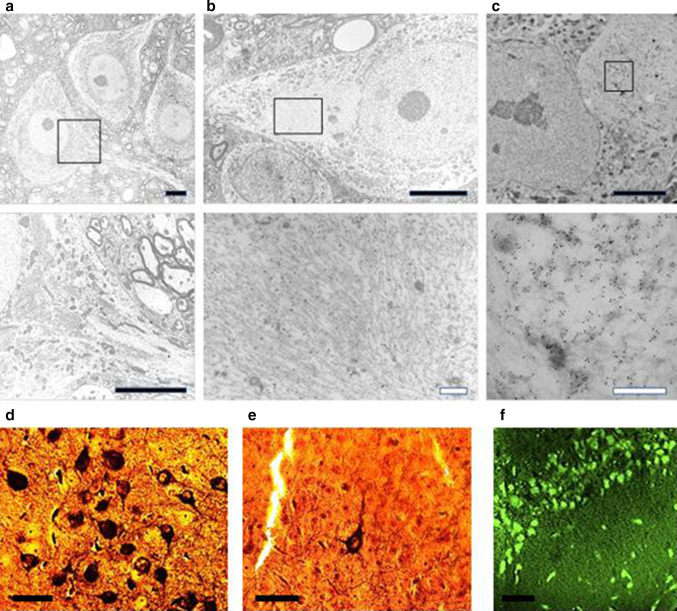
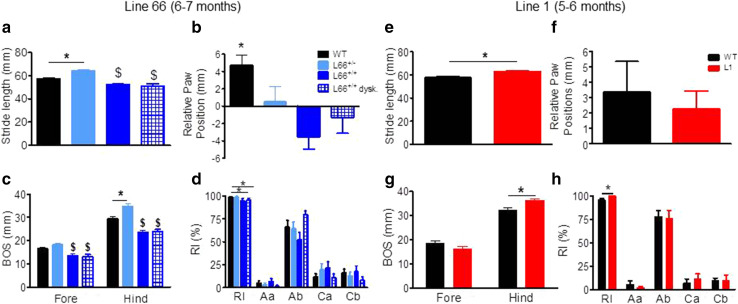
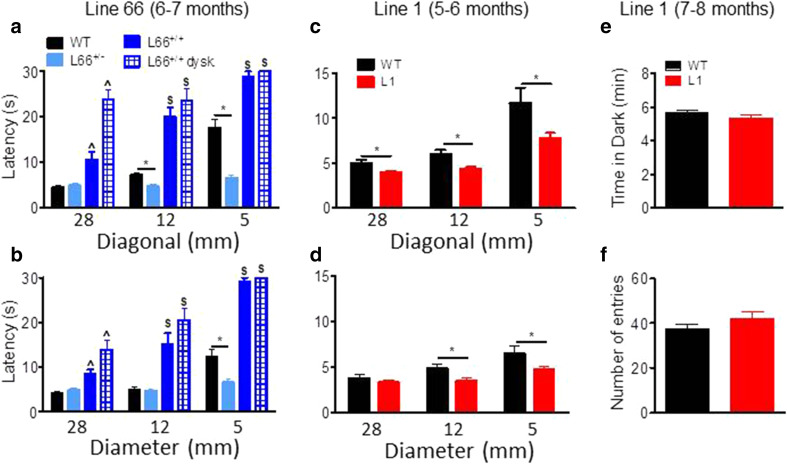
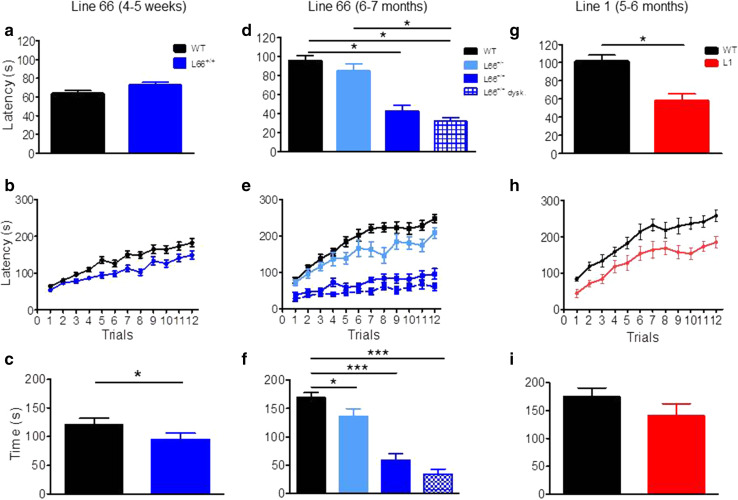
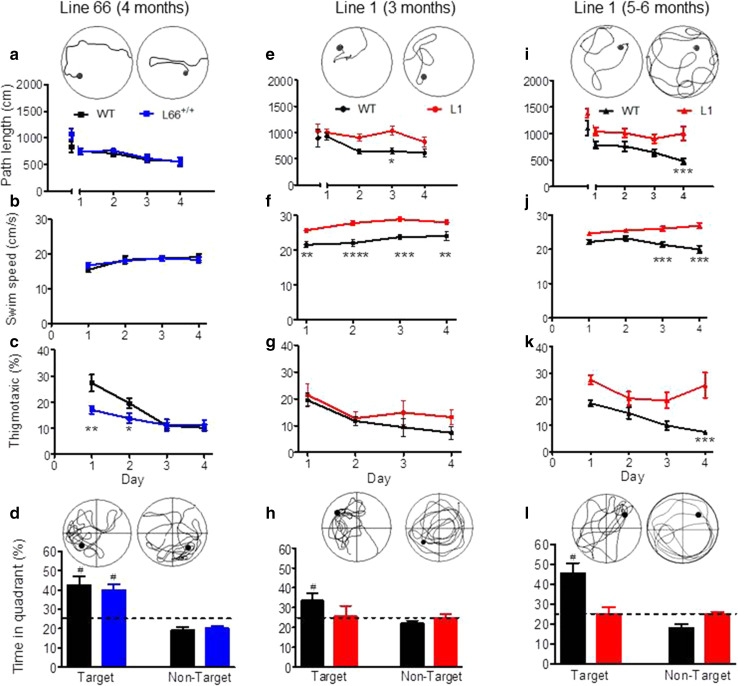
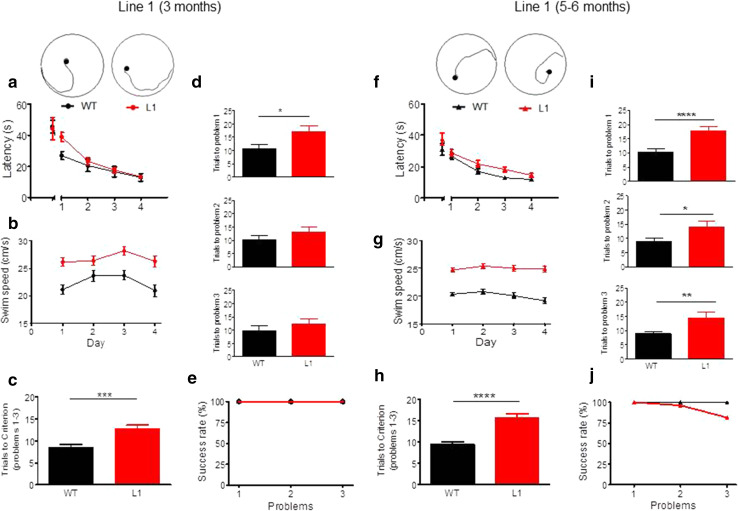
A poorly understood feature of the tauopathies is their very different clinical presentations. The frontotemporal lobar degeneration (FTLD) spectrum is dominated by motor and emotional/psychiatric abnormalities, whereas cognitive and memory deficits are prominent in the early stages of Alzheimer's disease (AD). We report two novel mouse models overexpressing different human tau protein constructs. One is a full-length tau carrying a double mutation [P301S/G335D; line 66 (L66)] and the second is a truncated 3-repeat tau fragment which constitutes the bulk of the PHF core in AD corresponding to residues 296-390 fused with a signal sequence targeting it to the endoplasmic reticulum membrane (line 1; L1). L66 has abundant tau pathology widely distributed throughout the brain, with particularly high counts of affected neurons in hippocampus and entorhinal cortex. The pathology is neuroanatomically static and declines with age. Behaviourally, the model is devoid of a higher cognitive phenotype but presents with sensorimotor impairments and motor learning phenotypes. L1 displays a much weaker histopathological phenotype, but shows evidence of neuroanatomical spread and amplification with age that resembles the Braak staging of AD. Behaviourally, the model has minimal motor deficits but shows severe cognitive impairments affecting particularly the rodent equivalent of episodic memory which progresses with advancing age. In both models, tau aggregation can be dissociated from abnormal phosphorylation. The two models make possible the demonstration of two distinct but nevertheless convergent pathways of tau molecular pathogenesis. L1 appears to be useful for modelling the cognitive impairment of AD, whereas L66 appears to be more useful for modelling the motor features of the FTLD spectrum. Differences in clinical presentation of AD-like and FTLD syndromes are therefore likely to be inherent to the respective underlying tauopathy, and are not dependent on presence or absence of concomitant APP pathology.
tau蛋白病一个尚未被充分理解的特征是它们非常不同的临床表现。额颞叶变性(FTLD)谱系以运动和情感/精神异常为主,而认知和记忆缺陷在阿尔茨海默病(AD)早期较为突出。我们报告了两种过表达不同人类tau蛋白构建体的新型小鼠模型。一种是携带双突变[P301S/G335D;66系(L66)]的全长tau蛋白,另一种是截短的3重复tau片段,它构成了AD中PHF核心的大部分,对应于296 - 390位残基,并与一个将其靶向内质网膜的信号序列融合(1系;L1)。L66有丰富的tau蛋白病理改变,广泛分布于整个大脑,海马体和内嗅皮质中受影响神经元的数量尤其多。这种病理改变在神经解剖学上是静态的,且随年龄增长而减少。在行为方面,该模型没有高级认知表型,但存在感觉运动障碍和运动学习表型。L1显示出弱得多的组织病理学表型,但随着年龄增长呈现出神经解剖学上的扩散和放大迹象,类似于AD的Braak分期。在行为方面,该模型运动缺陷最小,但表现出严重的认知障碍,尤其影响啮齿动物相当于情景记忆的部分,且随着年龄增长而加重。在这两种模型中,tau蛋白聚集可与异常磷酸化分离。这两种模型使得证明tau分子发病机制的两条不同但又相互趋同的途径成为可能。L1似乎有助于模拟AD的认知障碍,而L66似乎更有助于模拟FTLD谱系的运动特征。因此,AD样和FTLD综合征临床表现的差异可能是各自潜在的tau蛋白病所固有的,并不依赖于是否存在伴随的APP病理改变。