Carmo Marlene, Risma Kimberly A, Arumugam Paritha, Tiwari Swati, Hontz Adrianne E, Montiel-Equihua Claudia A, Alonso-Ferrero Maria E, Blundell Michael P, Schambach Axel, Baum Christopher, Malik Punam, Thrasher Adrian J, Jordan Michael B, Gaspar H Bobby
Infection, Immunity, Inflammation and Physiological Medicine Programme, Molecular and Cellular Immunology Section, UCL Institute of Child Health, London, UK.
1] Division of Allergy/Immunology, Department of Pediatrics, Cincinnati Children's Hospital Medical Center, University of Cincinnati, Cincinnati, Ohio, USA [2] Division of Immunobiology, Department of Pediatrics, Cincinnati Children's Hospital Medical Center, University of Cincinnati, Cincinnati, Ohio, USA [3] Division of Bone Marrow Transplant and Immune Deficiency, Department of Pediatrics, Cincinnati Children's Hospital Medical Center, University of Cincinnati, Cincinnati, Ohio, USA.
Mol Ther. 2015 Apr;23(4):737-45. doi: 10.1038/mt.2014.242. Epub 2014 Dec 19.
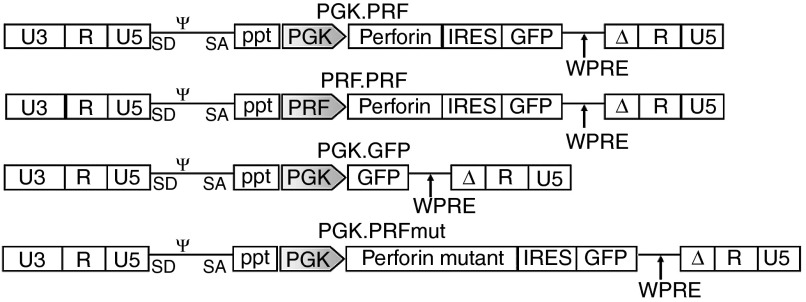
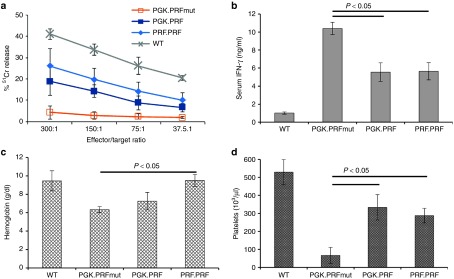
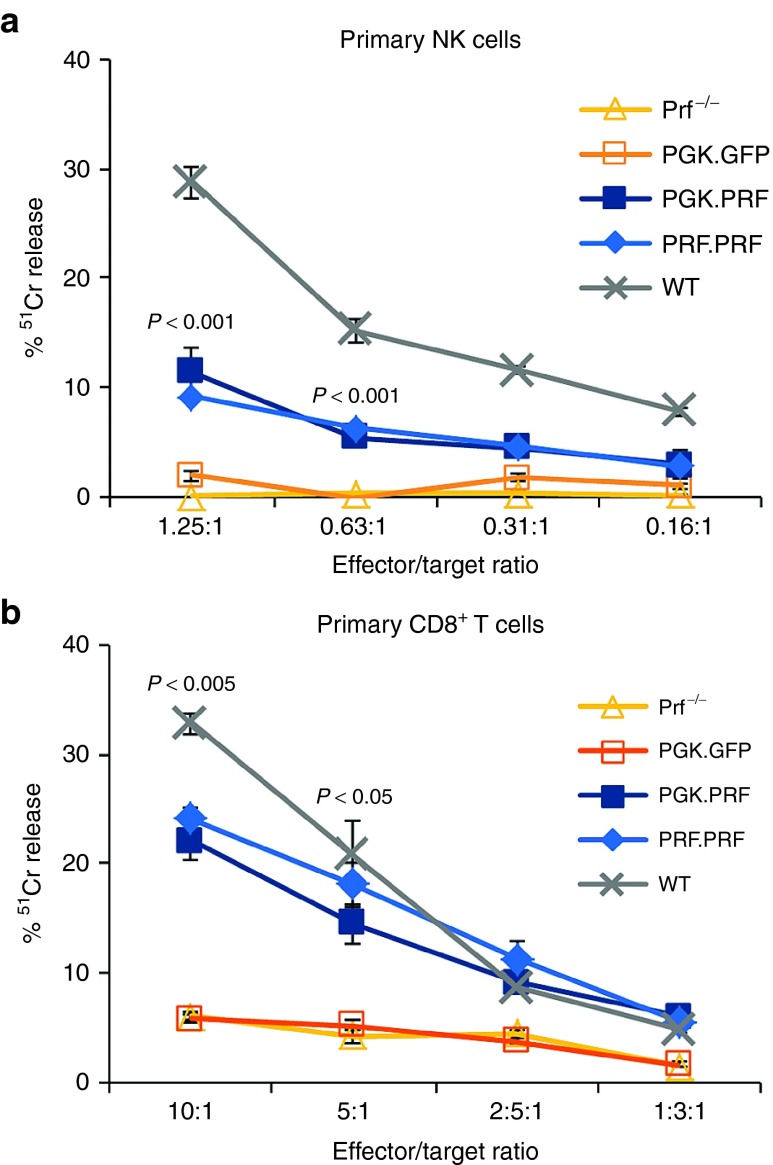
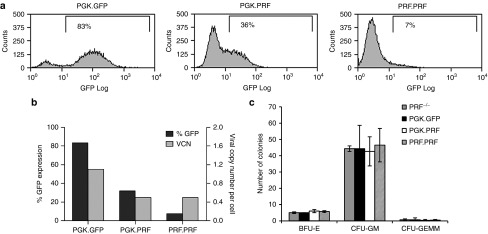
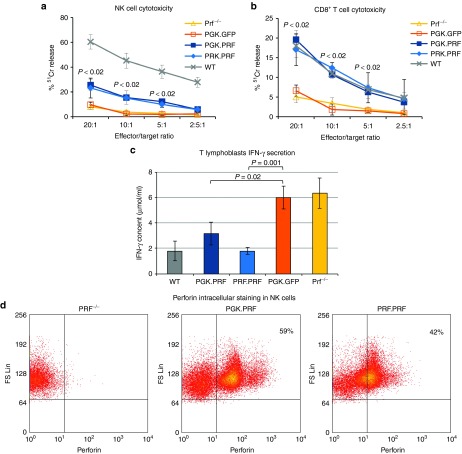
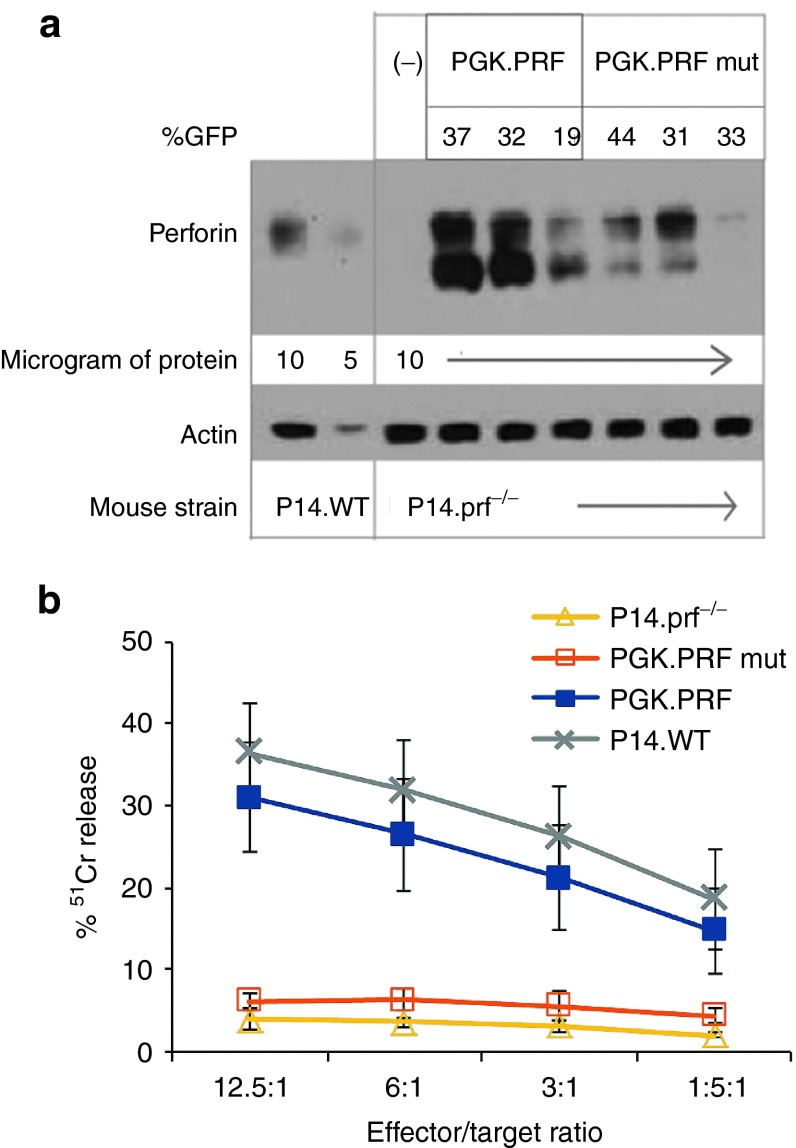
Defects in perforin lead to the failure of T and NK cell cytotoxicity, hypercytokinemia, and the immune dysregulatory condition known as familial hemophagocytic lymphohistiocytosis (FHL). The only curative treatment is allogeneic hematopoietic stem cell transplantation which carries substantial risks. We used lentiviral vectors (LV) expressing the human perforin gene, under the transcriptional control of the ubiquitous phosphoglycerate kinase promoter or a lineage-specific perforin promoter, to correct the defect in different murine models. Following LV-mediated gene transfer into progenitor cells from perforin-deficient mice, we observed perforin expression in mature T and NK cells, and there was no evidence of progenitor cell toxicity when transplanted into irradiated recipients. The resulting perforin-reconstituted NK cells showed partial recovery of cytotoxicity, and we observed full recovery of cytotoxicity in polyclonal CD8(+) T cells. Furthermore, reconstituted T cells with defined antigen specificity displayed normal cytotoxic function against peptide-loaded targets. Reconstituted CD8(+) lymphoblasts had reduced interferon-γ secretion following stimulation in vitro, suggesting restoration of normal immune regulation. Finally, upon viral challenge, mice with >30% engraftment of gene-modified cells exhibited reduction of cytokine hypersecretion and cytopenias. This study demonstrates the potential of hematopoietic stem cell gene therapy as a curative treatment for perforin-deficient FHL.
穿孔素缺陷会导致T细胞和NK细胞细胞毒性失效、高细胞因子血症以及被称为家族性噬血细胞性淋巴组织细胞增生症(FHL)的免疫失调状况。唯一的治愈性治疗方法是同种异体造血干细胞移植,但其存在很大风险。我们使用了在遍在磷酸甘油酸激酶启动子或谱系特异性穿孔素启动子的转录控制下表达人穿孔素基因的慢病毒载体(LV),来纠正不同小鼠模型中的缺陷。在将LV介导的基因转移到穿孔素缺陷小鼠的祖细胞后,我们在成熟的T细胞和NK细胞中观察到了穿孔素表达,并且在移植到受辐照受体中时没有祖细胞毒性的证据。由此产生的穿孔素重组NK细胞显示出细胞毒性部分恢复,并且我们在多克隆CD8(+) T细胞中观察到了细胞毒性的完全恢复。此外,具有明确抗原特异性的重组T细胞对负载肽的靶标显示出正常的细胞毒性功能。重组的CD8(+) 淋巴母细胞在体外刺激后干扰素-γ分泌减少,表明正常免疫调节得以恢复。最后,在病毒攻击后,基因修饰细胞植入率>30%的小鼠表现出细胞因子分泌过多和血细胞减少症的减轻。这项研究证明了造血干细胞基因治疗作为穿孔素缺陷型FHL治愈性治疗方法的潜力。