Infection, Immunity, Inflammation, Molecular and Cellular Immunology Section, UCL Great Ormond Street Institute of Child Health, London, United Kingdom; Department of Pediatric Oncology, Hematology and Clinical Immunology, Medical Faculty, Center of Child and Adolescent Health, Heinrich-Heine-University, Dusseldorf, Germany.
Infection, Immunity, Inflammation, Molecular and Cellular Immunology Section, UCL Great Ormond Street Institute of Child Health, London, United Kingdom.
J Allergy Clin Immunol. 2018 Sep;142(3):904-913.e3. doi: 10.1016/j.jaci.2017.11.050. Epub 2018 Jan 31.
Mutations in the perforin 1 (PRF1) gene account for up to 58% of familial hemophagocytic lymphohistiocytosis syndromes. The resulting defects in effector cell cytotoxicity lead to hypercytokinemia and hyperactivation with inflammation in various organs.
We sought to determine whether autologous gene-corrected T cells can restore cytotoxic function, reduce disease activity, and prevent hemophagocytic lymphohistiocytosis (HLH) symptoms in in vivo models.
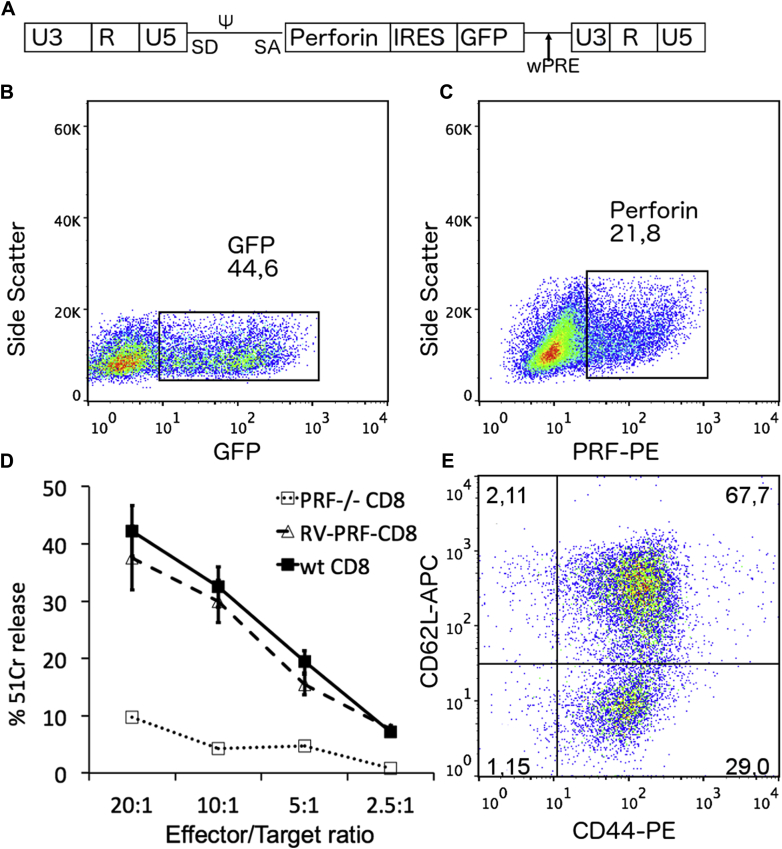
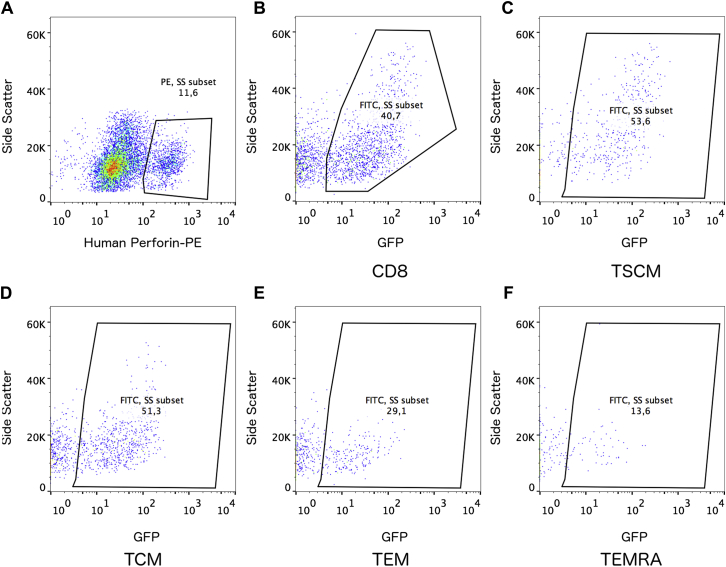
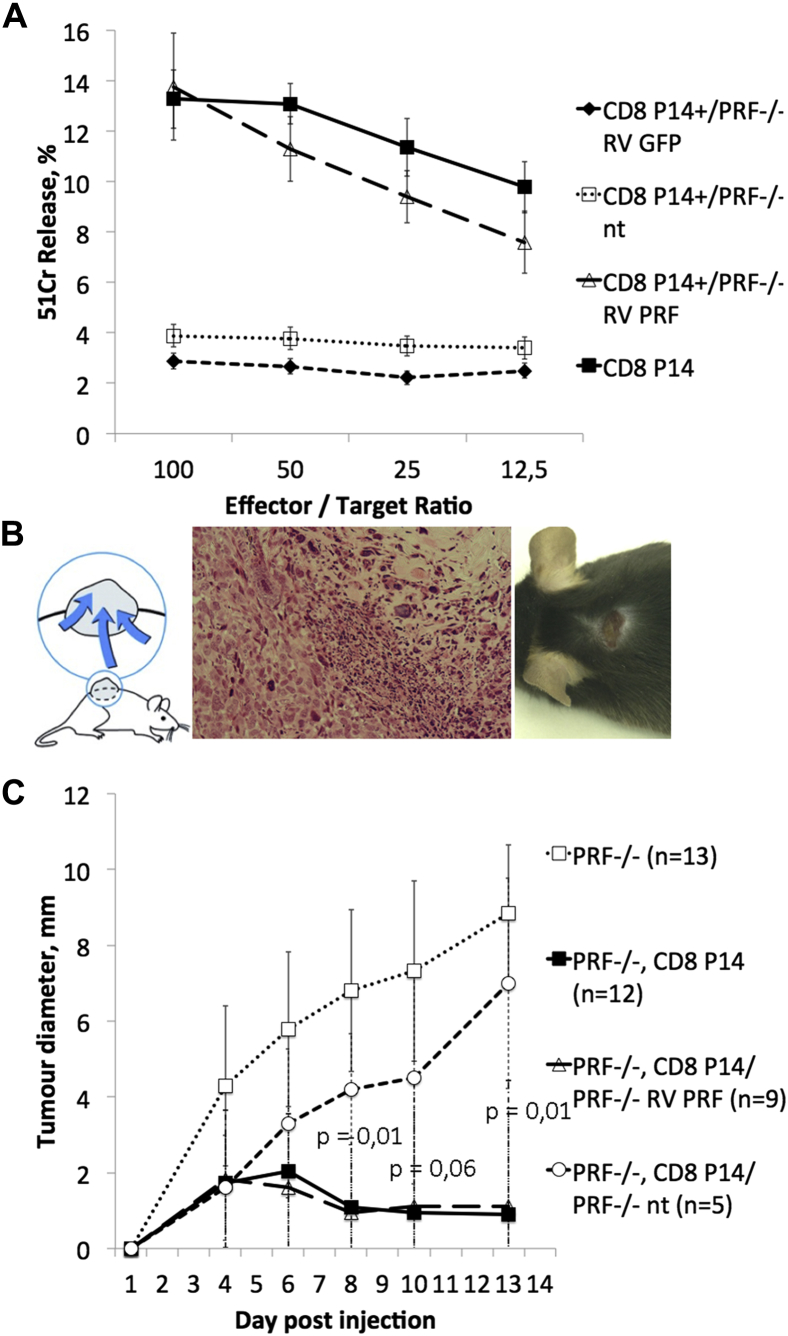
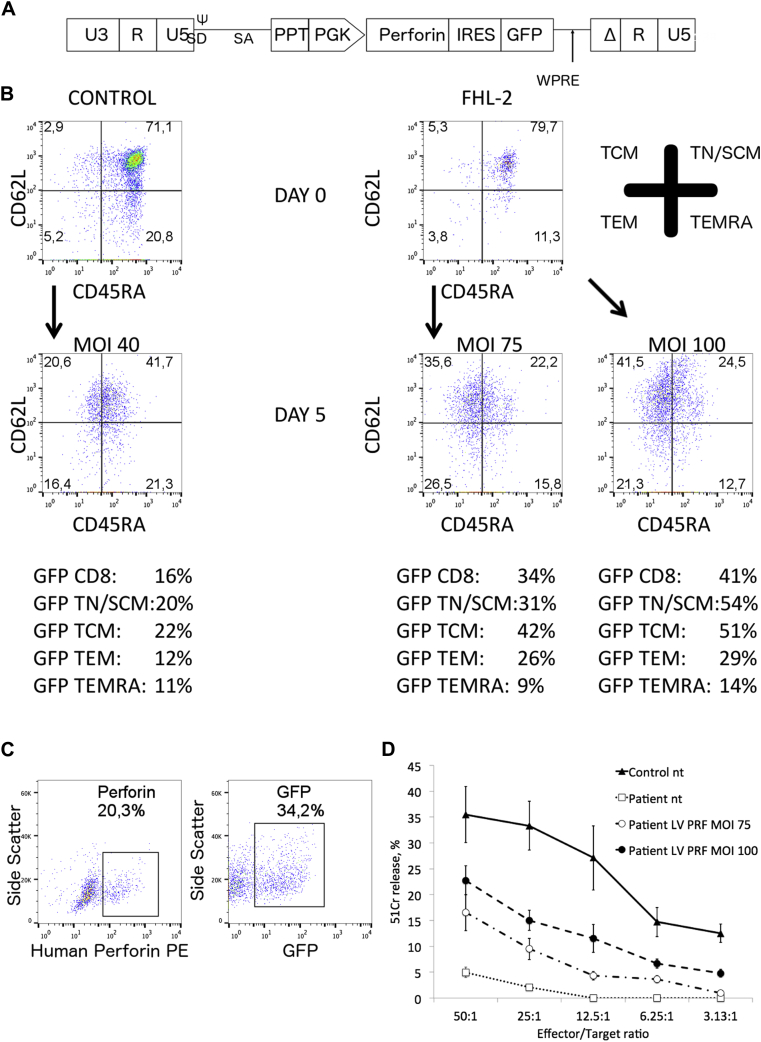
We developed a gammaretroviral vector to transduce murine CD8 T cells in the Prf mouse model. To verify functional correction of Prf CD8 T cells in vivo, we used a lymphocytic choriomeningitis virus (LCMV) epitope-transfected murine lung carcinoma cell tumor model. Furthermore, we challenged gene-corrected and uncorrected mice with LCMV. One patient sample was transduced with a PRF1-encoding lentiviral vector to study restoration of cytotoxicity in human cells.
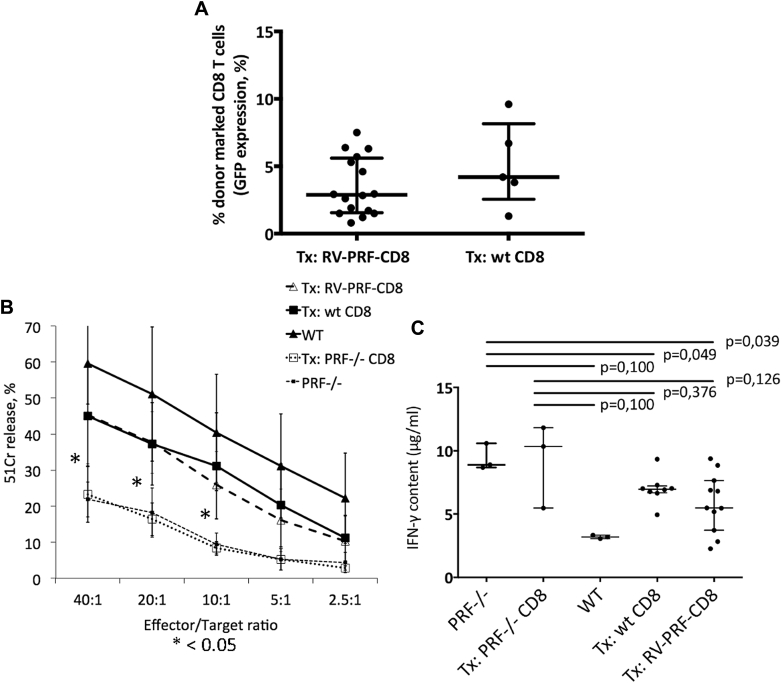
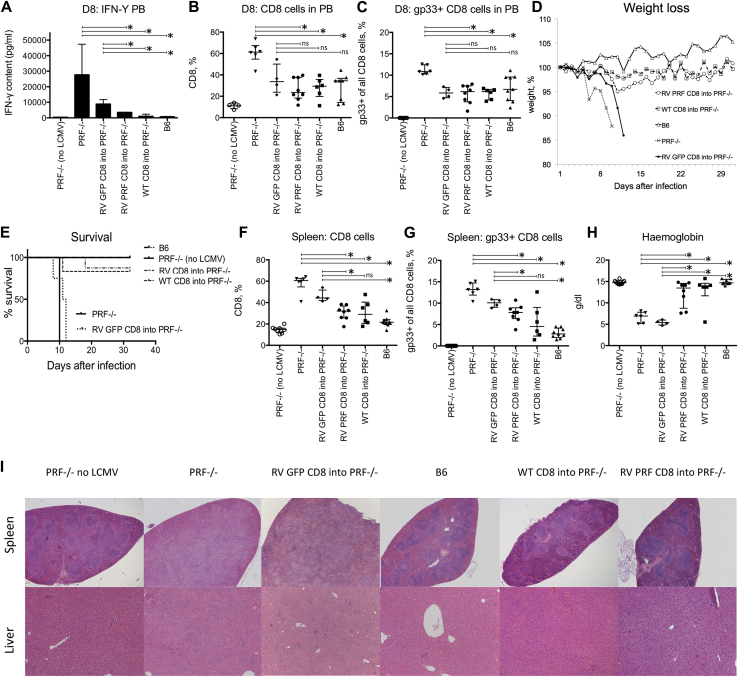
We demonstrated efficient engraftment and functional reconstitution of cytotoxicity after intravenous administration of gene-corrected Prf CD8 T cells into Prf mice. In the tumor model infusion of Prf gene-corrected CD8 T cells eliminated the tumor as efficiently as transplantation of wild-type CD8 T cells. Similarly, mice reconstituted with gene-corrected Prf CD8 T cells displayed complete protection from the HLH phenotype after infection with LCMV. Patients' cells showed correction of cytotoxicity in human CD8 T cells after transduction.
These data demonstrate the potential application of T-cell gene therapy in reconstituting cytotoxic function and protection against HLH in the setting of perforin deficiency.
穿孔素 1(PRF1)基因的突变占家族性噬血细胞性淋巴组织细胞增生症的 58%。效应细胞细胞毒性的缺陷导致细胞因子血症和各种器官的炎症过度激活。
我们旨在确定自体基因校正的 T 细胞是否可以恢复细胞毒性功能、降低疾病活性并预防体内模型中的噬血细胞性淋巴组织细胞增生症(HLH)症状。
我们开发了一种γ逆转录病毒载体来转导 Prf 小鼠模型中的鼠 CD8 T 细胞。为了验证 Prf CD8 T 细胞在体内功能校正,我们使用淋巴细胞脉络丛脑膜炎病毒(LCMV)表位转染的鼠肺癌细胞肿瘤模型。此外,我们用 LCMV 挑战基因校正和未校正的小鼠。一份患者样本被转导了一个 PRF1 编码的慢病毒载体,以研究人细胞中细胞毒性的恢复情况。
我们证明了在 Prf 小鼠中静脉注射基因校正的 Prf CD8 T 细胞后,细胞毒性的有效植入和功能重建。在肿瘤模型中,Prf 基因校正的 CD8 T 细胞的输注与野生型 CD8 T 细胞的移植一样有效地消除了肿瘤。同样,用基因校正的 Prf CD8 T 细胞重建的小鼠在感染 LCMV 后完全免受 HLH 表型的影响。患者的细胞在转导后显示出对人 CD8 T 细胞细胞毒性的校正。
这些数据表明 T 细胞基因治疗在重建穿孔素缺陷时的细胞毒性功能和预防 HLH 方面具有潜在的应用。