Institute of Physiological Chemistry, Hannover Medical School, 30625 Hannover, Germany
Centre for mRNP Biogenesis and Metabolism, Department of Molecular Biology and Genetics, Aarhus University, DK-8000 Aarhus C, Denmark.
RNA. 2015 Feb;21(2):262-78. doi: 10.1261/rna.048090.114. Epub 2014 Dec 18.
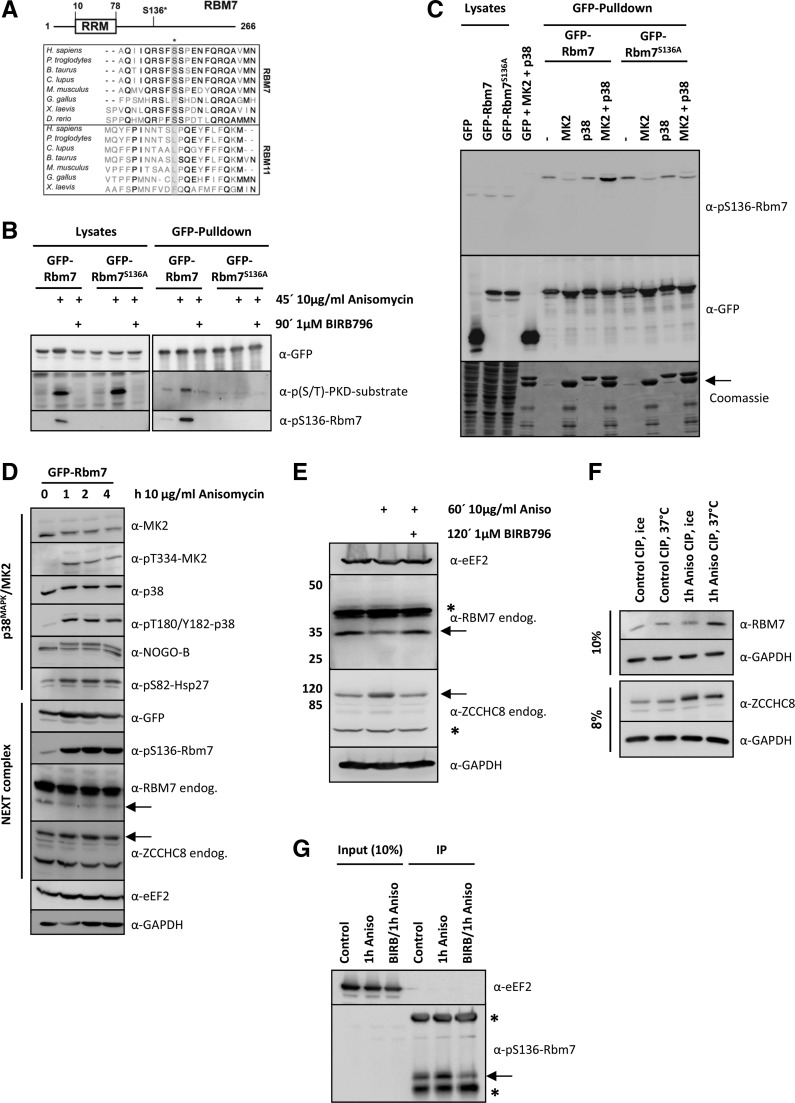
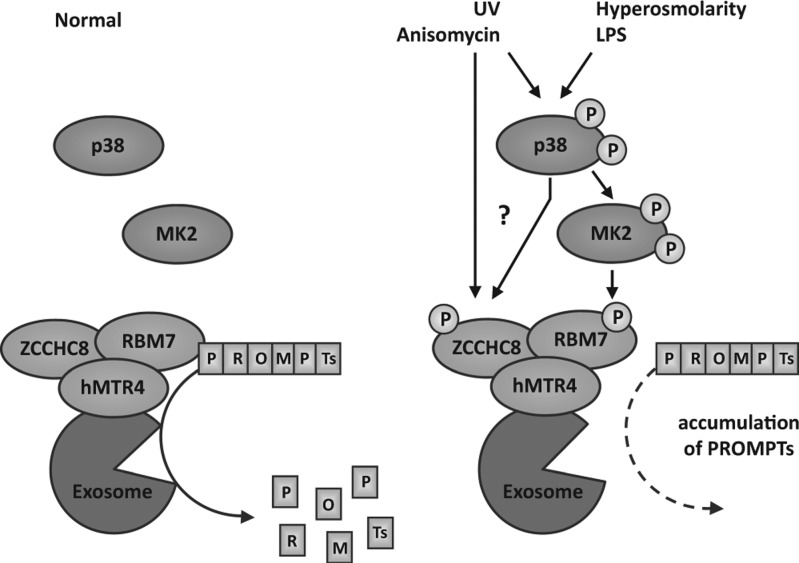
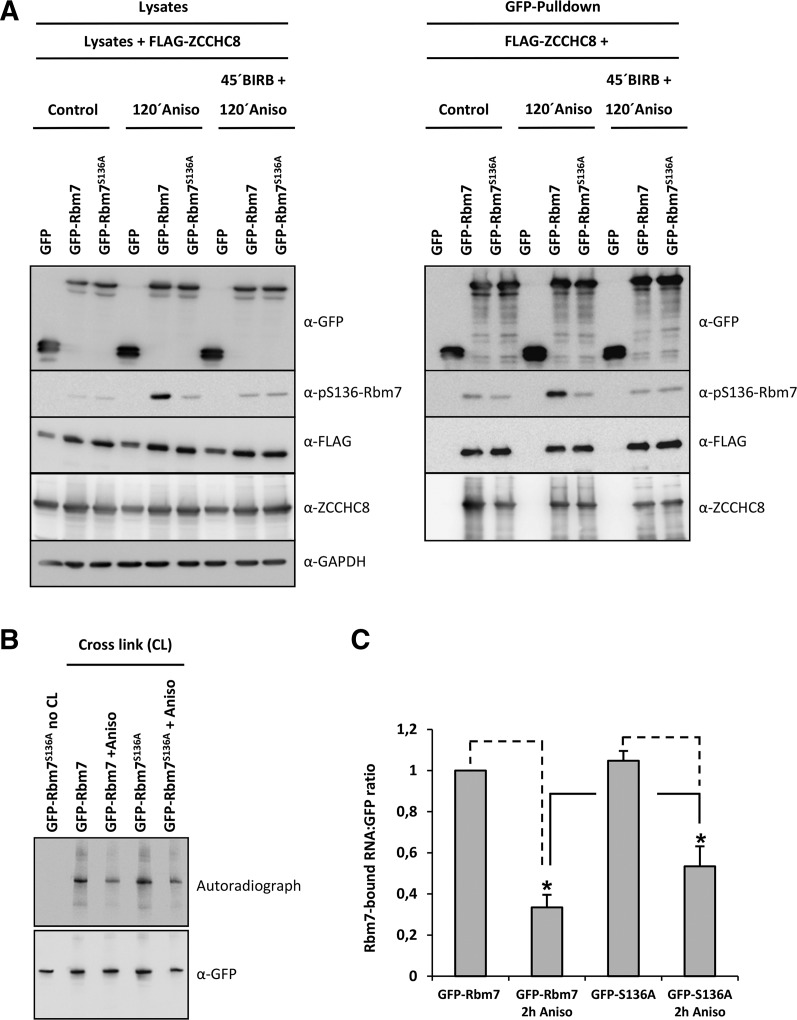
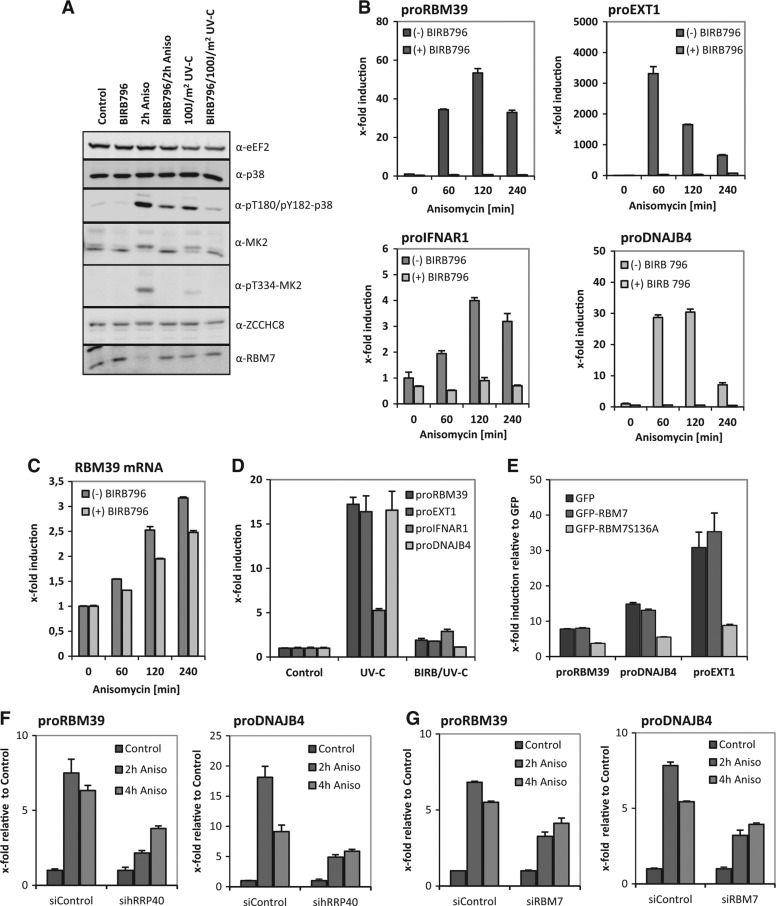
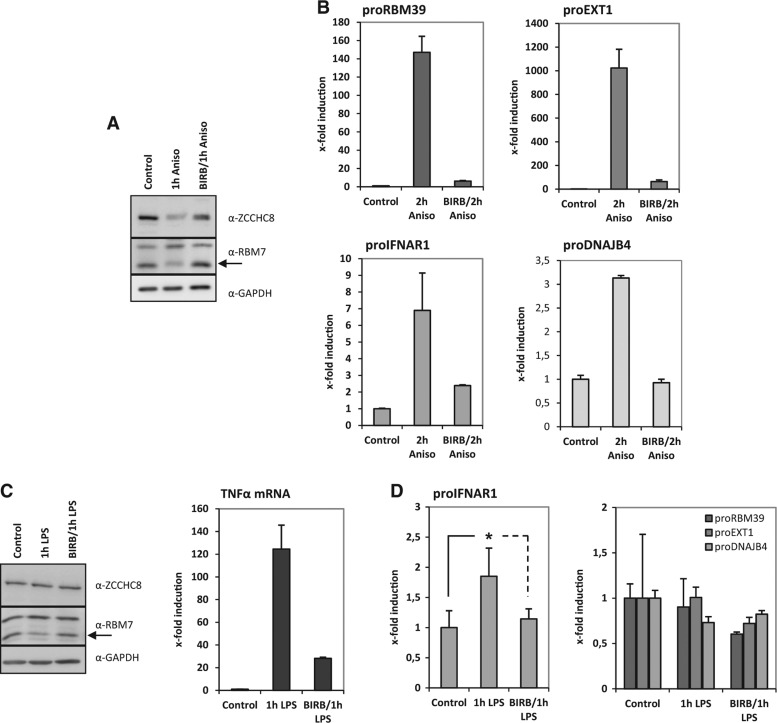
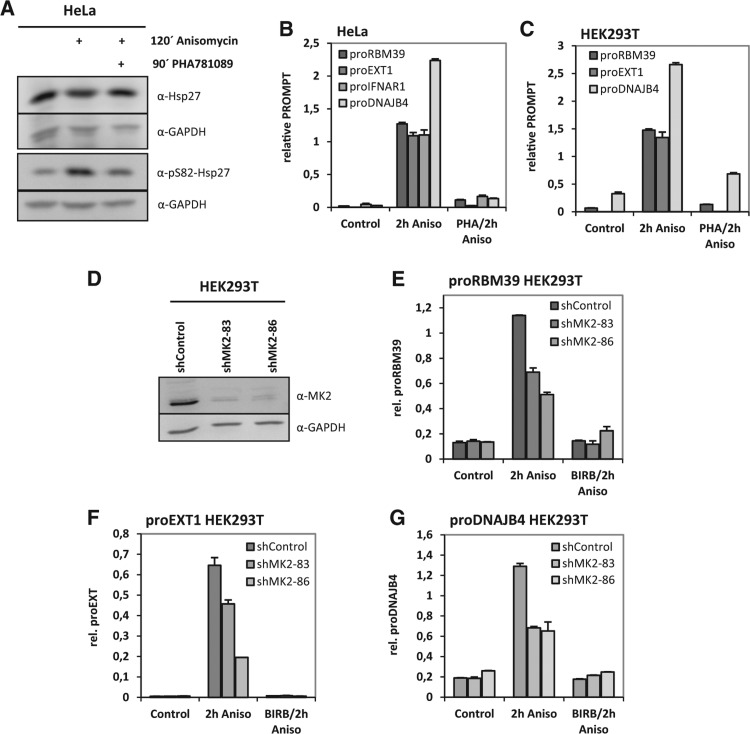
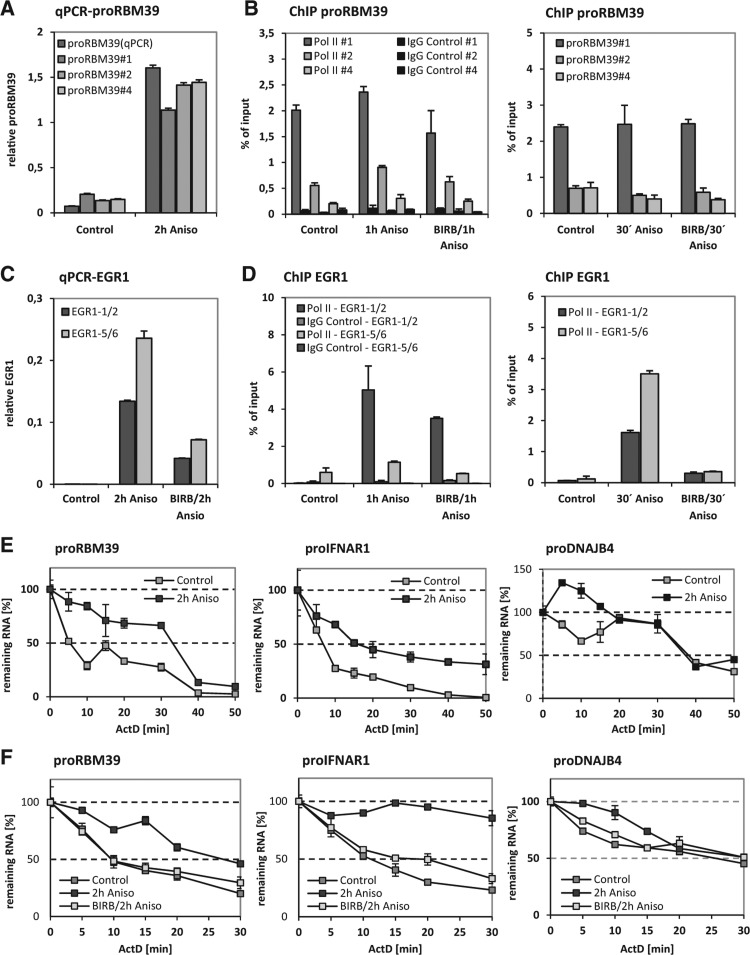
The nuclear exosome targeting complex (NEXT) directs a major 3'-5' exonuclease, the RNA exosome, for degradation of nuclear noncoding (nc) RNAs. We identified the RNA-binding component of the NEXT complex, RBM7, as a substrate of p38(MAPK)/MK2-mediated phosphorylation at residue S136. As a result of this phosphorylation, RBM7 displays a strongly decreased RNA-binding capacity, while inhibition of p38(MAPK) or mutation of S136A in RBM7 increases its RNA association. Interestingly, promoter-upstream transcripts (PROMPTs), such as proRBM39, proEXT1, proDNAJB4, accumulated upon stress stimulation in a p38(MAPK)/MK2-dependent manner, a process inhibited by overexpression of RBM7(S136A). While there are no stress-dependent changes in RNA-polymerase II (RNAPII) occupation of PROMPT regions representing unchanged transcription, stability of PROMPTs is increased. Hence, we propose that phosphorylation of RBM7 by the p38(MAPK)/MK2 axis increases nuclear ncRNA stability by blocking their RBM7-binding and subsequent RNA exosome targeting to allow stress-dependent modulations of the noncoding transcriptome.
核小体 exosome 靶向复合物(NEXT)指导主要的 3'-5' 外切核酸酶——RNA exosome 降解核非编码(nc)RNAs。我们鉴定了 NEXT 复合物的 RNA 结合成分 RBM7 作为 p38(MAPK)/MK2 介导的磷酸化 S136 残基的底物。由于这种磷酸化,RBM7 的 RNA 结合能力大大降低,而 p38(MAPK)的抑制或 RBM7 中 S136A 的突变增加了其 RNA 结合。有趣的是,在应激刺激下,如 proRBM39、proEXT1、proDNAJB4 等启动子上游转录物(PROMPTs)以 p38(MAPK)/MK2 依赖性方式积累,这一过程被 RBM7(S136A)的过表达所抑制。虽然在代表未改变转录的 PROMPT 区域中没有 RNA 聚合酶 II(RNAPII)占据的应激依赖性变化,但 PROMPTs 的稳定性增加。因此,我们提出 p38(MAPK)/MK2 轴通过磷酸化 RBM7 来阻止其与 RBM7 的结合,并随后将 RNA exosome 靶向到核非编码 RNA,从而增加核非编码 RNA 的稳定性,允许非编码转录组的应激依赖性调节。