Saeed Mujahid A, Narendran Parth
Department of Diabetes, University Hospital Birmingham NHS Foundation Trust, Birmingham, UK.
School of Clinical and Experimental Medicine, University of Birmingham, Birmingham, UK.
Drug Des Devel Ther. 2014 Dec 10;8:2493-505. doi: 10.2147/DDDT.S50963. eCollection 2014.
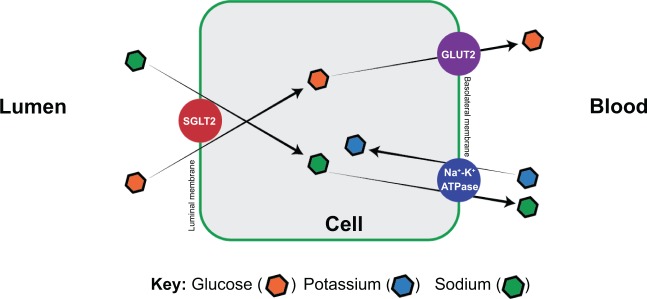
Dapagliflozin was the first drug in a class of therapies that took a new approach to glycemic control in adults with type 2 diabetes (T2D). It is an inhibitor of the sodium glucose cotransporter, resident in the proximal nephron, which is responsible for the recovery of filtered glucose back into circulation. Inhibiting this cotransporter reduces glucose recovery, increases glucose excretion, and reduces hyperglycemia. Here, we review some of the literature relating to the action, efficacy, and clinical use of dapagliflozin.
A Medline search was conducted within date, animal, and language limits, and relevant papers were selected for review. Conference proceedings were reviewed to obtain up-to-date literature on this drug. Clinical trial websites were reviewed for ongoing studies.
On average, treatment with dapagliflozin results in improvement in glycated hemoglobin by 0.50%, fasting plasma glucose by 1 mmol/L, weight by 2 kg, body mass index by 1.1%, and systolic/diastolic blood pressure by 4/2 mmHg over 24-52 weeks. The weight benefit is greater when used in association with sulfonylureas. It is generally well tolerated, but comes with an increased risk of genitourinary and urinary tract infections. In addition, it is associated with reversible changes to renal function that need to be explored. Early reports of an association with cancer also need to be carefully monitored.
Dapagliflozin is a useful therapy for adult patients with T2D. It also holds potential for a broader range of patients with T2D (such as the elderly and pediatric populations), as well as those with other forms of diabetes, such as type 1 diabetes. While longer-term outcome studies of safety and efficacy are awaited, dapagliflozin forms a very useful and welcome addition to our armamentarium for managing patients with T2D.
达格列净是一类采用新方法控制成人2型糖尿病(T2D)血糖的治疗药物中的首个药物。它是位于近端肾单位的钠-葡萄糖协同转运蛋白的抑制剂,该转运蛋白负责将滤过的葡萄糖回收至循环中。抑制这种协同转运蛋白可减少葡萄糖回收,增加葡萄糖排泄,并降低高血糖。在此,我们综述一些与达格列净的作用、疗效及临床应用相关的文献。
在日期、动物及语言限制范围内进行了Medline检索,并选择相关论文进行综述。查阅会议论文集以获取关于该药物的最新文献。查阅临床试验网站以了解正在进行的研究。
在24至52周内,平均而言,使用达格列净治疗可使糖化血红蛋白改善0.50%,空腹血糖降低1 mmol/L,体重减轻2 kg,体重指数降低1.1%,收缩压/舒张压降低4/2 mmHg。与磺脲类药物联合使用时,体重减轻的益处更大。它总体耐受性良好,但泌尿生殖系统和尿路感染的风险增加。此外,它与肾功能的可逆性变化有关,需要进一步研究。早期关于与癌症相关的报道也需要仔细监测。
达格列净对成年T2D患者是一种有用的治疗方法。它对更广泛的T2D患者群体(如老年和儿童人群)以及患有其他形式糖尿病(如1型糖尿病)的患者也具有潜力。在等待关于安全性和疗效的长期结局研究的同时,达格列净是我们治疗T2D患者的药物库中非常有用且受欢迎的补充药物。