Department of Biomedical and Molecular Sciences, Queen's University, Kingston, ON, Canada.
Department of Chemical Engineering, Queen's University, Kingston, ON, Canada.
Breast Cancer (Dove Med Press). 2014 Dec 9;6:191-203. doi: 10.2147/BCTT.S74663. eCollection 2014.
Triple-negative breast cancers (TNBCs) lack the estrogen, progesterone, and epidermal growth factor (EGF) receptor-2 (HER2/neu) receptors. Patients with TNBC have typical high grading, more frequent relapses, and exhibit poorer outcomes or prognosis compared with the other subtypes of breast cancers. Currently, there are no targeted therapies that are effective for TNBC. Preclinical antitumor activity of oseltamivir phosphate (OP) therapy was investigated to identify its role in tumor neovascularization, growth, invasiveness, and long-term survival in a mouse model of human TNBC.
Live cell sialidase, water soluble tetrazolium, WST-1 cell viability, and immunohistochemistry assays were used to evaluate sialidase activity, cell survival, and the expression levels of tumor E-cadherin, N-cadherin, and host endothelial CD31+/PECAM-1 cells in archived paraffin-embedded TNBC MDA-MB-231 tumors grown in RAGxCγ double mutant mice.
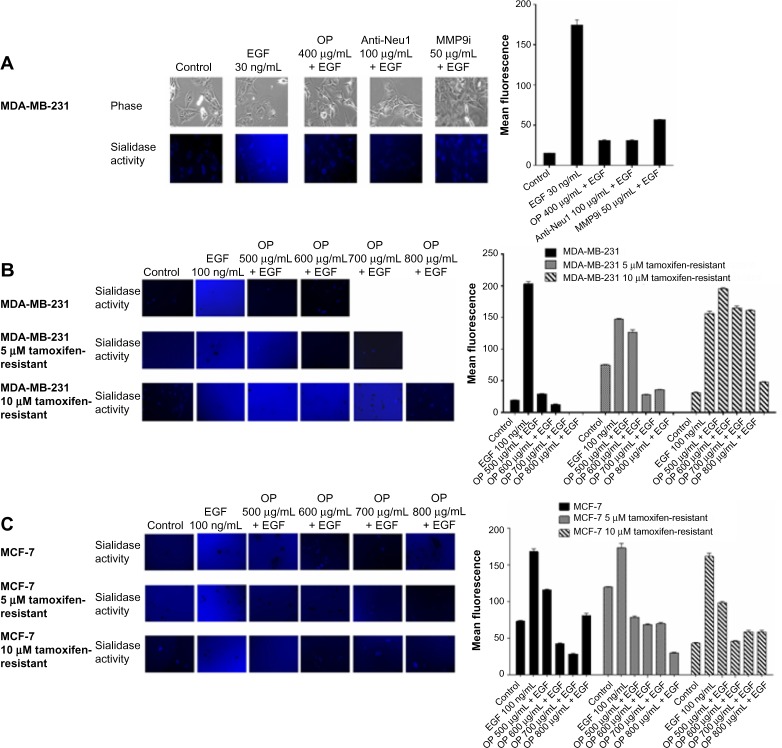
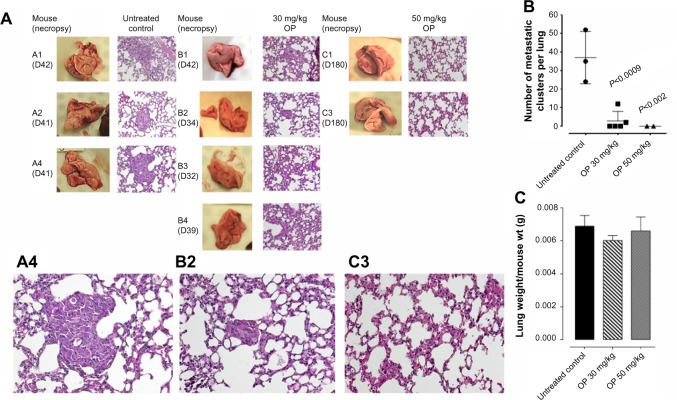
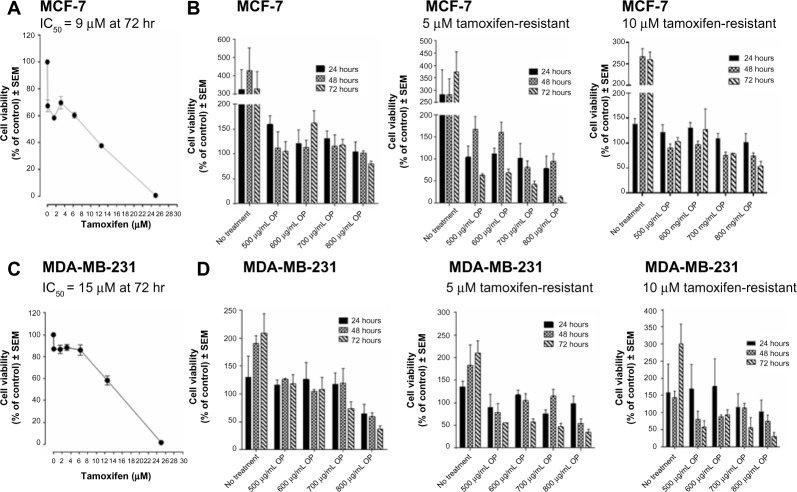
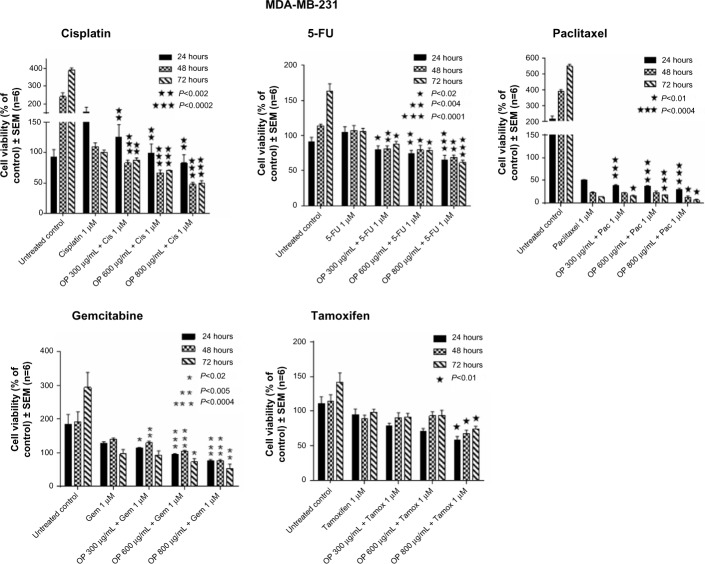
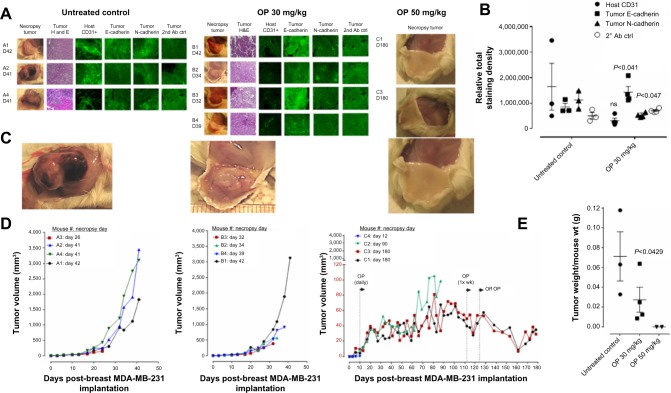
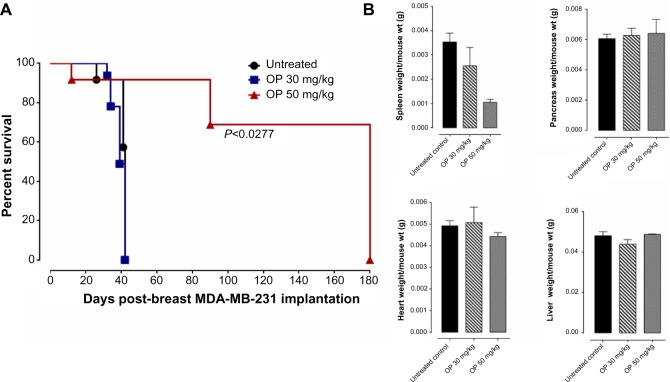
OP, anti-Neu1 antibodies, and matrix metalloproteinase-9-specific inhibitor blocked Neu1 activity associated with EGF-stimulated TNBC MDA-MB-231 cells. OP treatment of MDA-MB-231 and MCF-7 cells and their long-term tamoxifen-resistant clones reproducibly and dose-dependently reduced the sialidase activity associated with EGF-stimulated live cells and the cell viability after 72 hours of incubation. Combination of 1 μM cisplatin, 5-FU, paclitaxel, gemcitabine, or tamoxifen with OP dosages ≥300 μg/mL significantly reduced cell viability at 24, 48, and 72 hours when compared to the chemodrug alone. Heterotopic xenografts of MDA-MB-231 tumors developed robust and bloody tumor vascularization in RAG2xCγ double mutant mice. OP treatment at 30 mg/kg daily intraperitoneally reduced tumor vascularization and growth rate as well as significantly reduced tumor weight and spread to the lungs compared with the untreated cohorts. OP treatment at 50 mg/kg completely ablated tumor vascularization, tumor growth and spread to the lungs, with significant long-term survival at day 180 postimplantation, tumor shrinking, and no relapses after 56 days off-drug. OP 30 mg/kg cohort tumors expressed significantly reduced levels of human N-cadherins and host CD31+ endothelial cells with concomitant significant expression of E-cadherins compared to the untreated cohorts.
OP monotherapy may be the effective treatment therapy for TNBC.
三阴性乳腺癌(TNBC)缺乏雌激素、孕激素和表皮生长因子(EGF)受体 2(HER2/neu)受体。与其他类型的乳腺癌相比,TNBC 患者的典型分级较高,复发更为频繁,预后或结局较差。目前,尚无针对 TNBC 的有效靶向治疗方法。本研究旨在探讨磷酸奥司他韦(OP)治疗的抗肿瘤活性,以确定其在人 TNBC 小鼠模型中的肿瘤血管生成、生长、侵袭和长期生存中的作用。
使用活细胞唾液酸酶、水溶性四唑盐(WST-1)细胞活力和免疫组织化学检测,评估唾液酸酶活性、细胞活力以及存档石蜡包埋的 TNBC MDA-MB-231 肿瘤中肿瘤 E-钙粘蛋白、N-钙粘蛋白和宿主内皮细胞 CD31+/PECAM-1 表达水平,这些肿瘤在 RAGxCγ 双重突变小鼠中生长。
OP、抗 Neu1 抗体和基质金属蛋白酶-9 特异性抑制剂阻断了与 EGF 刺激的 TNBC MDA-MB-231 细胞相关的 Neu1 活性。OP 处理 MDA-MB-231 和 MCF-7 细胞及其长期他莫昔芬耐药克隆可重复性地、剂量依赖性地降低与 EGF 刺激的活细胞相关的唾液酸酶活性,并降低孵育 72 小时后的细胞活力。与单独使用化疗药物相比,将 1 μM 顺铂、5-FU、紫杉醇、吉西他滨或他莫昔芬与剂量≥300μg/ml 的 OP 联合使用,可显著降低 24、48 和 72 小时时的细胞活力。MDA-MB-231 肿瘤的异位异种移植在 RAG2xCγ 双重突变小鼠中产生了强大而血腥的肿瘤血管生成。与未治疗组相比,每天腹膜内注射 30mg/kg 的 OP 可减少肿瘤血管生成和生长速度,并显著降低肿瘤重量和向肺部的扩散。50mg/kg 的 OP 完全消融了肿瘤血管生成、肿瘤生长和向肺部的扩散,在植入后 180 天具有显著的长期生存率,肿瘤缩小,停药 56 天后无复发。与未治疗组相比,OP30mg/kg 组肿瘤中表达的人 N-钙粘蛋白水平显著降低,宿主 CD31+内皮细胞表达水平降低,同时 E-钙粘蛋白表达水平显著升高。
OP 单药治疗可能是 TNBC 的有效治疗方法。