Bunsick David A, Matsukubo Jenna, Szewczuk Myron R
Department of Biomedical and Molecular Sciences, Queen's University, Kingston, ON K7L3N6, Canada.
Cancers (Basel). 2023 Feb 6;15(4):1030. doi: 10.3390/cancers15041030.
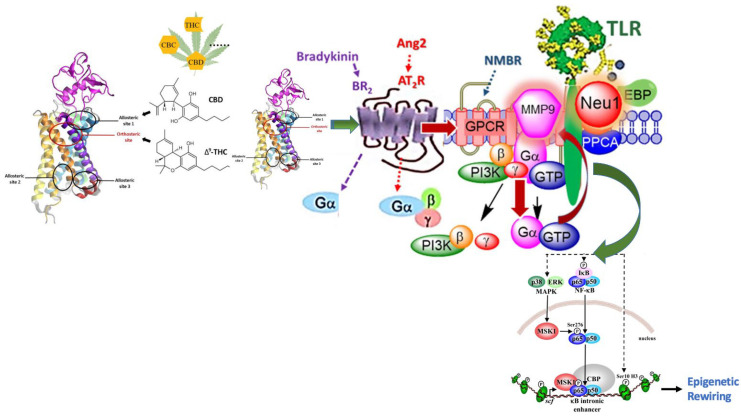
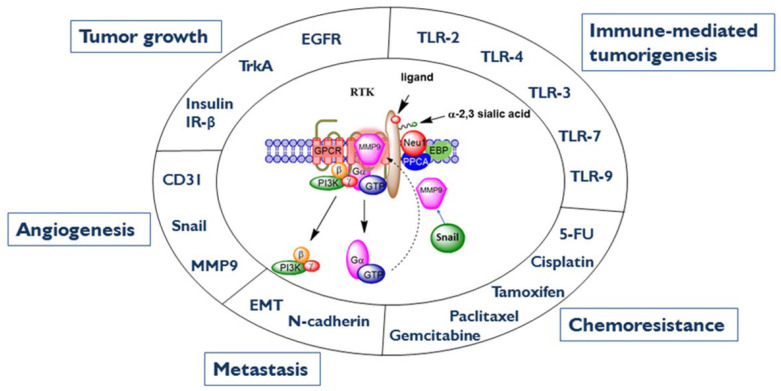
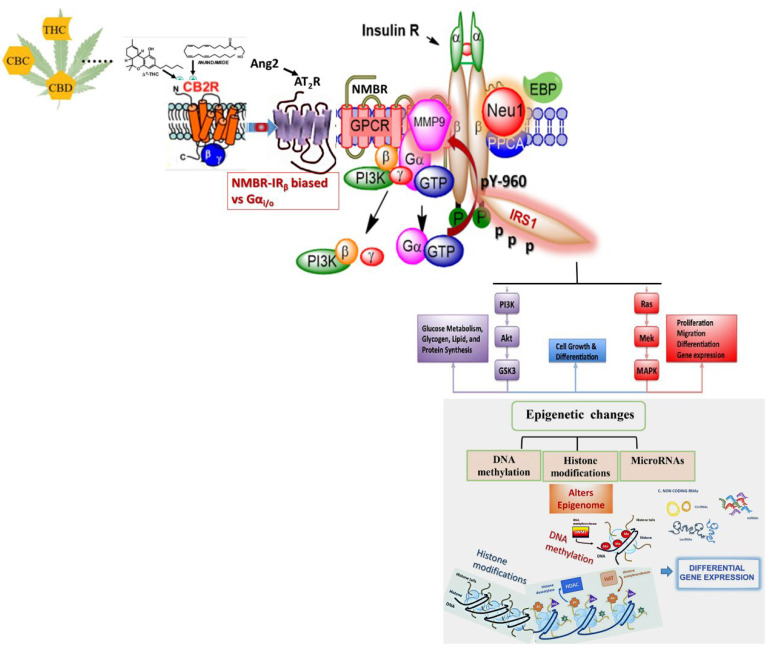
The concept of epigenetic reprogramming predicts long-term functional health effects. This reprogramming can be activated by exogenous or endogenous insults, leading to altered healthy and different disease states. The exogenous or endogenous changes that involve developing a roadmap of epigenetic networking, such as drug components on epigenetic imprinting and restoring epigenome patterns laid down during embryonic development, are paramount to establishing youthful cell type and health. This epigenetic landscape is considered one of the hallmarks of cancer. The initiation and progression of cancer are considered to involve epigenetic abnormalities and genetic alterations. Cancer epigenetics have shown extensive reprogramming of every component of the epigenetic machinery in cancer development, including DNA methylation, histone modifications, nucleosome positioning, non-coding RNAs, and microRNA expression. Endocannabinoids are natural lipid molecules whose levels are regulated by specific biosynthetic and degradative enzymes. They bind to and activate two primary cannabinoid receptors, type 1 (CB1) and type 2 (CB2), and together with their metabolizing enzymes, form the endocannabinoid system. This review focuses on the role of cannabinoid receptors CB1 and CB2 signaling in activating numerous receptor tyrosine kinases and Toll-like receptors in the induction of epigenetic landscape alterations in cancer cells, which might transmogrify cancer metabolism and epigenetic reprogramming to a metastatic phenotype. Strategies applied from conception could represent an innovative epigenetic target for preventing and treating human cancer. Here, we describe novel cannabinoid-biased G protein-coupled receptor signaling platforms (GPCR), highlighting putative future perspectives in this field.
表观遗传重编程的概念预示着长期的功能性健康影响。这种重编程可由外源性或内源性损伤激活,导致健康状态改变和不同的疾病状态。涉及绘制表观遗传网络路线图的外源性或内源性变化,如药物成分对表观遗传印记的影响以及恢复胚胎发育过程中形成的表观基因组模式,对于建立年轻的细胞类型和健康至关重要。这种表观遗传格局被认为是癌症的标志之一。癌症的发生和发展被认为涉及表观遗传异常和基因改变。癌症表观遗传学已显示在癌症发展过程中表观遗传机制的每个组成部分都发生了广泛的重编程,包括DNA甲基化、组蛋白修饰、核小体定位、非编码RNA和微小RNA表达。内源性大麻素是天然脂质分子,其水平由特定的生物合成和降解酶调节。它们与两种主要的大麻素受体1型(CB1)和2型(CB2)结合并激活,并且与它们的代谢酶一起形成内源性大麻素系统。本综述重点关注大麻素受体CB1和CB2信号在激活众多受体酪氨酸激酶和Toll样受体以诱导癌细胞表观遗传格局改变中的作用,这可能会使癌症代谢和表观遗传重编程转变为转移表型。从概念上应用的策略可能代表一种预防和治疗人类癌症的创新表观遗传靶点。在此,我们描述了新型大麻素偏向性G蛋白偶联受体信号平台(GPCR),突出了该领域未来可能的前景。