Sierra-Paredes Germán, Loureiro Ana I, Wright Lyndon C, Sierra-Marcuño Germán, Soares-da-Silva Patrício
Department of Biochemistry and Molecular Biology, School of Medicine, University of Santiago de Compostela, Santiago de Compostela, Spain.
Department Research & Development, BIAL - Portela & Cª - S.A., 4745-457, S. Mamede do Coronado, Portugal.
BMC Neurosci. 2014 Dec 20;15:134. doi: 10.1186/s12868-014-0134-2.
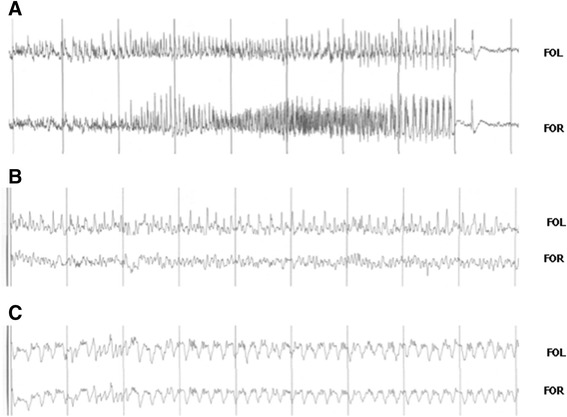
Latrunculin A microperfusion of the hippocampus induces acute epileptic seizures and long-term biochemical changes leading to spontaneous seizures. This study tested the effect of eslicarbazepine acetate (ESL), a novel antiepileptic drug, on latrunculin A-induced acute and chronic seizures, and changes in brain amino acid extracellular levels. Hippocampi of Swiss mice were continuously perfused with a latrunculin A solution (4 μM, 1 μl/min, 7 h/day) with continuous EEG and videotape recording for 3 consecutive days. Microdialysate samples were analyzed by HPLC and fluorescence detection of taurine, glycine, aspartate, glutamate and GABA. Thereafter, mice were continuously video monitored for two months to identify chronic spontaneous seizures or behavioral changes. Control EEG recordings (8 h) were performed in all animals at least once a week for a minimum of one month.
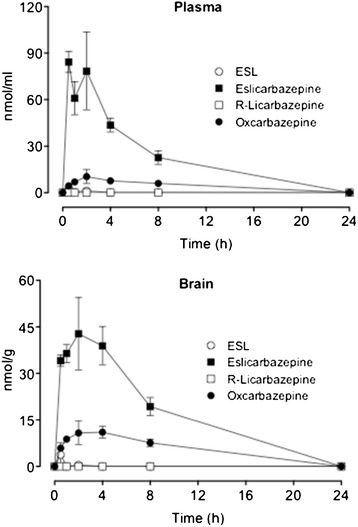
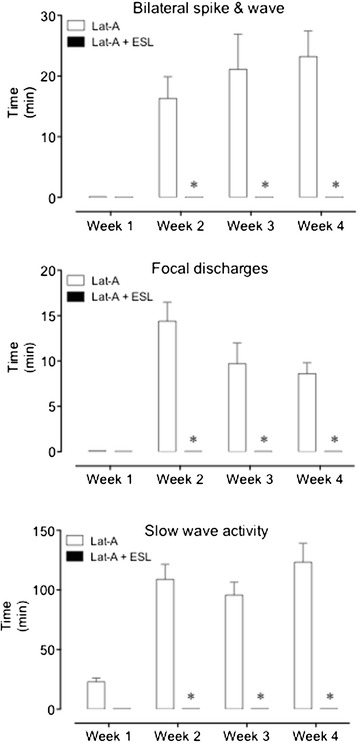
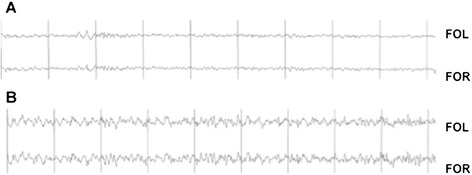
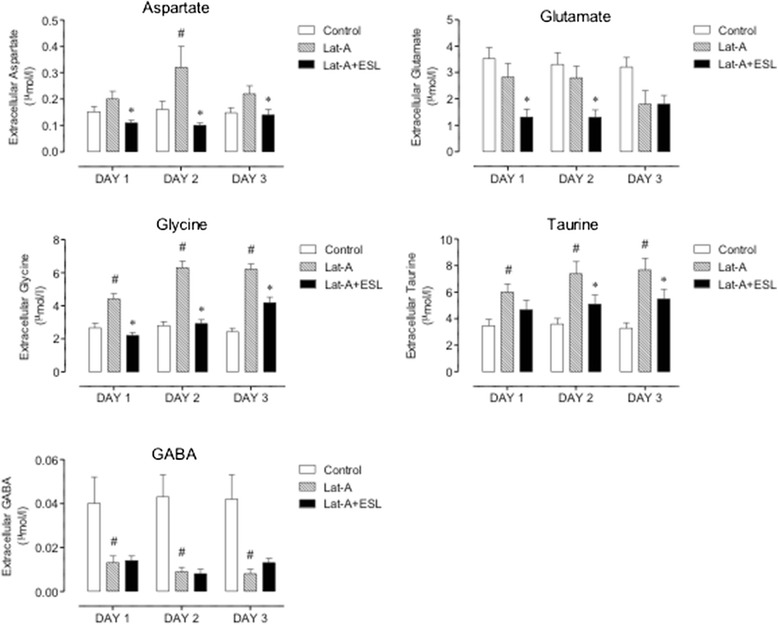
Oral administration of ESL (100 mg/kg), previous to latrunculin A microperfusion, completely prevented acute latrunculin A-induced seizures as well as chronic seizures and all EEG chronic signs of paroxysmal activity. Hippocampal extracellular levels of taurine, glycine and aspartate were significantly increased during latrunculin A microperfusion, while GABA and glutamate levels remained unchanged. ESL reversed the increases in extracellular taurine, glycine and aspartate concentrations to basal levels and significantly reduced glutamate levels. Plasma and brain bioanalysis showed that ESL was completely metabolized within 1 h after administration to mainly eslicarbazepine, its major active metabolite.
ESL treatment prevented acute latrunculin A-induced seizures as well as chronic seizures and all EEG chronic signs of paroxysmal activity, supporting a possible anti-epileptogenic effect of ESL in mice.
用拉布立酶A微量灌注海马体可诱发急性癫痫发作以及导致自发性癫痫发作的长期生化变化。本研究测试了新型抗癫痫药物醋酸艾司利卡西平(ESL)对拉布立酶A诱发的急性和慢性癫痫发作以及脑氨基酸细胞外水平变化的影响。对瑞士小鼠的海马体连续3天灌注拉布立酶A溶液(4 μM,1 μl/分钟,7小时/天),同时进行连续脑电图和录像记录。通过高效液相色谱法和对牛磺酸、甘氨酸、天冬氨酸、谷氨酸和γ-氨基丁酸的荧光检测来分析微透析样品。此后,对小鼠连续进行两个月的视频监测,以确定慢性自发性癫痫发作或行为变化。所有动物每周至少进行一次对照脑电图记录(8小时),至少持续一个月。
在拉布立酶A微量灌注前口服ESL(100毫克/千克)可完全预防急性拉布立酶A诱发的癫痫发作以及慢性癫痫发作和所有脑电图阵发性活动的慢性体征。在拉布立酶A微量灌注期间,海马体细胞外的牛磺酸、甘氨酸和天冬氨酸水平显著升高,而γ-氨基丁酸和谷氨酸水平保持不变。ESL将细胞外牛磺酸、甘氨酸和天冬氨酸浓度的升高逆转至基础水平,并显著降低谷氨酸水平。血浆和脑生物分析表明,ESL在给药后1小时内完全代谢,主要代谢为其主要活性代谢物艾司利卡西平。
ESL治疗可预防急性拉布立酶A诱发的癫痫发作以及慢性癫痫发作和所有脑电图阵发性活动的慢性体征,支持ESL在小鼠中可能具有抗癫痫发生的作用。