Naganuma Kaori, Hatta Mitsutoki, Ikebe Tetsuro, Yamazaki Jun
Department of Physiological Science and Molecular Biology, Fukuoka Dental College, Fukuoka 814-0193, Japan.
BMC Cancer. 2014 Dec 20;14:988. doi: 10.1186/1471-2407-14-988.
Epigenetic modifications play important roles in the regulation of gene expression determining cellular phenotype as well as various pathologies such as cancer. Although the loss of keratin 13 (KRT13) is reportedly linked to malignant transformation of oral epithelial cells, the molecular mechanisms through which KRT13 is repressed in oral squamous cell carcinoma (OSCC) remain unclear. The aim of this study is to identify the epigenetic alterations of the KRT13 gene in OSCCs.
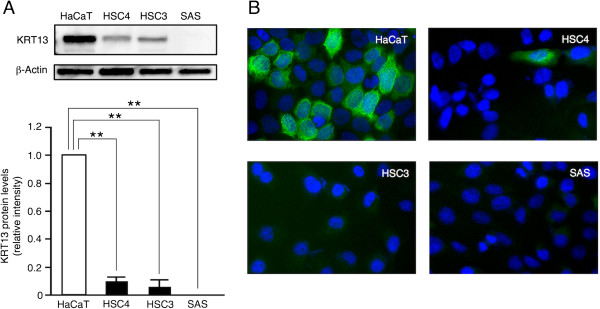
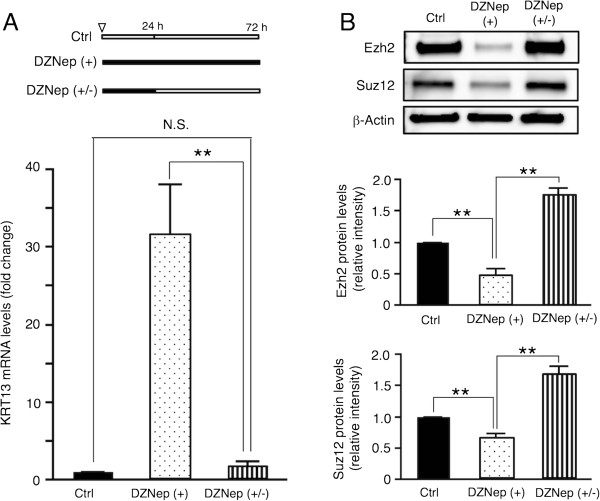
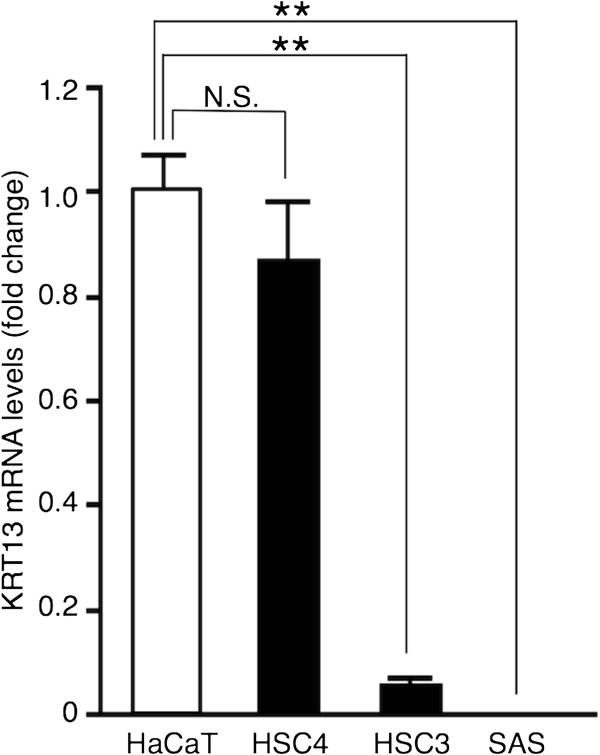
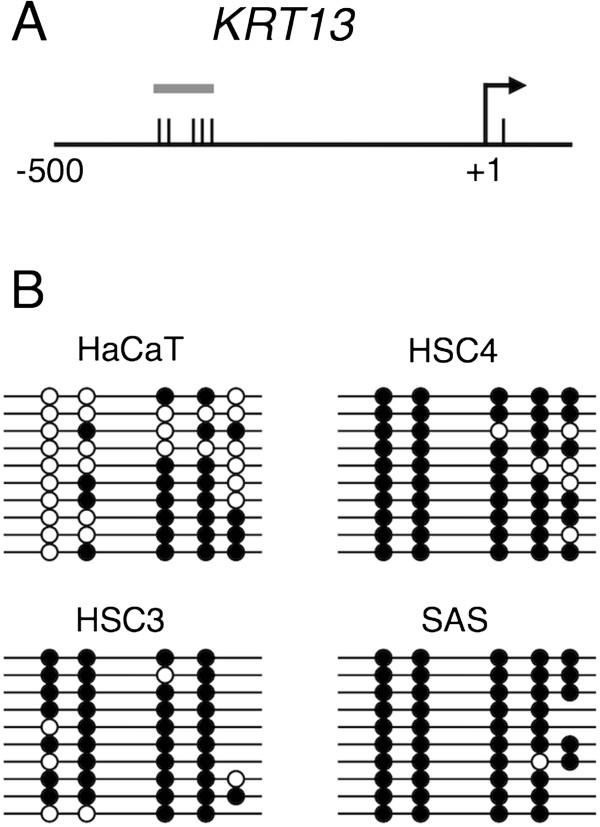
We investigated KRT13 expression levels and chromatin modifications of the KRT13 promoter in the three OSCC cell lines (HSC4, HSC3, and SAS). The expression levels of KRT13 protein and mRNA were analyzed by western blotting and quantitative reverse-transcription polymerase chain reaction, respectively, and the localization of KRT13 protein was detected by immunofluorescence. DNA methylation and histone modifications in the KRT13 promoter were determined by bisulfite sequencing and chromatin immunoprecipitation (ChIP), respectively. For the pharmacological depletion of Polycomb repressive complex 2 (PRC2), cells were treated with 3-deazaneplanocin A (DZNep).
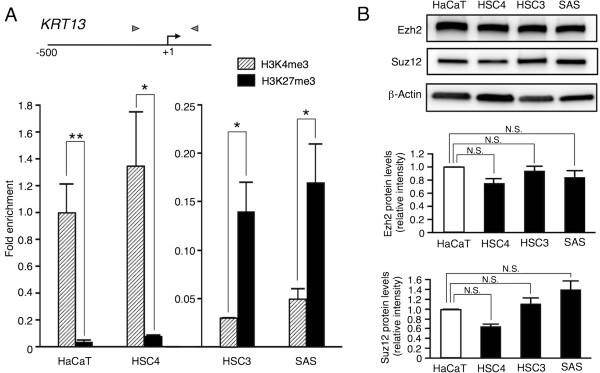
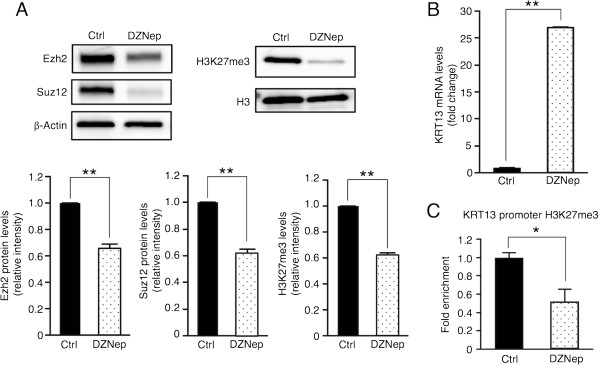
KRT13 expression was transcriptionally silenced in the HSC3 and SAS cells and post-transcriptionally repressed in the HSC4 cells, while the KRT13 promoter was hypermethylated in all of the three OSCC cell lines. ChIP analysis revealed that PRC2-mediated trimethylation of Lys 27 on histone H3 (H3K27me3) was increased in the KRT13 promoter in the HSC3 and SAS cells. Finally, we demonstrated that the treatment of SAS cells with DZNep reactivated the transcription of KRT13 gene.
Our data provide mechanistic insights into the epigenetic silencing of KRT13 genes in OSCC cells and might be useful for the development of diagnostic markers and novel therapeutic approaches against OSCCs.
表观遗传修饰在调控基因表达以决定细胞表型以及诸如癌症等各种病理过程中发挥着重要作用。尽管据报道角蛋白13(KRT13)的缺失与口腔上皮细胞的恶性转化有关,但在口腔鳞状细胞癌(OSCC)中KRT13被抑制的分子机制仍不清楚。本研究的目的是确定OSCC中KRT13基因的表观遗传改变。
我们研究了三种OSCC细胞系(HSC4、HSC3和SAS)中KRT13的表达水平以及KRT13启动子的染色质修饰。分别通过蛋白质免疫印迹法和定量逆转录聚合酶链反应分析KRT13蛋白和mRNA的表达水平,并通过免疫荧光检测KRT13蛋白的定位。分别通过亚硫酸氢盐测序和染色质免疫沉淀(ChIP)确定KRT13启动子中的DNA甲基化和组蛋白修饰。为了通过药物耗尽多梳抑制复合物2(PRC2),用3-去氮杂氮胞苷(DZNep)处理细胞。
KRT13在HSC3和SAS细胞中发生转录沉默,在HSC4细胞中发生转录后抑制,而在所有三种OSCC细胞系中KRT13启动子均发生高甲基化。ChIP分析显示,在HSC3和SAS细胞的KRT13启动子中,PRC2介导的组蛋白H3赖氨酸27三甲基化(H3K27me3)增加。最后,我们证明用DZNep处理SAS细胞可重新激活KRT13基因的转录。
我们的数据为OSCC细胞中KRT13基因的表观遗传沉默提供了机制性见解,可能有助于开发针对OSCC的诊断标志物和新的治疗方法。