Trompetto Carlo, Marinelli Lucio, Mori Laura, Pelosin Elisa, Currà Antonio, Molfetta Luigi, Abbruzzese Giovanni
Department of Neuroscience, Rehabilitation, Ophthalmology, Genetics, Maternal and Child Health, University of Genoa, Largo Daneo 3, 16132 Genoa, Italy.
Department of Medical-Surgical Sciences and Biotechnologies, Sapienza University of Rome, Polo Pontino, Via Firenze, 04019 Terracina, Italy.
Biomed Res Int. 2014;2014:354906. doi: 10.1155/2014/354906. Epub 2014 Oct 30.
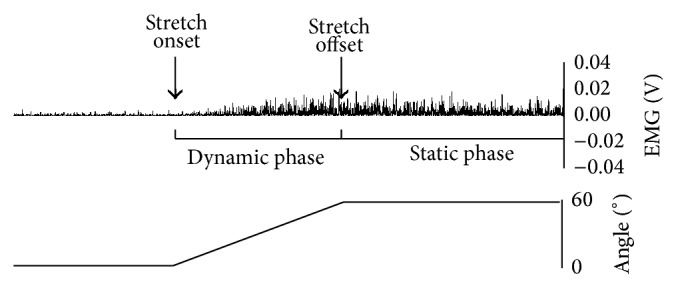
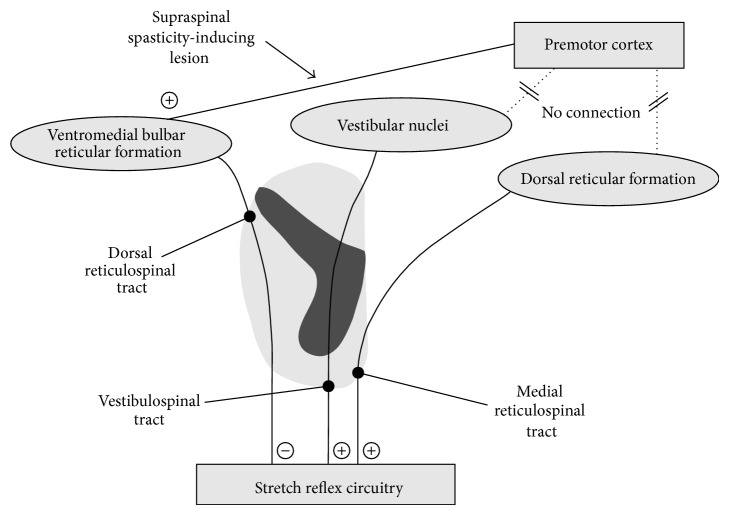
Spasticity is the velocity-dependent increase in muscle tone due to the exaggeration of stretch reflex. It is only one of the several components of the upper motor neuron syndrome (UMNS). The central lesion causing the UMNS disrupts the balance of supraspinal inhibitory and excitatory inputs directed to the spinal cord, leading to a state of disinhibition of the stretch reflex. However, the delay between the acute neurological insult (trauma or stroke) and the appearance of spasticity argues against it simply being a release phenomenon and suggests some sort of plastic changes, occurring in the spinal cord and also in the brain. An important plastic change in the spinal cord could be the progressive reduction of postactivation depression due to limb immobilization. As well as hyperexcitable stretch reflexes, secondary soft tissue changes in the paretic limbs enhance muscle resistance to passive displacements. Therefore, in patients with UMNS, hypertonia can be divided into two components: hypertonia mediated by the stretch reflex, which corresponds to spasticity, and hypertonia due to soft tissue changes, which is often referred as nonreflex hypertonia or intrinsic hypertonia. Compelling evidences state that limb mobilisation in patients with UMNS is essential to prevent and treat both spasticity and intrinsic hypertonia.
痉挛是由于牵张反射亢进导致的与速度相关的肌张力增加。它只是上运动神经元综合征(UMNS)的几个组成部分之一。导致UMNS的中枢性病变破坏了导向脊髓的脊髓上抑制性和兴奋性输入之间的平衡,导致牵张反射的去抑制状态。然而,急性神经损伤(创伤或中风)与痉挛出现之间的延迟表明,痉挛不仅仅是一种释放现象,还提示了脊髓和大脑中发生的某种可塑性变化。脊髓中一个重要的可塑性变化可能是由于肢体固定导致的激活后抑制的逐渐减少。除了过度兴奋的牵张反射外,瘫痪肢体的继发性软组织变化增强了肌肉对被动移位的抵抗力。因此,在UMNS患者中,张力亢进可分为两个部分:由牵张反射介导的张力亢进,对应于痉挛;以及由于软组织变化导致的张力亢进,通常称为非反射性张力亢进或固有性张力亢进。有力的证据表明,UMNS患者的肢体活动对于预防和治疗痉挛以及固有性张力亢进至关重要。