Tang Center for Herbal Medicine Research, University of Chicago, Chicago, IL, USA ; Department of Anesthesia and Critical Care, University of Chicago, Chicago, IL, USA ; School of Life Science and Chemical Engineering, and Jiangsu Provincial Engineering Laboratory for Biomass Conversion and Process Integration, Huaiyin Institute of Technology, Huaian, China.
Tang Center for Herbal Medicine Research, University of Chicago, Chicago, IL, USA ; Department of Anesthesia and Critical Care, University of Chicago, Chicago, IL, USA.
J Ginseng Res. 2015 Jan;39(1):14-21. doi: 10.1016/j.jgr.2014.07.001. Epub 2014 Jul 18.
Colorectal cancer is a leading cause of cancer-related death, and inflammatory bowel disease is a risk factor for this malignancy. We previously reported colon cancer chemoprevention potential using American ginseng (AG) in a xenograft mice model. However, the nude mouse model is not a gut-specific colon carcinogenesis animal model.
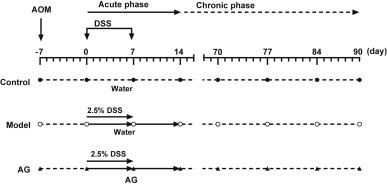
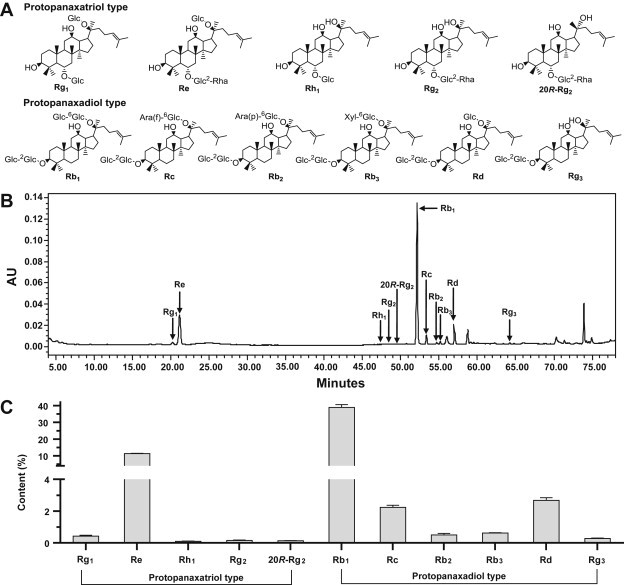
In this study, an experimental colitis and colitis-associated colorectal carcinogenesis mouse model, chemically induced by azoxymethane/dextran sodium sulfate (DSS) was established and the effects of oral AG were evaluated. The contents of representative ginseng saponins in the extract were determined.
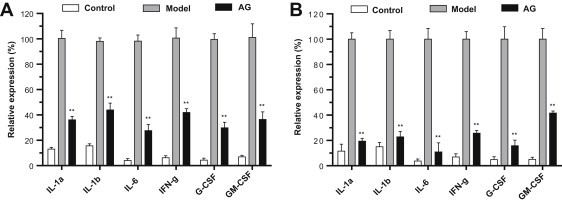
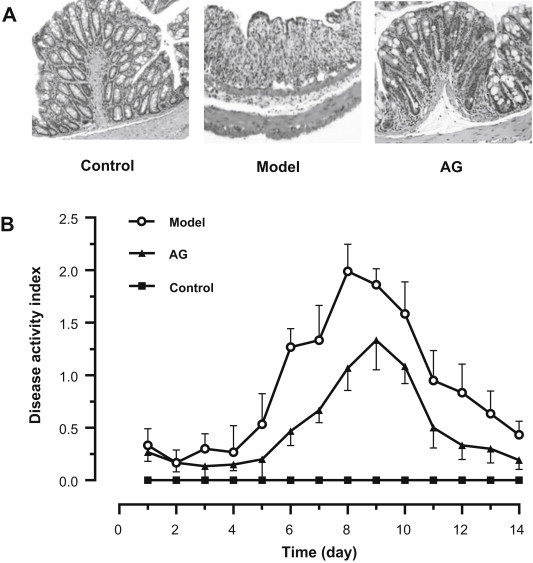
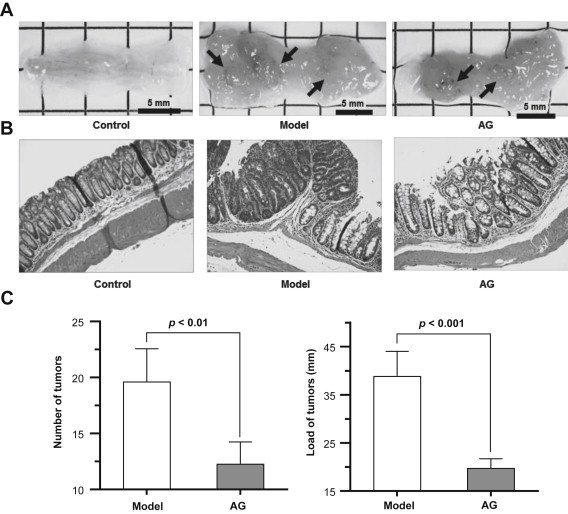
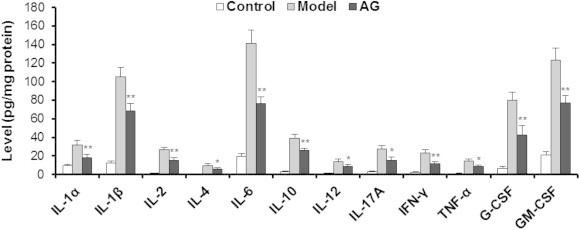
AG significantly reduced experimental colitis measured by the disease activity index scores. This suppression of the experimental colitis was not only evident during DSS treatment, but also very obvious after the cessation of DSS, suggesting that the ginseng significantly promoted recovery from the colitis. Consistent with the anti-inflammation data, we showed that ginseng very significantly attenuated azoxymethane/DSS-induced colon carcinogenesis by reducing the colon tumor number and tumor load. The ginseng also effectively suppressed DSS-induced proinflammatory cytokines activation using an enzyme-linked immunosorbent assay array, in which 12 proinflammatory cytokine levels were assessed, and this effect was supported subsequently by real-time polymerase chain reaction data.
AG, as a candidate of botanical-based colon cancer chemoprevention, should be further investigated for its potential clinical utility.
结直肠癌是癌症相关死亡的主要原因,而炎症性肠病是这种恶性肿瘤的一个危险因素。我们之前曾报道过西洋参(AG)在异种移植小鼠模型中预防结肠癌的作用。然而,裸鼠模型并不是一种肠道特异性结肠癌发生的动物模型。
在这项研究中,我们建立了一种实验性结肠炎和结肠炎相关结直肠癌发生的小鼠模型,该模型通过氧化偶氮甲烷/葡聚糖硫酸钠(DSS)化学诱导,并评估了口服 AG 的效果。提取物中代表性人参皂甙的含量也进行了测定。
AG 显著降低了疾病活动指数评分所衡量的实验性结肠炎。这种对实验性结肠炎的抑制作用不仅在 DSS 治疗期间明显,而且在 DSS 停止后也非常明显,这表明人参显著促进了结肠炎的恢复。与抗炎数据一致,我们表明人参通过减少结肠肿瘤数量和肿瘤负荷,非常显著地抑制了氧化偶氮甲烷/DSS 诱导的结肠癌发生。人参还通过酶联免疫吸附试验阵列有效地抑制了 DSS 诱导的促炎细胞因子激活,在该阵列中评估了 12 种促炎细胞因子的水平,随后的实时聚合酶链反应数据也支持了这一结果。
AG 作为一种基于植物的结肠癌化学预防候选物,应该进一步研究其在临床上的潜在应用。