Meng Xiangning, Qi Xiuying, Guo Huanhuan, Cai Mengdi, Li Chunxiang, Zhu Jing, Chen Feng, Guo Huan, Li Jie, Zhao Yuzhen, Liu Peng, Jia Xueyuan, Yu Jingcui, Zhang Chunyu, Sun Wenjing, Yu Yang, Jin Yan, Bai Jing, Wang Mingrong, Rosales Jesusa, Lee Ki-Young, Fu Songbin
Laboratory of Medical Genetics, Harbin Medical University, Harbin, China.
Laboratory of Medical Genetics, Harbin Medical University, Harbin, China Key Laboratory of Medical Genetics (Harbin Medical University), Heilongjiang Higher Education Institutions, Harbin, China.
J Med Genet. 2015 Feb;52(2):135-44. doi: 10.1136/jmedgenet-2014-102703. Epub 2014 Dec 23.
Gene amplification is a frequent manifestation of genomic instability that plays a role in tumour progression and development of drug resistance. It is manifested cytogenetically as extrachromosomal double minutes (DMs) or intrachromosomal homogeneously staining regions (HSRs). To better understand the molecular mechanism by which HSRs and DMs are formed and how they relate to the development of methotrexate (MTX) resistance, we used two model systems of MTX-resistant HT-29 colon cancer cell lines harbouring amplified DHFR primarily in (i) HSRs and (ii) DMs.
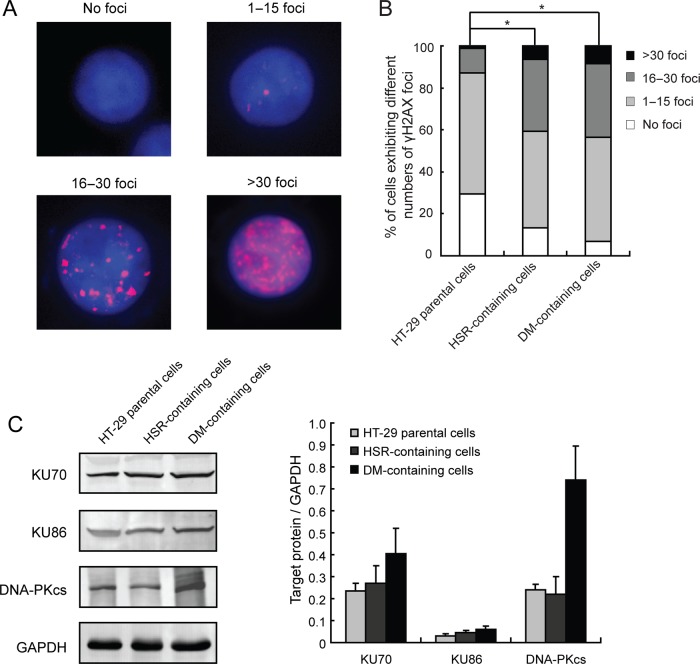
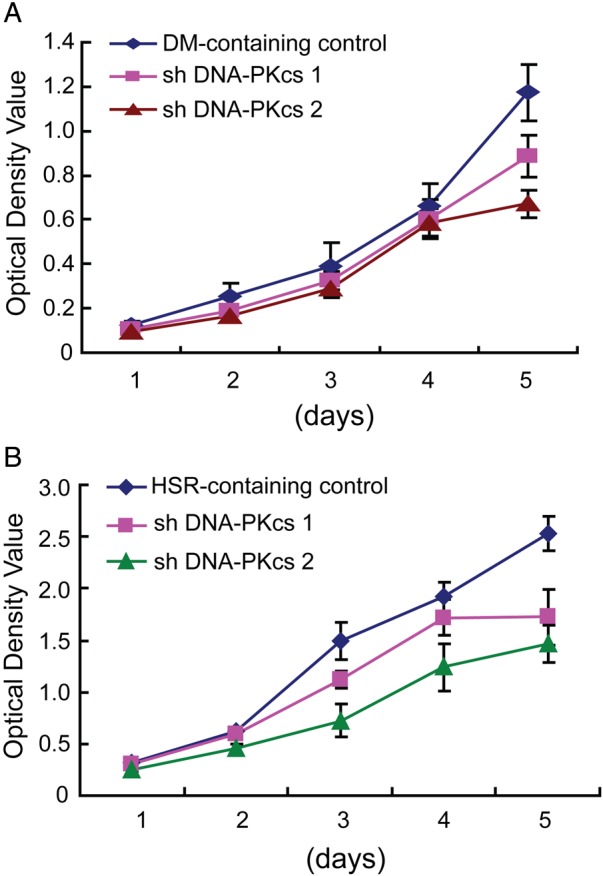
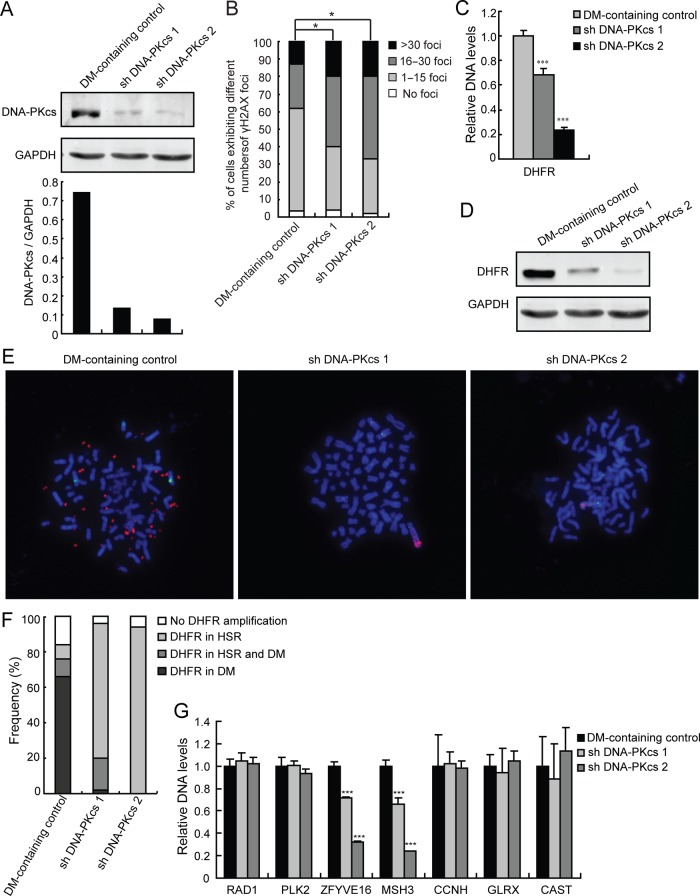
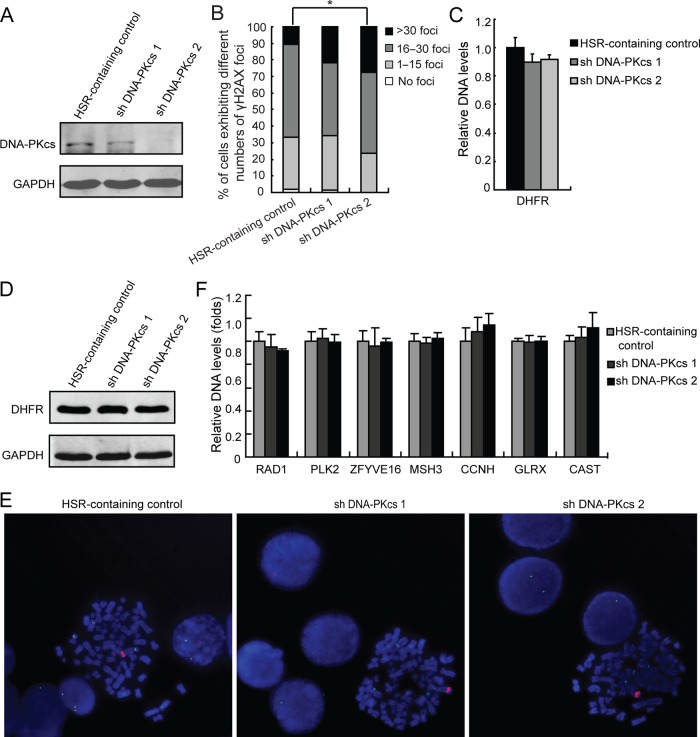
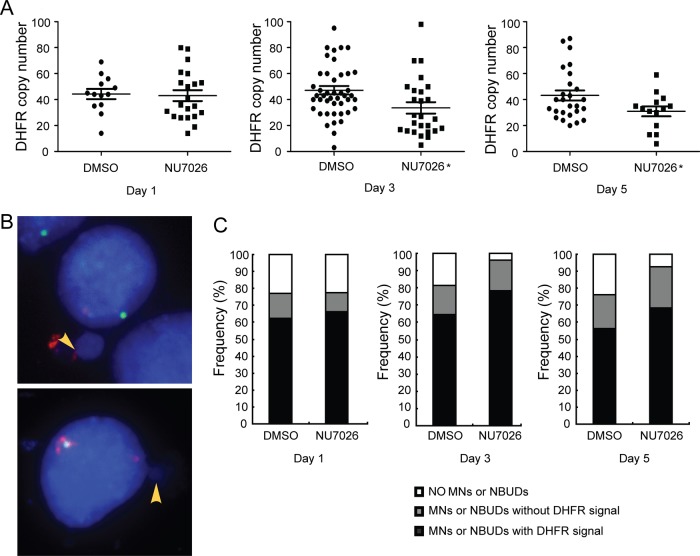
In DM-containing cells, we found increased expression of non-homologous end joining (NHEJ) proteins. Depletion or inhibition of DNA-PKcs, a key NHEJ protein, caused decreased DHFR amplification, disappearance of DMs, increased formation of micronuclei or nuclear buds, which correlated with the elimination of DHFR, and increased sensitivity to MTX. These findings indicate for the first time that NHEJ plays a specific role in DM formation, and that increased MTX sensitivity of DM-containing cells depleted of DNA-PKcs results from DHFR elimination. Conversely, in HSR-containing cells, we found no significant change in the expression of NHEJ proteins. Depletion of DNA-PKcs had no effect on DHFR amplification and resulted in only a modest increase in sensitivity to MTX. Interestingly, both DM-containing and HSR-containing cells exhibited decreased proliferation upon DNA-PKcs depletion.
We demonstrate a novel specific role for NHEJ in the formation of DMs, but not HSRs, in MTX-resistant cells, and that NHEJ may be targeted for the treatment of MTX-resistant colon cancer.
基因扩增是基因组不稳定的常见表现,在肿瘤进展和耐药性发展中起作用。其细胞遗传学表现为染色体外双微体(DMs)或染色体内均匀染色区(HSRs)。为了更好地理解HSRs和DMs形成的分子机制以及它们与甲氨蝶呤(MTX)耐药性发展的关系,我们使用了两种MTX耐药的HT - 29结肠癌细胞系模型系统,其扩增的二氢叶酸还原酶(DHFR)主要存在于(i)HSRs和(ii)DMs中。
在含有DMs的细胞中,我们发现非同源末端连接(NHEJ)蛋白的表达增加。关键的NHEJ蛋白DNA - PKcs的缺失或抑制导致DHFR扩增减少、DMs消失、微核或核芽形成增加,这与DHFR的消除相关,并且对MTX的敏感性增加。这些发现首次表明NHEJ在DMs形成中起特定作用,并且DNA - PKcs缺失的含DMs细胞对MTX敏感性增加是由于DHFR的消除。相反,在含有HSRs的细胞中,我们发现NHEJ蛋白的表达没有显著变化。DNA - PKcs的缺失对DHFR扩增没有影响,仅导致对MTX的敏感性适度增加。有趣的是,DNA - PKcs缺失后,含DMs和含HSRs的细胞增殖均降低。
我们证明了NHEJ在MTX耐药细胞中DMs而非HSRs的形成中具有新的特定作用,并且NHEJ可能是MTX耐药结肠癌治疗的靶点。