Weng Lindong, Elliott Gloria D
Department of Mechanical Engineering and Engineering Sciences, University of North Carolina at Charlotte, Charlotte, North Carolina, 28223, USA.
Pharm Res. 2015 Jul;32(7):2217-28. doi: 10.1007/s11095-014-1610-1. Epub 2014 Dec 24.
The present study is aimed at understanding how the interactions between sugar molecules and phosphate ions affect the glass transition temperature of their mixtures, and the implications for pharmaceutical formulations.
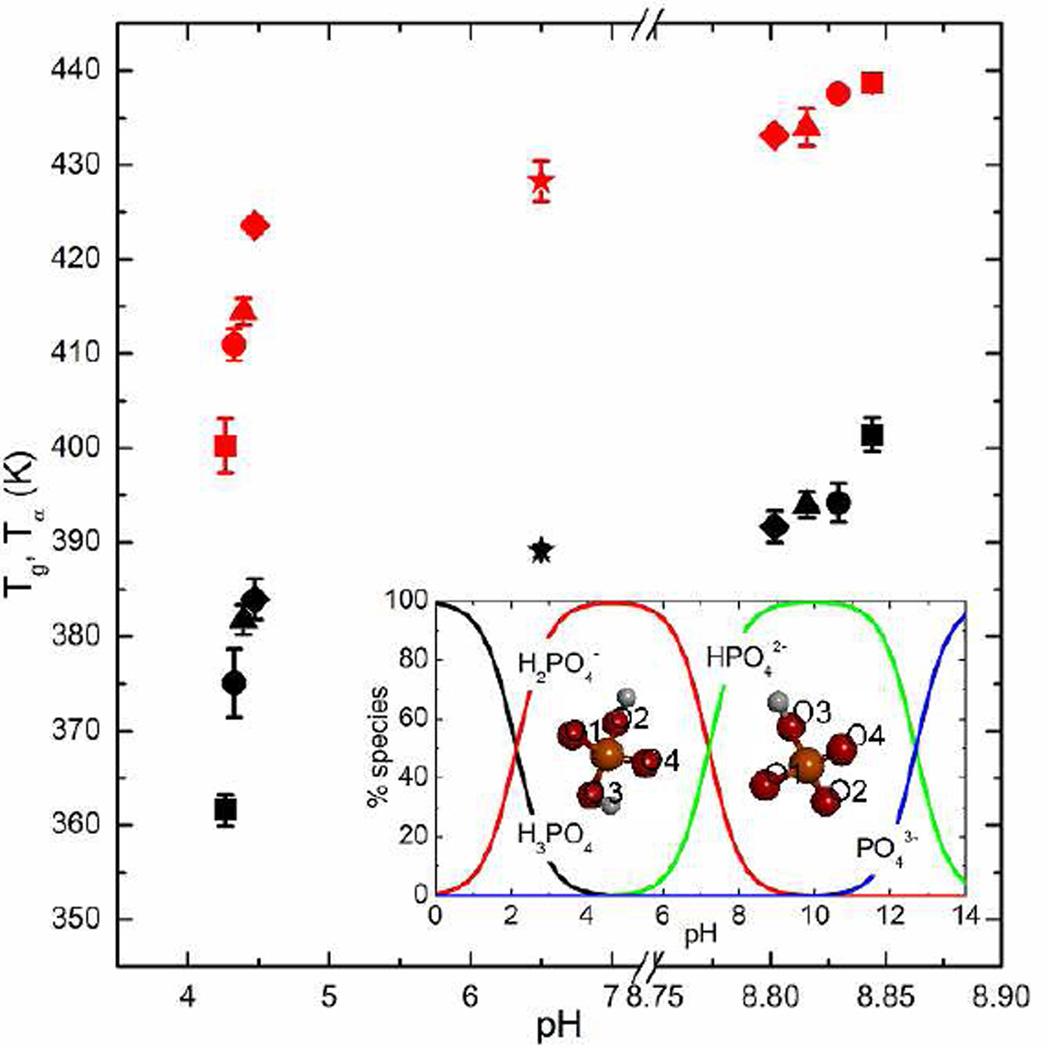
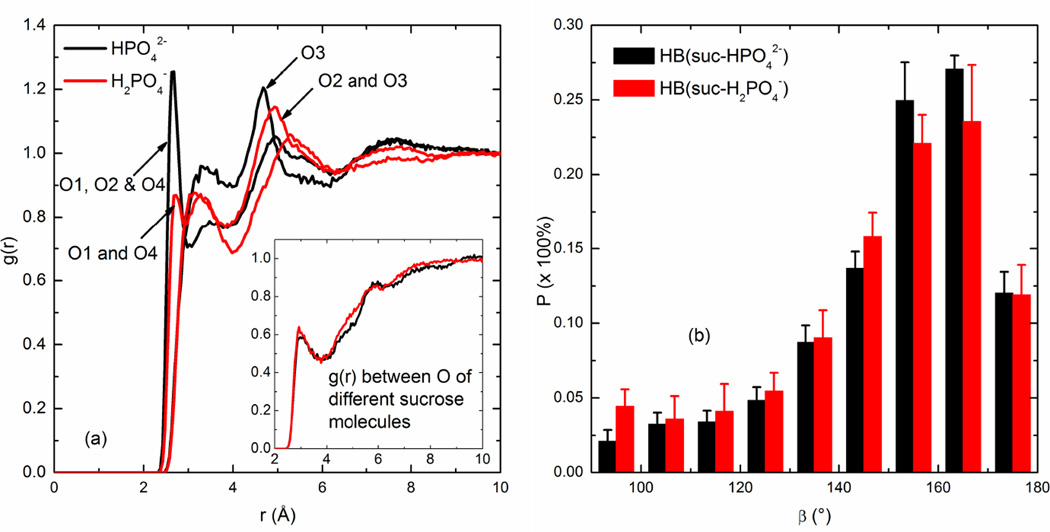
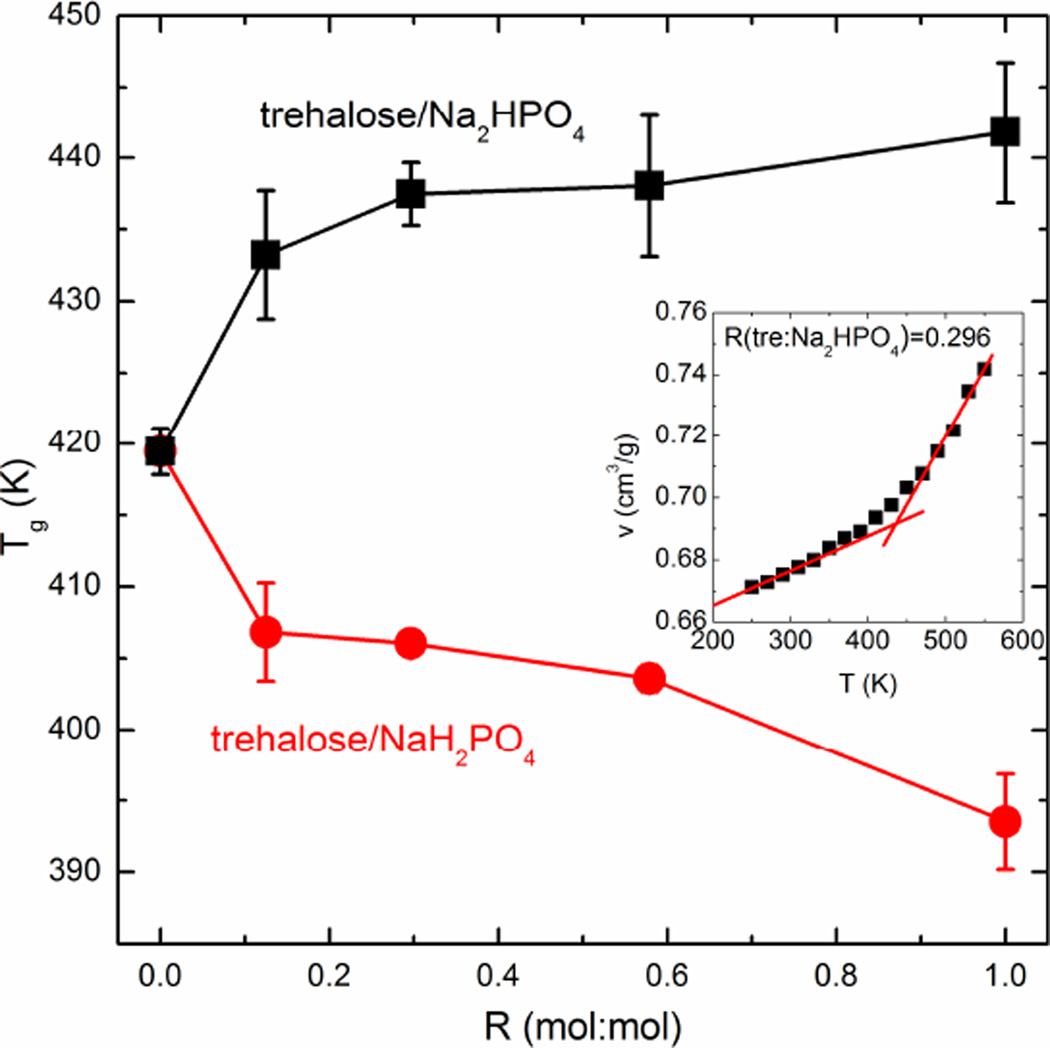
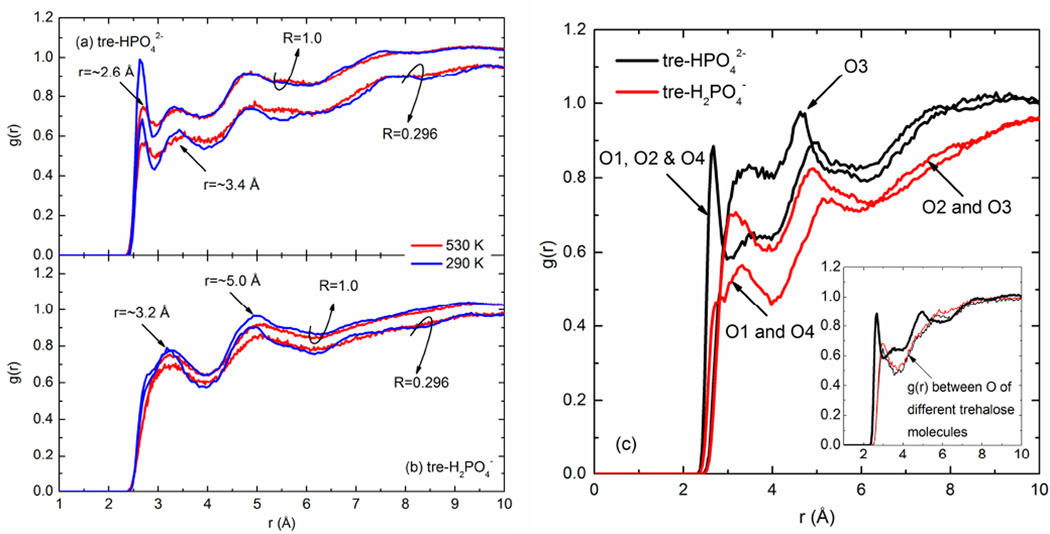
The glass transition temperature (Tg) and the α-relaxation temperature (Tα) of dehydrated trehalose/sodium phosphate mixtures (monobasic or dibasic) were determined by differential scanning calorimetry and dynamic mechanical analysis, respectively. Molecular dynamics simulations were also conducted to investigate the microscopic interactions between sugar molecules and phosphate ions. The hydrogen-bonding characteristics and the self-aggregation features of these mixtures were quantified and compared.
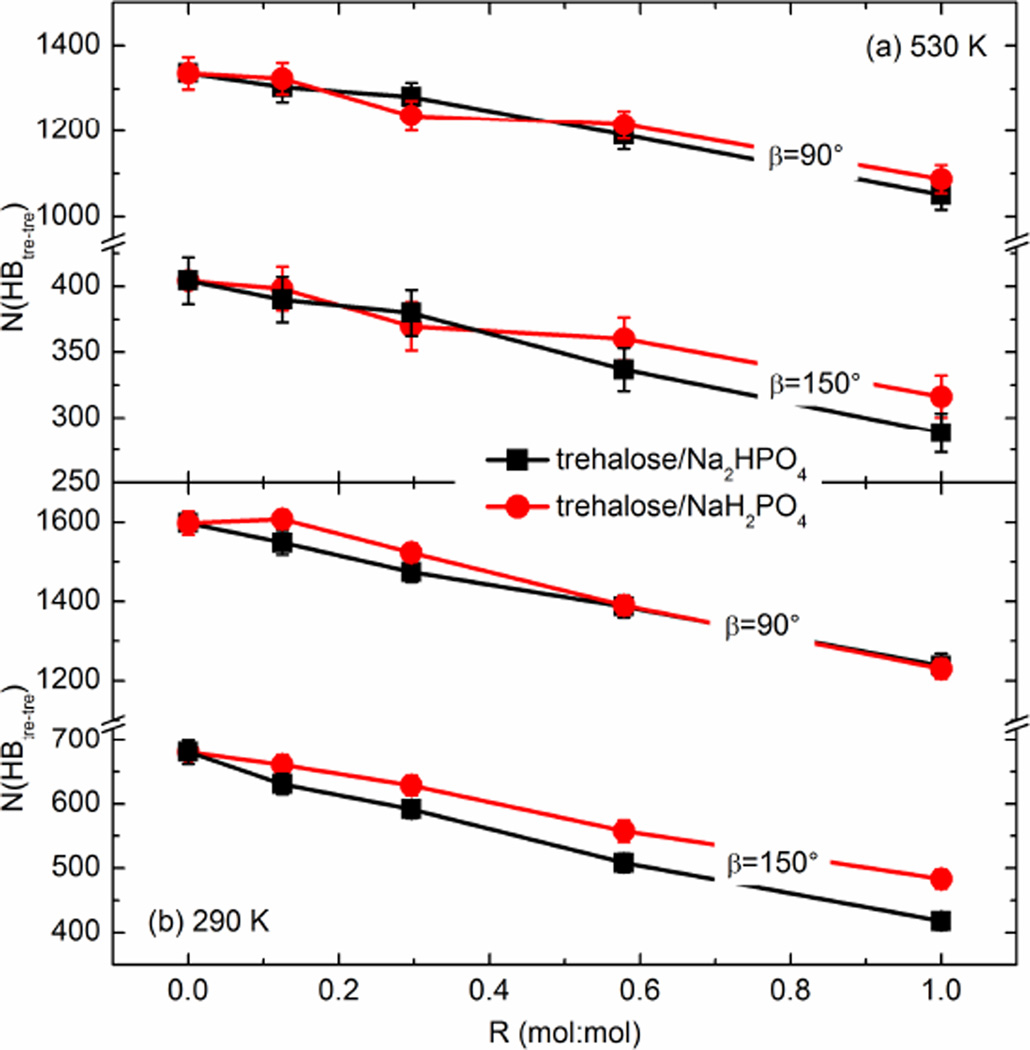
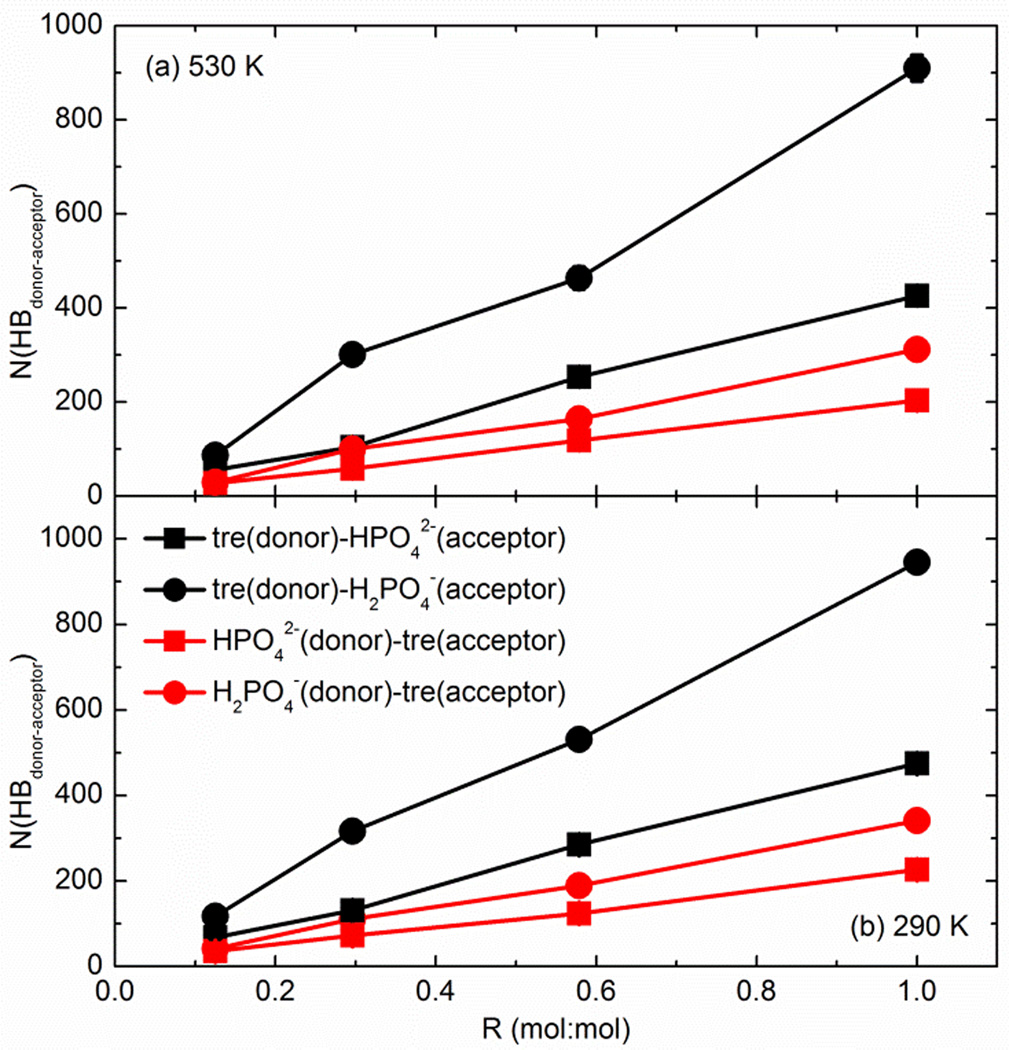
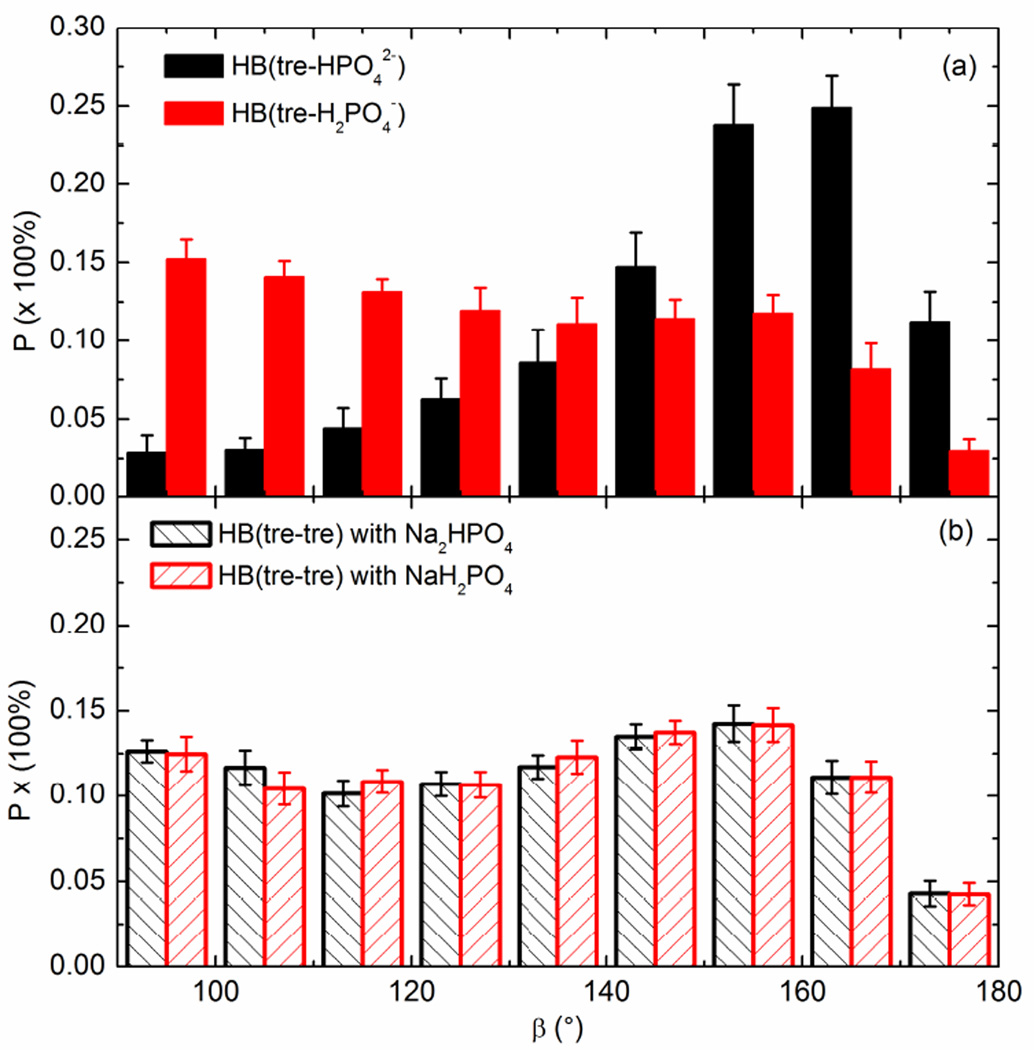
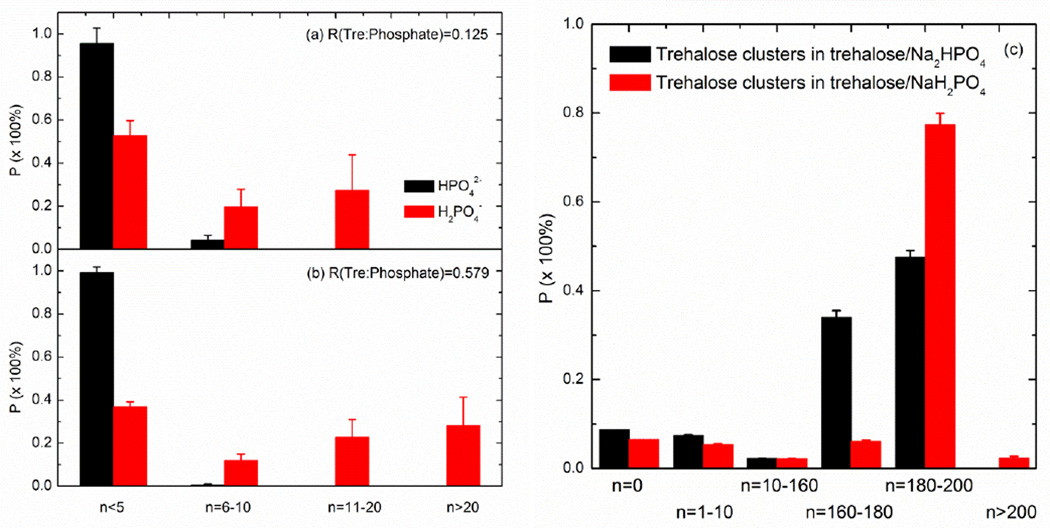
Thermal analysis measurements demonstrated that the addition of NaH2PO4 decreased both the glass transition temperature and the α-relaxation temperature of the dehydrated trehalose/NaH2PO4 mixture compared to trehalose alone while both Tg and Tα were increased by adding Na2HPO4 to pure trehalose. The hydrogen-bonding interactions between trehalose and HPO4(2-) were found to be stronger than both the trehalose-trehalose hydrogen bonds and those formed between trehalose and H2PO4(-). The HPO4(2-) ions also aggregated into smaller clusters than H2PO4(-) ions.
The trehalose/Na2HPO4 mixture yielded a higher T g than pure trehalose because marginally self-aggregated HPO4(2-) ions established a strengthened hydrogen-bonding network with trehalose molecules. In contrast H2PO4(-) ions served only as plasticizers, resulting in a lower Tg of the mixtures than trehalose alone, creating large-sized ionic pockets, weakening interactions, and disrupting the original hydrogen-bonding network amongst trehalose molecules.
本研究旨在了解糖分子与磷酸根离子之间的相互作用如何影响其混合物的玻璃化转变温度,以及对药物制剂的影响。
分别通过差示扫描量热法和动态力学分析测定脱水海藻糖/磷酸钠混合物(磷酸二氢钠或磷酸氢二钠)的玻璃化转变温度(Tg)和α-松弛温度(Tα)。还进行了分子动力学模拟以研究糖分子与磷酸根离子之间的微观相互作用。对这些混合物的氢键特征和自聚集特性进行了量化和比较。
热分析测量表明,与单独的海藻糖相比,添加磷酸二氢钠降低了脱水海藻糖/磷酸二氢钠混合物的玻璃化转变温度和α-松弛温度,而向纯海藻糖中添加磷酸氢二钠则使Tg和Tα均升高。发现海藻糖与HPO4(2-)之间的氢键相互作用强于海藻糖-海藻糖氢键以及海藻糖与H2PO4(-)之间形成的氢键。HPO4(2-)离子也比H2PO4(-)离子聚集形成更小的簇。
海藻糖/磷酸氢二钠混合物产生的Tg高于纯海藻糖,因为略微自聚集的HPO4(2-)离子与海藻糖分子建立了强化的氢键网络。相比之下,H2PO4(-)离子仅作为增塑剂,导致混合物的Tg低于单独的海藻糖,形成大尺寸的离子口袋,削弱相互作用,并破坏海藻糖分子之间原有的氢键网络。