Agboola Stephen, Flanagan Clare, Searl Meghan, Elfiky Aymen, Kvedar Joseph, Jethwani Kamal
Partners Healthcare Center for Connected Health, Boston, MA, United States.
JMIR Res Protoc. 2014 Dec 23;3(4):e79. doi: 10.2196/resprot.4041.
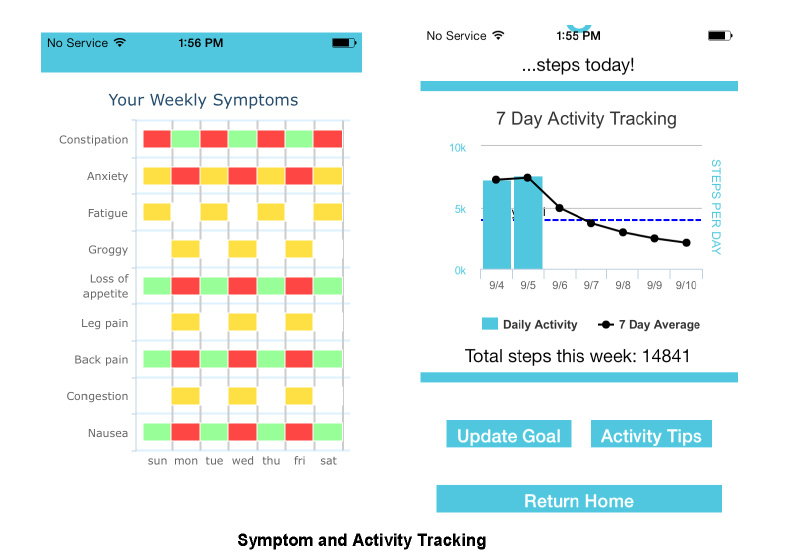
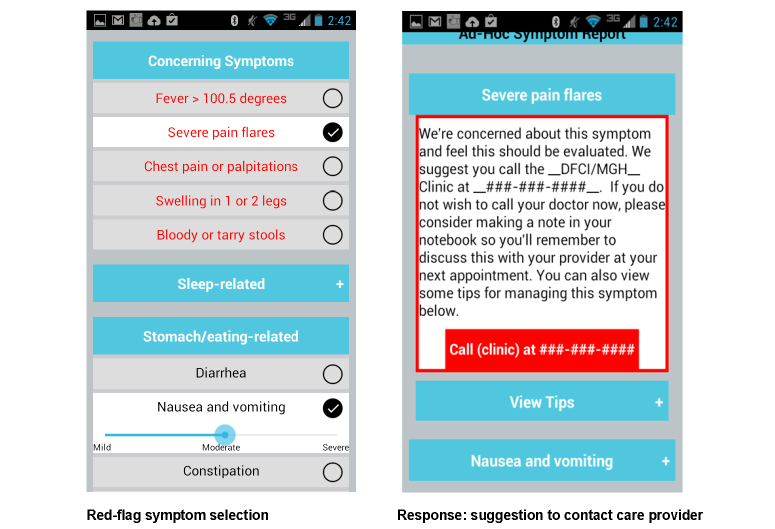
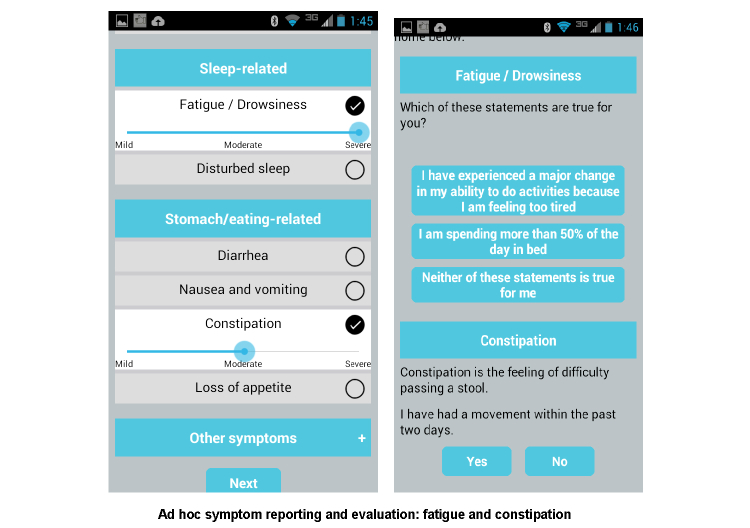
The widespread and increasing use of oral anti-cancer medications has been ushered in by a rapidly increasing understanding of cancer pathophysiology. Furthermore, their popular ease of administration and potential cost savings has highlighted their central position in the health care system as a whole. These facts have heightened appreciation of the unique challenges associated with the use of oral anti-cancer medications; especially in the long-term use of these medications and the associated side effects that may impede optimal adherence to their use. Therefore, we developed ChemOtheRapy Assistant, CORA, a personalized mobile phone-based self-management application to help cancer patients on oral anti-cancer medications.
Our objective is to evaluate the effect of CORA on adherence to oral anti-cancer medications and other clinically relevant outcomes in the management of patients with renal and prostate cancer.
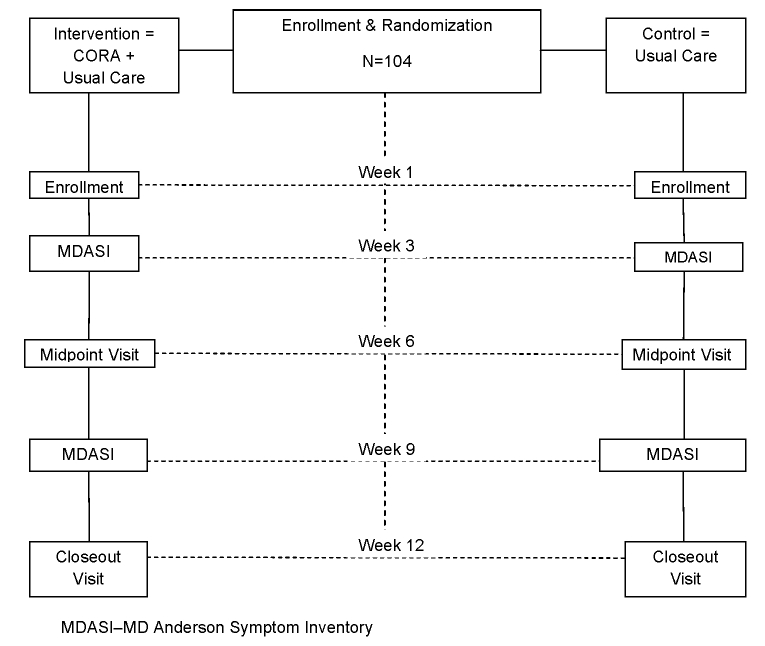
The study will be implemented as a 2-parallel group randomized controlled trial in 104 patients with renal or prostate cancer on oral anti-cancer medications over a 3-month study period. The intervention group will use CORA in addition to usual care for self-management while the control group will continue care as usual. Medication adherence will be measured objectively by a Medication Event Monitoring System device and is defined as the percentage of prescribed doses taken. We will also assess the effect of the intervention on cancer-related symptoms measured by the MD Anderson Symptom Inventory and unplanned hospital utilizations. Other outcomes that will be measured at study start, midpoint, and endpoint are health-related quality of life, cancer-related fatigue, and anxiety. Group differences in medication adherence will be examined by t tests or by non-parametric Mann-Whitney tests if the data are not normally distributed. Logistic regression will be used to identify potential predictors of adherence.
We expect to have results for this study before the end of 2016.
This novel mobile phone-enabled, multimodal self-management and educational intervention could lead to improvements in clinical outcomes and serve as a foundation for future mHealth research in improving outcomes for patients on oral anti-cancer medications.
随着对癌症病理生理学的认识迅速增加,口服抗癌药物的使用日益广泛。此外,其给药方式简便且可能节省成本,这凸显了它们在整个医疗保健系统中的核心地位。这些事实使人们更加认识到与口服抗癌药物使用相关的独特挑战;尤其是在长期使用这些药物以及可能妨碍最佳用药依从性的相关副作用方面。因此,我们开发了化疗助手(CORA),这是一款基于手机的个性化自我管理应用程序,旨在帮助服用口服抗癌药物的癌症患者。
我们的目的是评估CORA对肾癌和前列腺癌患者口服抗癌药物依从性及其他临床相关结局的影响。
该研究将作为一项双平行组随机对照试验,在104例服用口服抗癌药物的肾癌或前列腺癌患者中进行,为期3个月。干预组除接受常规护理进行自我管理外,还将使用CORA,而对照组将继续接受常规护理。药物依从性将通过药物事件监测系统设备进行客观测量,定义为所服用规定剂量的百分比。我们还将评估干预措施对通过MD安德森症状量表测量的癌症相关症状以及非计划住院率的影响。在研究开始、中期和终点测量的其他结局包括健康相关生活质量、癌症相关疲劳和焦虑。如果数据非正态分布,将通过t检验或非参数曼-惠特尼检验来检查药物依从性的组间差异。将使用逻辑回归来确定依从性的潜在预测因素。
我们预计在2016年底前得出本研究的结果。
这种新型的基于手机的多模式自我管理和教育干预可能会改善临床结局,并为未来移动健康研究改善口服抗癌药物患者的结局奠定基础。