Phillips Jane L, Heneka Nicole, Lovell Melanie, Lam Lawrence, Davidson Patricia, Boyle Frances, McCaffrey Nikki, Fielding Sally, Shaw Tim
University of Technology Sydney, PO Box 123, Ultimo, NSW, 2007, Australia.
University of Sydney, City Rd, Camperdown, NSW, 2006, Australia.
Trials. 2019 Jan 18;20(1):62. doi: 10.1186/s13063-018-3152-z.
Variations in care models contribute to cancer pain being under-recognised and under-treated in half of all patients with cancer. International and national cancer pain management guidelines are achievable with minimal investment but require practice changes. While much of the cancer pain research over the preceding decades has focused on management interventions, little attention has been given to achieving better adherence to recommended cancer pain guideline screening and assessment practices. This trial aims to reduce unrelieved cancer pain by improving cancer and palliative doctors' and nurses' ('clinicians') pain assessment capabilities through a targeted inter-professional clinical education intervention delivered to participants' mobile devices ('mHealth').
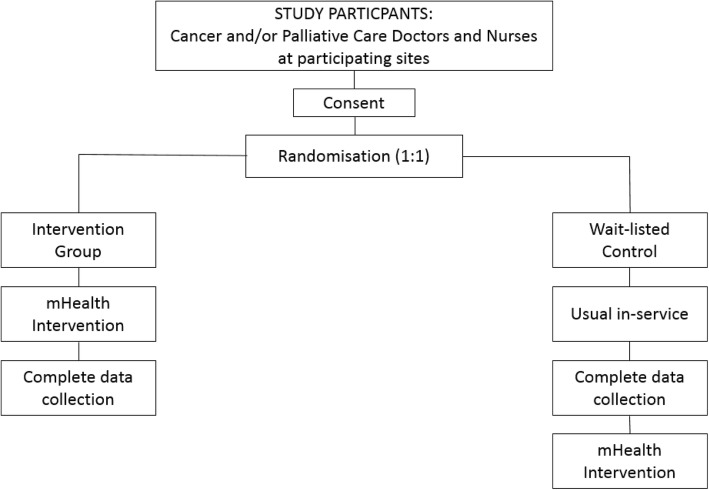
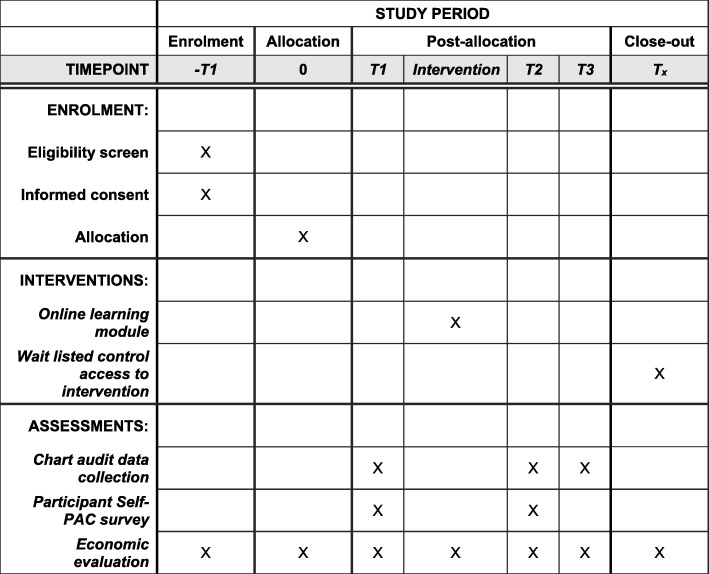
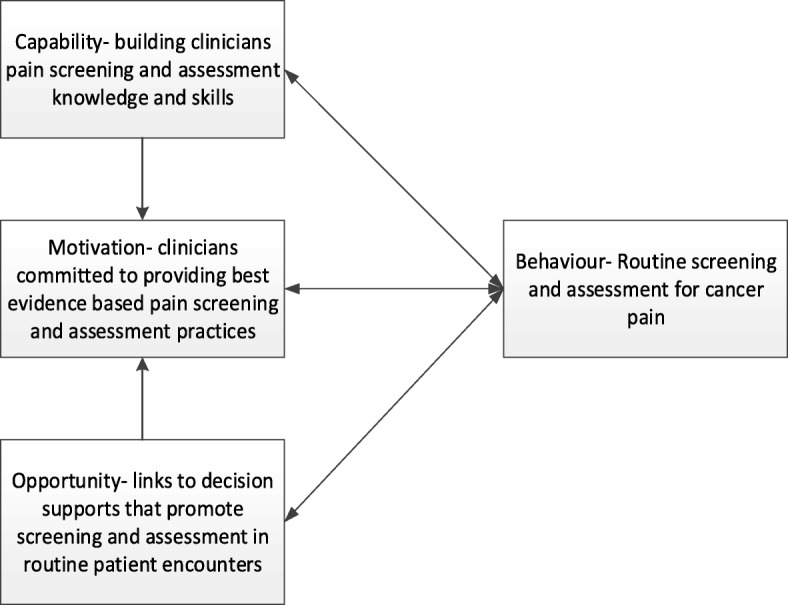
A wait-listed, randomised control trial design. Cancer and/or palliative care physicians and nurses employed at one of the six participating sites across Australia will be eligible to participate in this trial and, on enrolment, will be allocated to the active or wait-listed arm. Participants allocated to the active arm will be invited to complete the mHealth cancer pain assessment intervention. In this trial, mHealth is defined as medical or public health practice supported by mobile devices (i.e. phones, patient monitoring devices, personal digital assistants and other wireless devices). This mHealth intervention integrates three evidence-based elements, namely: the COM-B theoretical framework; spaced learning pedagogy; and audit and feedback. This intervention will be delivered via the QStream online platform to participants' mobile devices over four weeks. The trial will determine if a tailored mHealth intervention, targeting clinicians' cancer pain assessment capabilities, is effective in reducing self-reported cancer pain scores, as measured by a Numerical Rating Scale (NRS).
If this mHealth intervention is found to be effective, in addition to improving cancer pain assessment practices, it will provide a readily transferable evidence-based framework that could readily be applied to other evidence practice gaps and a scalable intervention that could be administered simultaneously to multiple clinicians across diverse geographical locations. Moreover, if found to be cost-effective, it will help transform clinical continuing professional development. In summary, this mHealth intervention will provide health services with an opportunity to offer an evidence-based, pedagogically robust, cost-effective, scalable training alternative.
Australian New Zealand Clinical Trials Registry (ANZCTR), ACTRN12618001103257 . Registered on 3 July 2018.
护理模式的差异导致一半的癌症患者的癌痛未得到充分认识和治疗。国际和国家癌症疼痛管理指南只需极少投入即可实现,但需要改变医疗实践。尽管在过去几十年里,许多癌症疼痛研究都集中在管理干预措施上,但对于更好地遵循推荐的癌症疼痛指南筛查和评估实践却很少关注。本试验旨在通过向参与者的移动设备(“移动健康”)提供有针对性的跨专业临床教育干预,提高癌症和姑息治疗医生及护士(“临床医生”)的疼痛评估能力,从而减轻未缓解的癌痛。
采用等待名单、随机对照试验设计。在澳大利亚六个参与地点之一工作的癌症和/或姑息治疗医生及护士有资格参与本试验,入选后将被分配到试验组或等待名单组。分配到试验组的参与者将被邀请完成移动健康癌症疼痛评估干预。在本试验中,移动健康被定义为由移动设备(如手机、患者监测设备、个人数字助理和其他无线设备)支持的医疗或公共卫生实践。这种移动健康干预整合了三个基于证据的要素,即:COM-B理论框架;间隔学习教学法;以及审核与反馈。该干预将通过QStream在线平台在四周内发送到参与者的移动设备上。试验将确定针对临床医生癌症疼痛评估能力的定制移动健康干预是否能有效降低通过数字评分量表(NRS)测量的自我报告的癌症疼痛评分。
如果发现这种移动健康干预有效,除了改善癌症疼痛评估实践外,它还将提供一个易于转移的基于证据的框架,该框架可轻松应用于其他证据实践差距,以及一种可扩展的干预措施,可同时应用于不同地理位置的多名临床医生。此外,如果被证明具有成本效益,它将有助于改变临床继续职业发展。总之,这种移动健康干预将为卫生服务机构提供一个机会,提供一种基于证据、教学稳健、成本效益高、可扩展的培训选择。
澳大利亚新西兰临床试验注册中心(ANZCTR),ACTRN12618001103257。于2018年7月3日注册。