School of Psychology, University of Birmingham Birmingham, UK.
School of Biosciences, University of Birmingham Birmingham, UK.
Front Psychol. 2014 Dec 4;5:1395. doi: 10.3389/fpsyg.2014.01395. eCollection 2014.
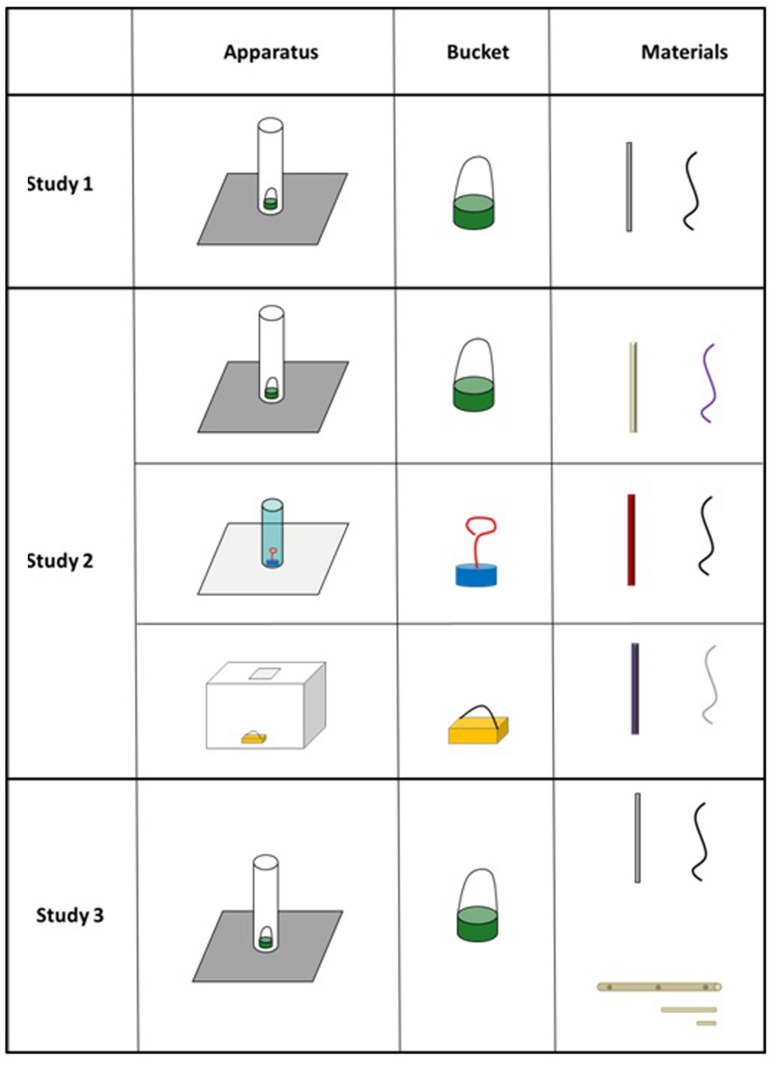
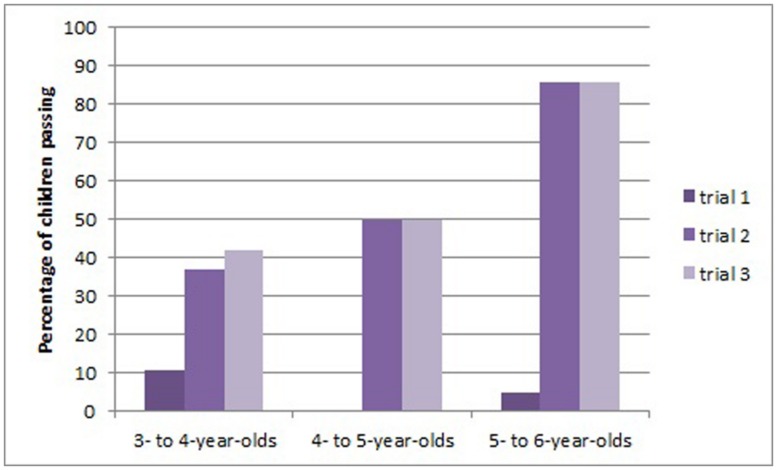
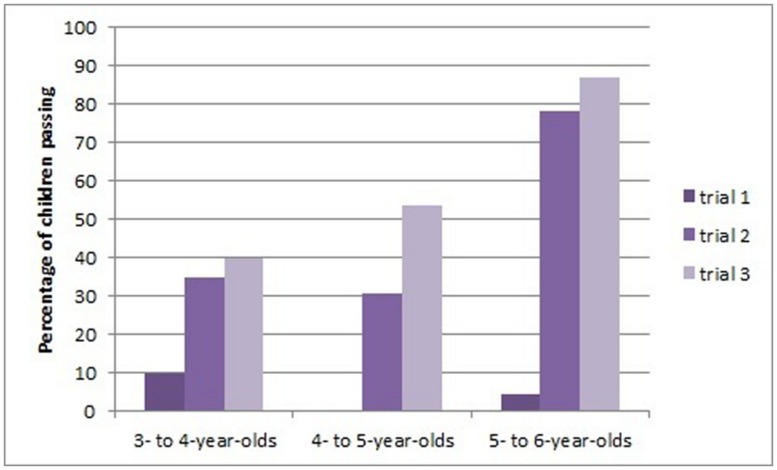
In three studies, we explored the retention and transfer of tool-making knowledge, learnt from an adult demonstration, to other temporal and task contexts. All studies used a variation of a task in which children had to make a hook tool to retrieve a bucket from a tall transparent tube. Children who failed to innovate the hook tool independently saw a demonstration. In Study 1, we tested children aged 4-6 years (N = 53) who had seen the original demonstration 3 months earlier. Performance was excellent at the second time, indicating that children's knowledge was retained over the 3 month period. In Studies 2 and 3 we explored transfer of the new knowledge to other tasks. In Study 2, children were given two variants of the apparatus that differed in surface characteristics (e.g., shape and color). Participants generalized their knowledge to these new apparatuses even though the new pipecleaner also differed in size and color. Five- to 6-year-olds (N = 22) almost always transferred their knowledge to problems where the same tool had to be made. Younger, 3- to 5-year-olds' (N = 46), performance was more variable. In Study 3, 4- to 7-year-olds (N = 146) saw a demonstration of hook making with a pipecleaner, but then had to make a tool by combining pieces of wooden dowel (or vice versa: original training on dowel, transfer to pipecleaner). Children did not transfer their tool-making knowledge to the new material. Children retained tool-making knowledge over time and transferred their knowledge to new situations in which they needed to make a similar tool from similar materials, but not different materials. We concluded that children's ability to use tool-making knowledge in novel situations is likely to depend on memory and analogical reasoning, with the latter continuing to develop during middle childhood.
在三项研究中,我们探讨了从成人示范中学习的工具制造知识的保留和迁移,以适应其他时间和任务情境。所有研究都使用了一种变体任务,要求孩子们制作一个钩子工具,以从一个高而透明的管子中取回一个桶。那些未能独立创新钩子工具的孩子会看到一个示范。在研究 1 中,我们测试了年龄在 4-6 岁的孩子(N = 53),他们在 3 个月前看过原始示范。第二次表现非常出色,表明孩子的知识在 3 个月的时间内得到了保留。在研究 2 和 3 中,我们探讨了新知识向其他任务的迁移。在研究 2 中,孩子们得到了两种不同表面特征(例如形状和颜色)的装置变体。尽管新的塑料扎线带在大小和颜色上也有所不同,参与者还是将他们的知识推广到了这些新的装置上。5 到 6 岁的孩子(N = 22)几乎总是将他们的知识转移到需要制作相同工具的问题上。年龄较小的 3 到 5 岁的孩子(N = 46)的表现则更为多变。在研究 3 中,4 到 7 岁的孩子(N = 146)看到了用塑料扎线带制作钩子的示范,但后来必须用木钉制作工具(或者反之亦然:原始训练在木钉上,转移到塑料扎线带上)。孩子们没有将他们的工具制造知识转移到新材料上。孩子们随着时间的推移保留了工具制造知识,并将其知识转移到需要从类似材料制作类似工具的新情境中,但不能转移到不同的材料。我们的结论是,孩子们在新情境中使用工具制造知识的能力可能取决于记忆和类比推理,而后者在整个童年中期仍在发展。