Tianjin Key Laboratory of Exercise Physiology and Sports Medicine, Department of Health & Exercise Science, Tianjin University of Sport, Tianjin 300381, China ; Department of Military Training Medicines, Logistics University of Chinese People's Armed Police Force, Tianjin 300162, China.
Department of Interventional Neuroradiology, Chinese People's Second Artillery General Hospital, Beijing 100080, China.
Oxid Med Cell Longev. 2014;2014:834502. doi: 10.1155/2014/834502. Epub 2014 Nov 5.
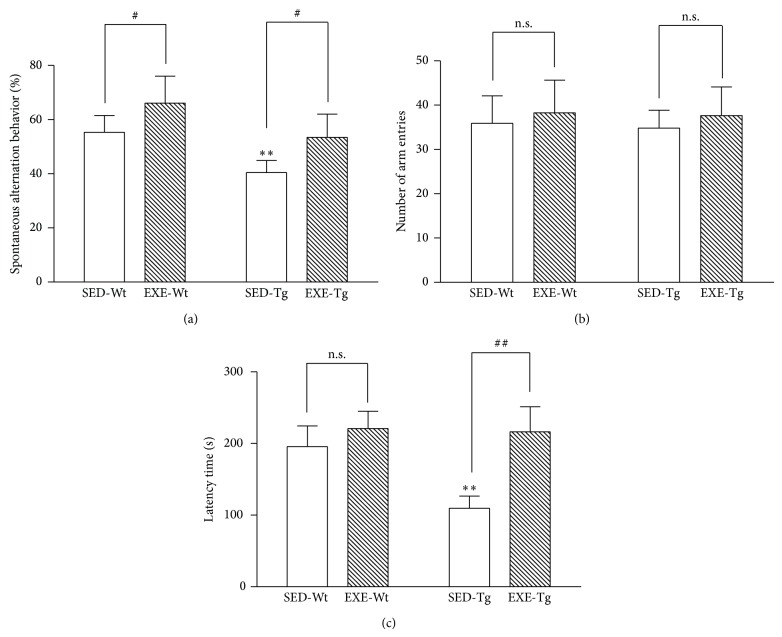
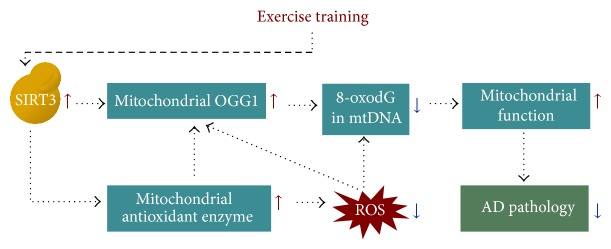
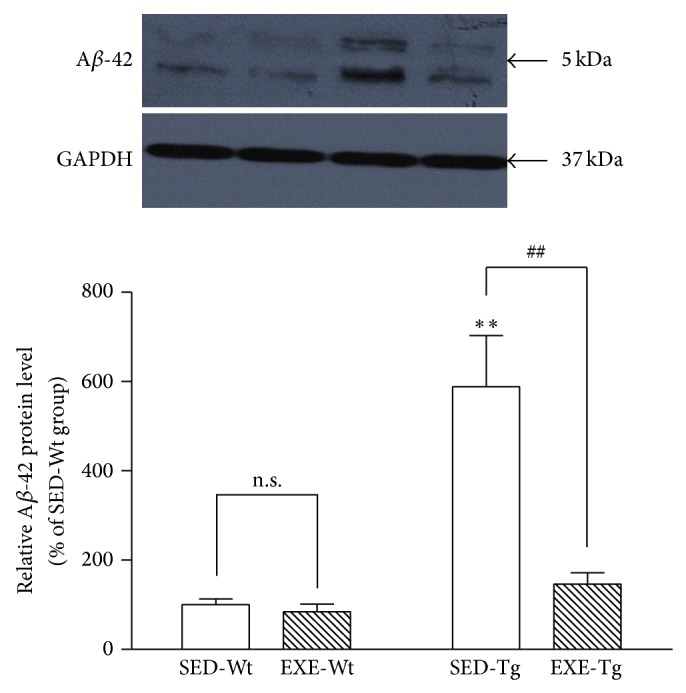
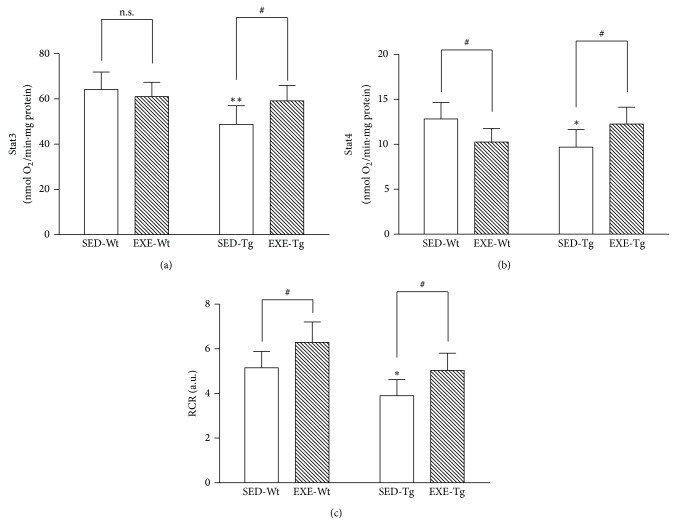
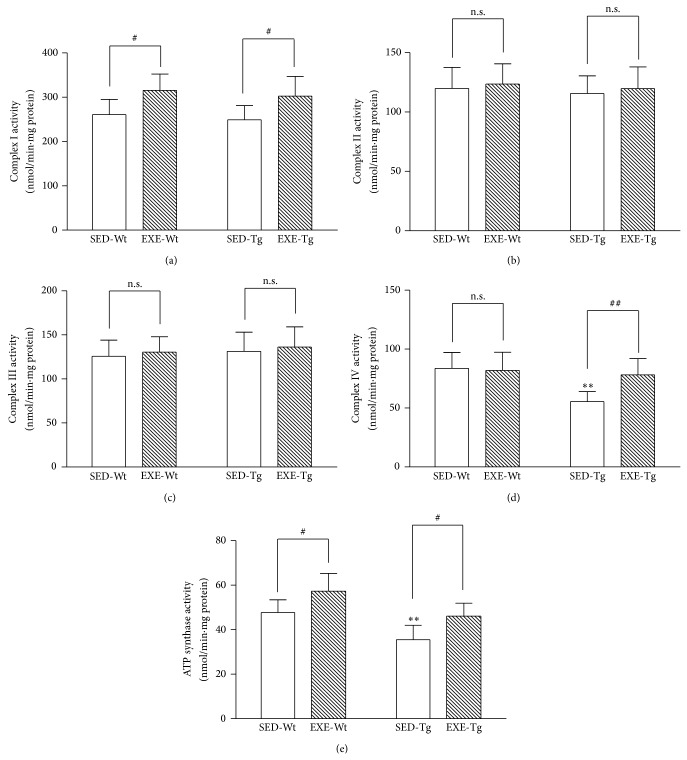
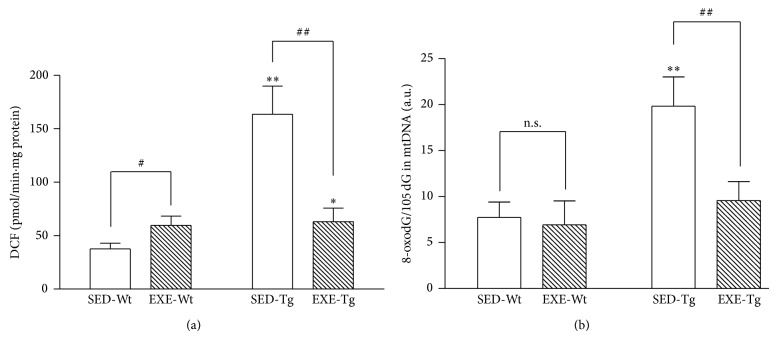
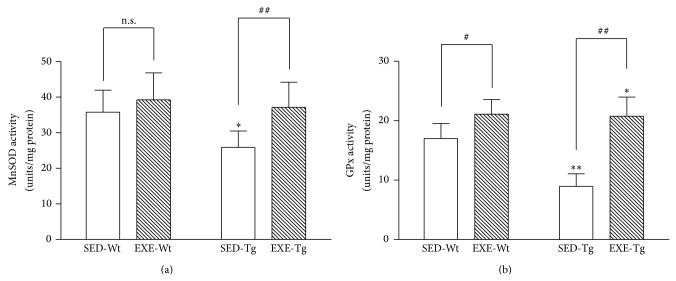
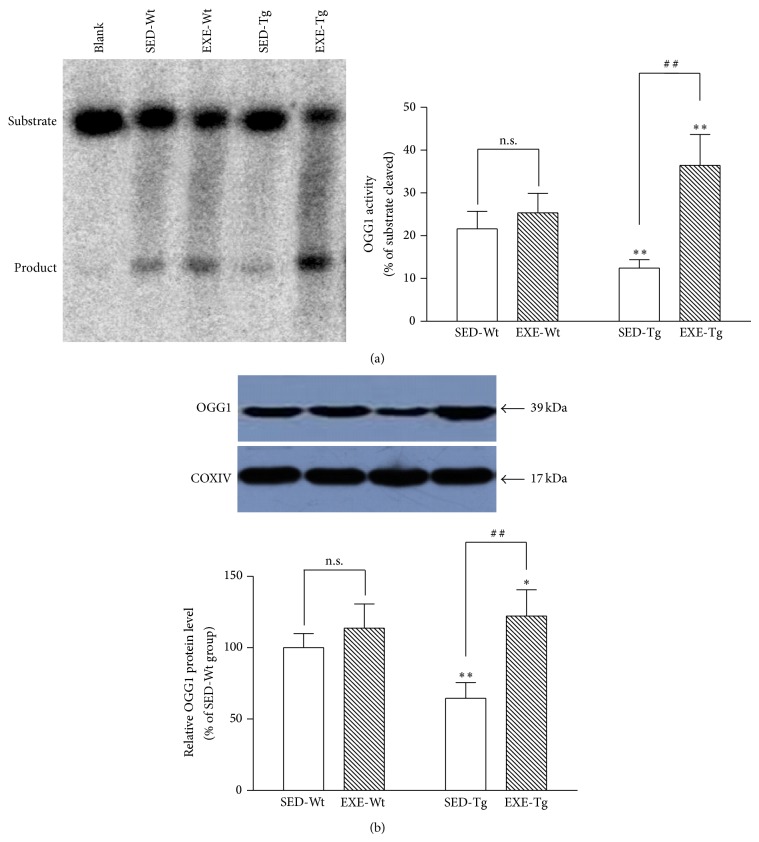
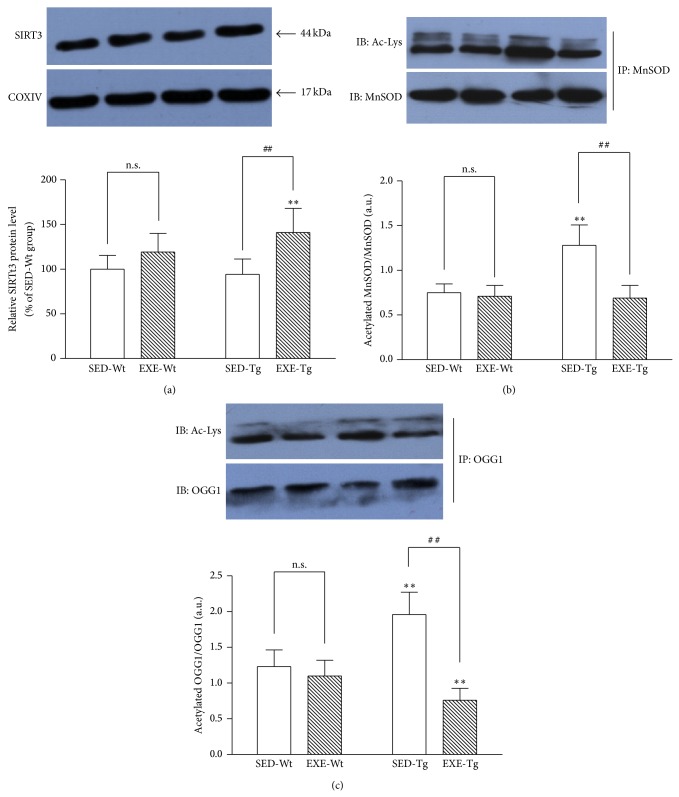
Improving mitochondrial function has been proposed as a reasonable therapeutic strategy to reduce amyloid-β (Aβ) load and to modify the progression of Alzheimer's disease (AD). However, the relationship between mitochondrial adaptation and brain neuroprotection caused by physical exercise in AD is poorly understood. This study was undertaken to investigate the effects of long-term treadmill exercise on mitochondrial 8-oxoguanine DNA glycosylase-1 (OGG1) level, mtDNA oxidative damage, and mitochondrial function in the hippocampus of APP/PS1 transgenic mouse model of AD. In the present study, twenty weeks of treadmill training significantly improved the cognitive function and reduced the expression of Aβ-42 in APP/PS1 transgenic (Tg) mice. Training also ameliorated mitochondrial respiratory function by increasing the complexes I, and IV and ATP synthase activities, whereas it attenuated ROS generation and mtDNA oxidative damage in Tg mice. Furthermore, the impaired mitochondrial antioxidant enzymes and mitochondrial OGG1 activities seen in Tg mice were restored with training. Acetylation level of mitochondrial OGG1 and MnSOD was markedly suppressed in Tg mice after exercise training, in parallel with increased level of SIRT3. These findings suggest that exercise training could increase mtDNA repair capacity in the mouse hippocampus, which in turn would result in protection against AD-related mitochondrial dysfunction and phenotypic deterioration.
提高线粒体功能被认为是一种合理的治疗策略,可以减少淀粉样蛋白-β(Aβ)负荷并改变阿尔茨海默病(AD)的进展。然而,运动引起的线粒体适应与大脑神经保护之间的关系在 AD 中还了解甚少。本研究旨在探讨长期跑步机运动对 APP/PS1 转基因 AD 小鼠模型海马中线粒体 8-氧鸟嘌呤 DNA 糖基化酶-1(OGG1)水平、mtDNA 氧化损伤和线粒体功能的影响。在本研究中,20 周的跑步机训练显著改善了 APP/PS1 转基因(Tg)小鼠的认知功能,降低了 Aβ-42 的表达。训练还通过增加复合物 I、IV 和 ATP 合酶的活性改善了线粒体呼吸功能,同时减轻了 Tg 小鼠的 ROS 生成和 mtDNA 氧化损伤。此外,训练还恢复了 Tg 小鼠受损的线粒体抗氧化酶和线粒体 OGG1 活性。运动训练后,Tg 小鼠的线粒体 OGG1 和 MnSOD 的乙酰化水平明显受到抑制,同时 SIRT3 水平升高。这些发现表明,运动训练可以增加小鼠海马中线粒体的 mtDNA 修复能力,从而防止与 AD 相关的线粒体功能障碍和表型恶化。