Liu Xiaodong, Luo Yantao, Mohamed Osama Abdalla, Liu Dongying, Wei Gehong
State Key Laboratory of Soil Erosion and Dryland Farming on the Loess Plateau,, College of Life Sciences, Northwest A&F University, Yangling 712100, Shaanxi, China.
BMC Microbiol. 2014 Dec 24;14:1. doi: 10.1186/s12866-014-0319-y.
Mesorhizobium alhagi CCNWXJ12-2 is a α-proteobacterium which could be able to fix nitrogen in the nodules formed with Alhagi sparsifolia in northwest of China. Desiccation and high salinity are the two major environmental problems faced by M. alhagi CCNWXJ12-2. In order to identify genes involved in salt-stress adaption, a global transcriptional analysis of M. alhagi CCNWXJ12-2 growing under salt-free and high salt conditions was carried out. The next generation sequencing technology, RNA-Seq, was used to obtain the transcription profiles.
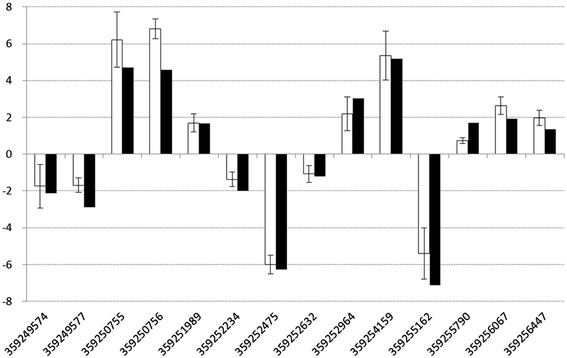
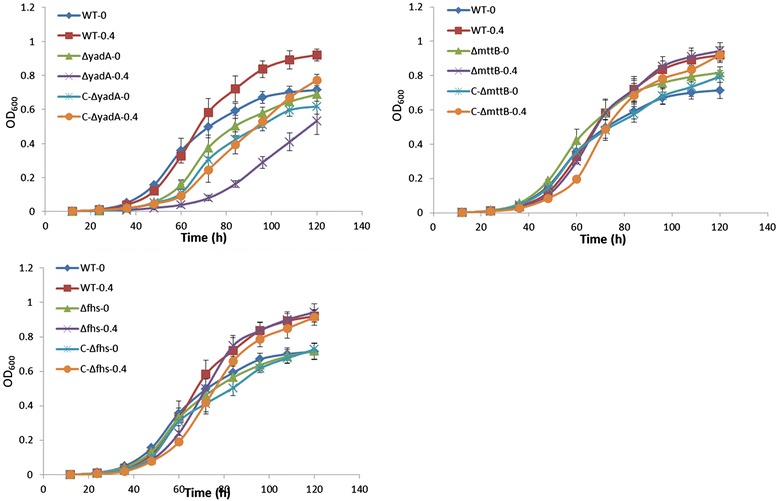
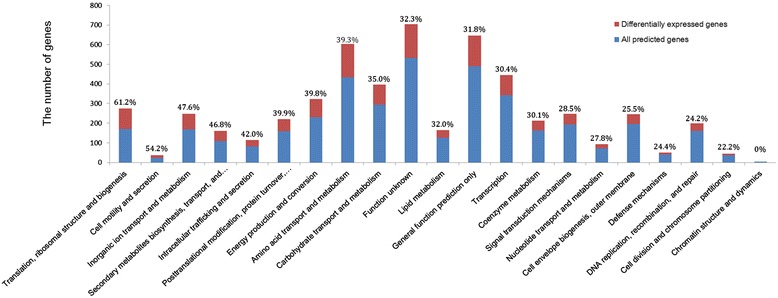
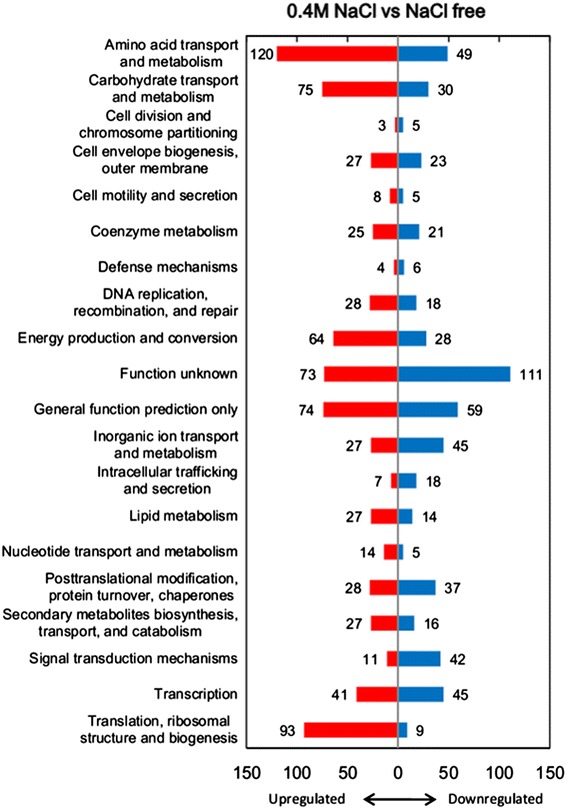
We have compared the transcriptome of M. alhagi growing in TY medium under high salt conditions (0.4 M NaCl) with salt free conditions as a control. A total of 1,849 differentially expressed genes (fold change ≧ 2) were identified and 933 genes were downregulated while 916 genes were upregulated under high salt condition. Except for the upregulation of some genes proven to be involved in salt resistance, we found that the expression levels of protein secretion systems were changed under high salt condition and the expression levels of some heat shock proteins were reduced by salt stress. Notably, a gene encoding YadA domain-containing protein (yadA), a gene encoding trimethylamine methyltransferase (mttB) and a gene encoding formate--tetrahydrofolate ligase (fhs) were highly upregulated. Growth analysis of the three gene knockout mutants under salt stress demonstrated that yadA was involved in salt resistance while the other two were not.
To our knowledge, this is the first report about transcriptome analysis of a rhizobia using RNA-Seq to elucidate the salt resistance mechanism. Our results showed the complex mechanism of bacterial adaption to salt stress and it was a systematic work for bacteria to cope with the high salinity environmental problems. Therefore, these results could be helpful for further investigation of the bacterial salt resistance mechanism.
苜蓿中华根瘤菌CCNWXJ12 - 2是一种α-变形菌,能够在中国西北部与稀疏苜蓿形成的根瘤中固氮。干燥和高盐度是苜蓿中华根瘤菌CCNWXJ12 - 2面临的两个主要环境问题。为了鉴定参与盐胁迫适应的基因,对在无盐和高盐条件下生长的苜蓿中华根瘤菌CCNWXJ12 - 2进行了全基因组转录分析。采用新一代测序技术RNA-Seq获得转录谱。
我们将在高盐条件(0.4 M NaCl)下于TY培养基中生长的苜蓿中华根瘤菌转录组与无盐条件下的转录组进行了比较,无盐条件作为对照。共鉴定出1849个差异表达基因(倍数变化≥2),其中933个基因下调,916个基因在高盐条件下上调。除了一些已证实参与抗盐性的基因上调外,我们发现高盐条件下蛋白质分泌系统的表达水平发生了变化,一些热休克蛋白的表达水平因盐胁迫而降低。值得注意的是,一个编码含YadA结构域蛋白的基因(yadA)、一个编码三甲胺甲基转移酶的基因(mttB)和一个编码甲酸 - 四氢叶酸连接酶的基因(fhs)高度上调。对这三个基因敲除突变体在盐胁迫下的生长分析表明,yadA参与抗盐性,而另外两个基因不参与。
据我们所知,这是首次关于利用RNA-Seq对根瘤菌进行转录组分析以阐明抗盐机制的报道。我们的结果显示了细菌适应盐胁迫的复杂机制,细菌应对高盐度环境问题是一项系统性工作。因此,这些结果有助于进一步研究细菌的抗盐机制。