Department of Pharmaceutical Sciences, School of Pharmacy, West Virginia University Morgantown, WV, USA ; Center for Neuroscience, Health Sciences Center, West Virginia University, Morgantown WV, USA ; Department of Neurosurgery, School of Medicine, West Virginia University, Morgantown WV, USA.
Center for Neuroscience, Health Sciences Center, West Virginia University, Morgantown WV, USA ; Department of Neurosurgery, School of Medicine, West Virginia University, Morgantown WV, USA.
Front Cell Neurosci. 2014 Dec 10;8:421. doi: 10.3389/fncel.2014.00421. eCollection 2014.
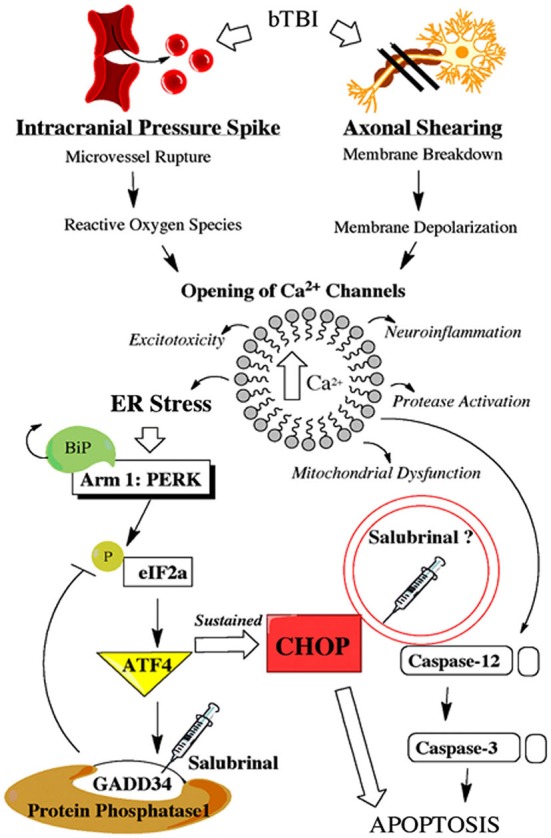
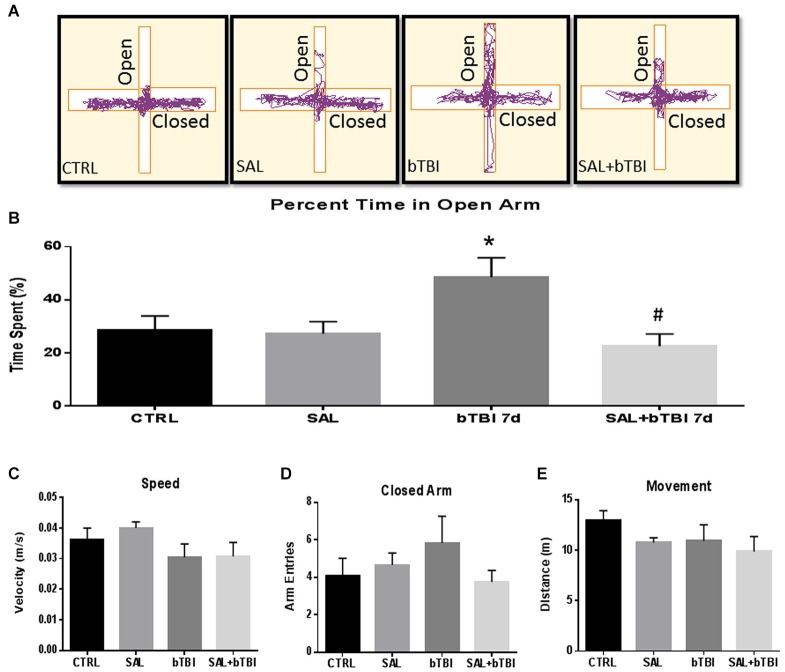
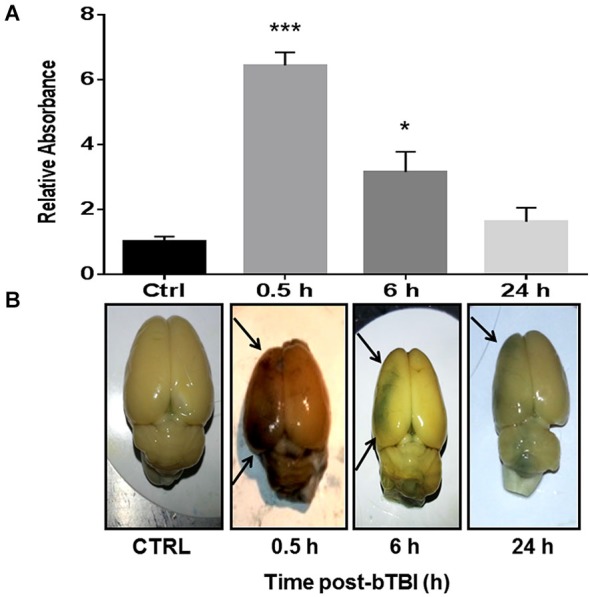
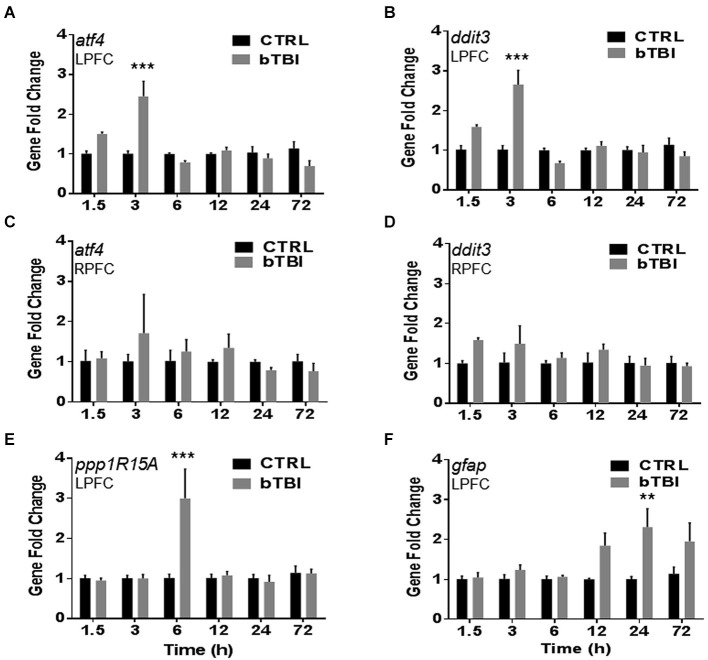
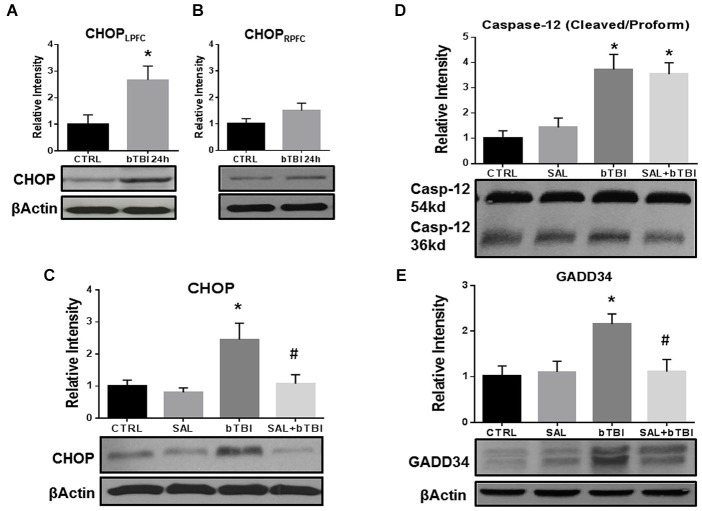
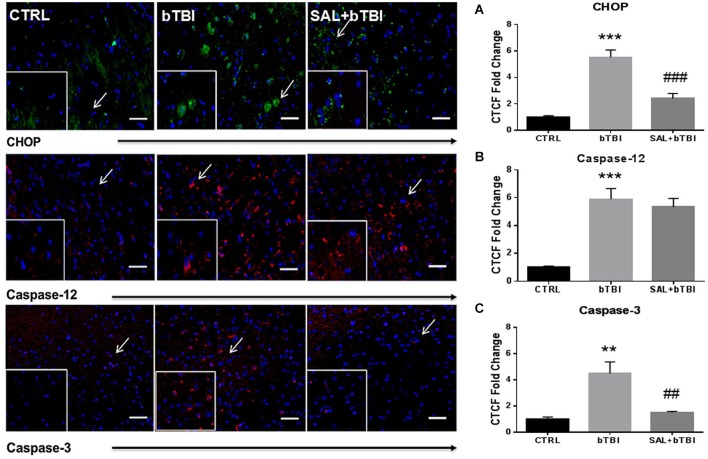
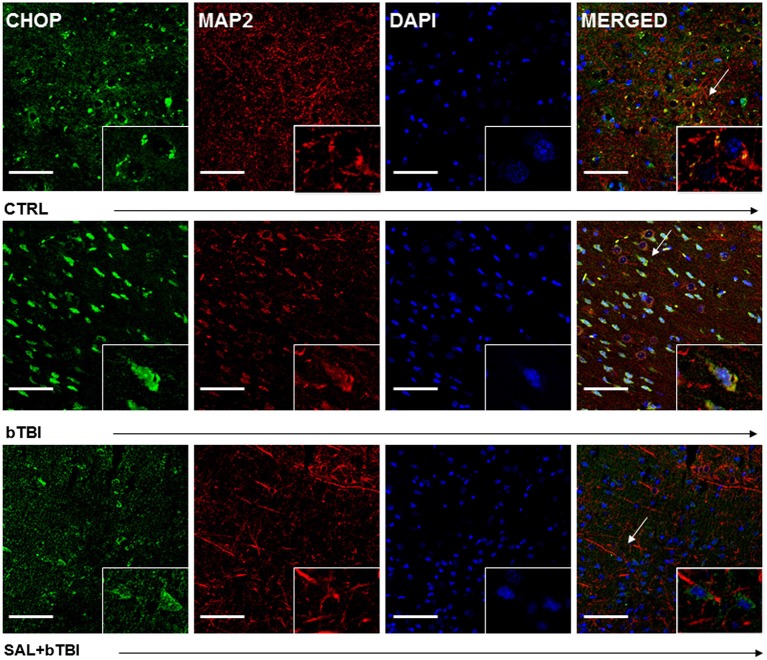
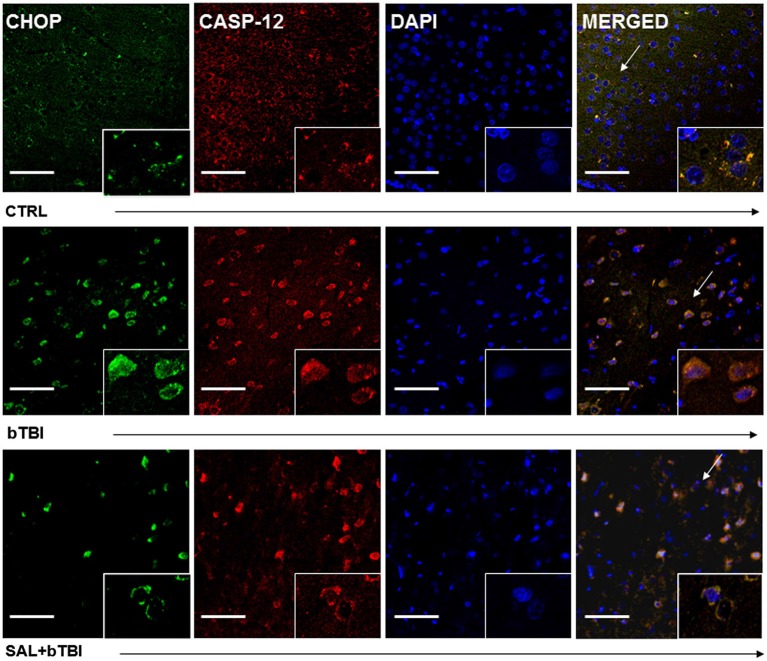
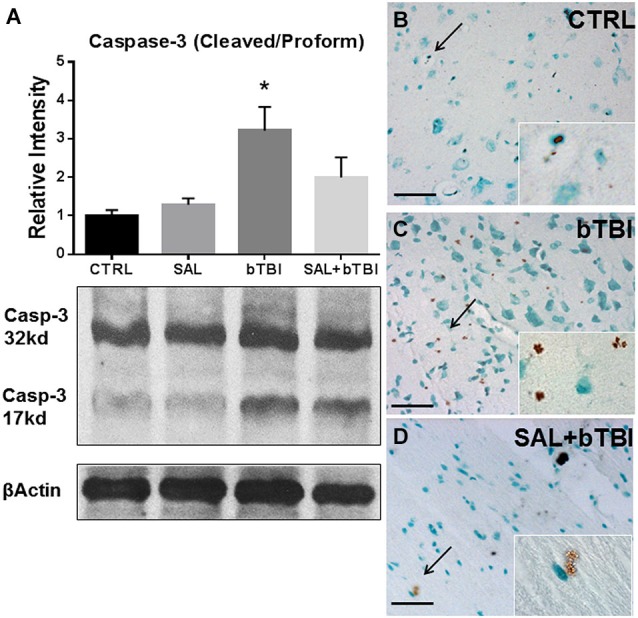
Neuronal injury following blast-induced traumatic brain injury (bTBI) increases the risk for neuropsychiatric disorders, yet the pathophysiology remains poorly understood. Blood-brain-barrier (BBB) disruption, endoplasmic reticulum (ER) stress, and apoptosis have all been implicated in bTBI. Microvessel compromise is a primary effect of bTBI and is postulated to cause subcellular secondary effects such as ER stress. What remains unclear is how these secondary effects progress to personality disorders in humans exposed to head trauma. To investigate this we exposed male rats to a clinically relevant bTBI model we have recently developed. The study examined initial BBB disruption using Evan's blue (EB), ER stress mechanisms, apoptosis and impulsive-like behavior measured with elevated plus maze (EPM). Large BBB openings were observed immediately following bTBI, and persisted for at least 6 h. Data showed increased mRNA abundance of stress response genes at 3 h, with subsequent increases in the ER stress markers C/EBP homologous protein (CHOP) and growth arrest and DNA damage-inducible protein 34 (GADD34) at 24 h. Caspase-12 and Caspase-3 were both cleaved at 24 h following bTBI. The ER stress inhibitor, salubrinal (SAL), was administered (1 mg/kg i.p.) to investigate its effects on neuronal injury and impulsive-like behavior associated with bTBI. SAL reduced CHOP protein expression, and diminished Caspase-3 cleavage, suggesting apoptosis attenuation. Interestingly, SAL also ameliorated impulsive-like behavior indicative of head trauma. These results suggest SAL plays a role in apoptosis regulation and the pathology of chronic disease. These observations provide evidence that bTBI involves ER stress and that the unfolded protein response (UPR) is a promising molecular target for the attenuation of neuronal injury.
爆炸引起的创伤性脑损伤(bTBI)后的神经元损伤增加了神经精神疾病的风险,但病理生理学仍知之甚少。血脑屏障(BBB)破坏、内质网(ER)应激和细胞凋亡都与 bTBI 有关。微血管损伤是 bTBI 的主要影响,据推测会导致 ER 应激等亚细胞的次级影响。目前尚不清楚暴露于头部创伤的人类中这些次级影响如何进展为人格障碍。为了研究这一点,我们将雄性大鼠暴露于我们最近开发的一种临床相关的 bTBI 模型中。该研究使用 Evans 蓝(EB)检查初始 BBB 破坏、ER 应激机制、凋亡和用高架十字迷宫(EPM)测量的冲动样行为。bTBI 后立即观察到较大的 BBB 开口,并至少持续 6 小时。数据显示,应激反应基因的 mRNA 丰度在 3 小时增加,随后 ER 应激标志物 C/EBP 同源蛋白(CHOP)和生长停滞和 DNA 损伤诱导蛋白 34(GADD34)在 24 小时增加。bTBI 后 24 小时,Caspase-12 和 Caspase-3 均被切割。给予内质网应激抑制剂 salubrinal(SAL)(1mg/kg ip)以研究其对与 bTBI 相关的神经元损伤和冲动样行为的影响。SAL 降低了 CHOP 蛋白表达,并减少了 Caspase-3 的切割,表明凋亡减弱。有趣的是,SAL 还改善了提示头部创伤的冲动样行为。这些结果表明,SAL 在凋亡调节和慢性疾病的病理学中发挥作用。这些观察结果提供了证据,表明 bTBI 涉及 ER 应激,未折叠蛋白反应(UPR)是减轻神经元损伤的有前途的分子靶标。