Warren Christopher P, Pascual Mercedes, Lafferty Kevin D, Kuris Armand M
2019 Kraus Natural Science Building, Department of Ecology and Evolutionary Biology, University of Michigan, 830 North University Avenue, Ann Arbor, MI 48109-1048 USA ; Department of Neurology, Mayo Clinic, 200 First St. SW, Rochester, MN 5590 USA.
2019 Kraus Natural Science Building, Department of Ecology and Evolutionary Biology, University of Michigan, 830 North University Avenue, Ann Arbor, MI 48109-1048 USA ; Howard Hughes Medical Institute, Chevy Chase, MD USA.
Theor Ecol. 2010;3(4):285-294. doi: 10.1007/s12080-009-0069-x. Epub 2010 Jan 27.
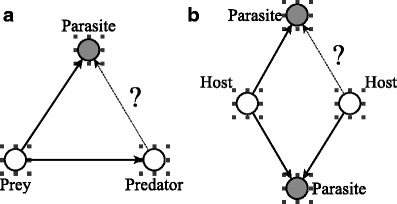
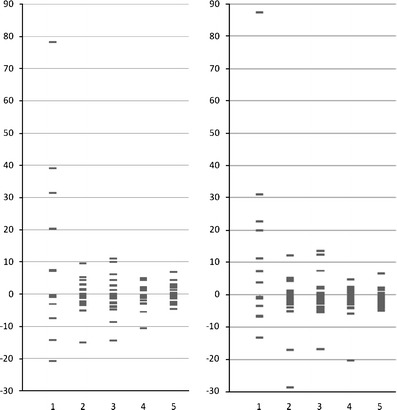
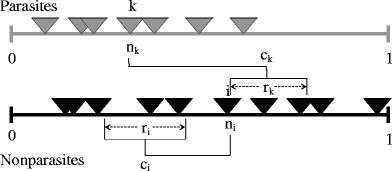
Although parasites represent an important component of ecosystems, few field and theoretical studies have addressed the structure of parasites in food webs. We evaluate the structure of parasitic links in an extensive salt marsh food web, with a new model distinguishing parasitic links from non-parasitic links among free-living species. The proposed model is an extension of the niche model for food web structure, motivated by the potential role of size (and related metabolic rates) in structuring food webs. The proposed extension captures several properties observed in the data, including patterns of clustering and nestedness, better than does a random model. By relaxing specific assumptions, we demonstrate that two essential elements of the proposed model are the similarity of a parasite's hosts and the increasing degree of parasite specialization, along a one-dimensional niche axis. Thus, inverting one of the basic rules of the original model, the one determining consumers' generality appears critical. Our results support the role of size as one of the organizing principles underlying niche space and food web topology. They also strengthen the evidence for the non-random structure of parasitic links in food webs and open the door to addressing questions concerning the consequences and origins of this structure.
尽管寄生虫是生态系统的重要组成部分,但很少有实地研究和理论研究探讨食物网中寄生虫的结构。我们利用一个新模型评估了广阔盐沼食物网中寄生联系的结构,该模型能够区分自由生活物种之间的寄生联系和非寄生联系。所提出的模型是食物网结构生态位模型的扩展,其灵感来源于体型(以及相关代谢率)在构建食物网中的潜在作用。与随机模型相比,所提出的扩展模型能更好地捕捉数据中观察到的几种特性,包括聚类和嵌套模式。通过放宽特定假设,我们证明了所提出模型的两个基本要素是寄生虫宿主的相似性以及沿着一维生态位轴寄生虫专业化程度的增加。因此,与原始模型的一个基本规则相反,即决定消费者普遍性的那个规则,似乎至关重要。我们的结果支持了体型作为生态位空间和食物网拓扑结构潜在组织原则之一的作用。它们还强化了食物网中寄生联系具有非随机结构的证据,并为解决有关这种结构的后果和起源的问题打开了大门。