Department of Pathology, Centre for Free Radical Research, University of Otago , Christchurch , New Zealand.
Front Oncol. 2014 Dec 10;4:359. doi: 10.3389/fonc.2014.00359. eCollection 2014.
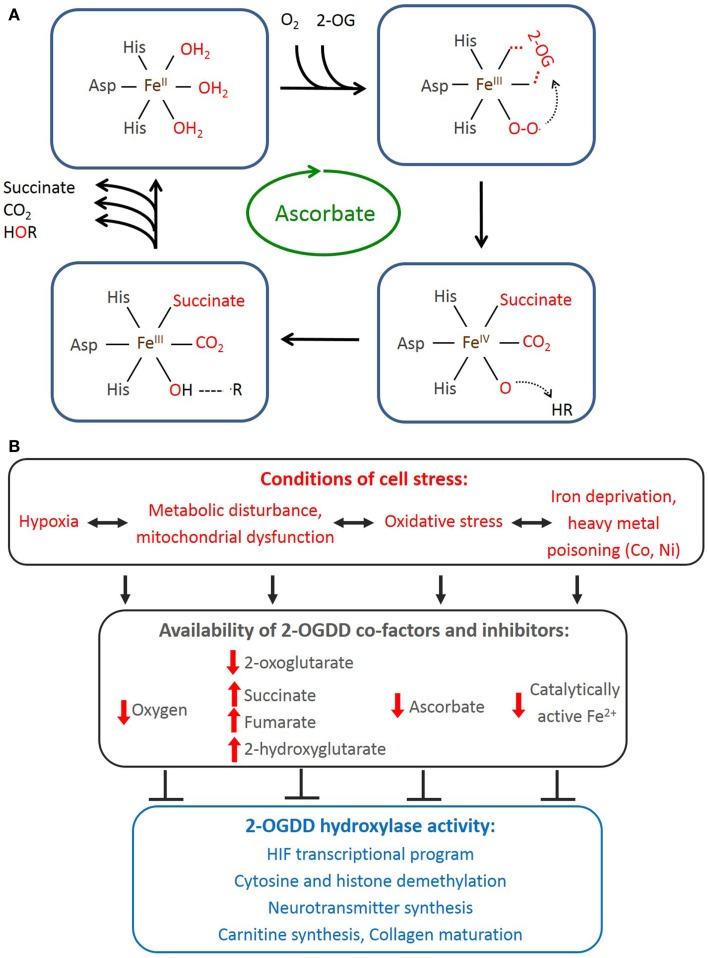
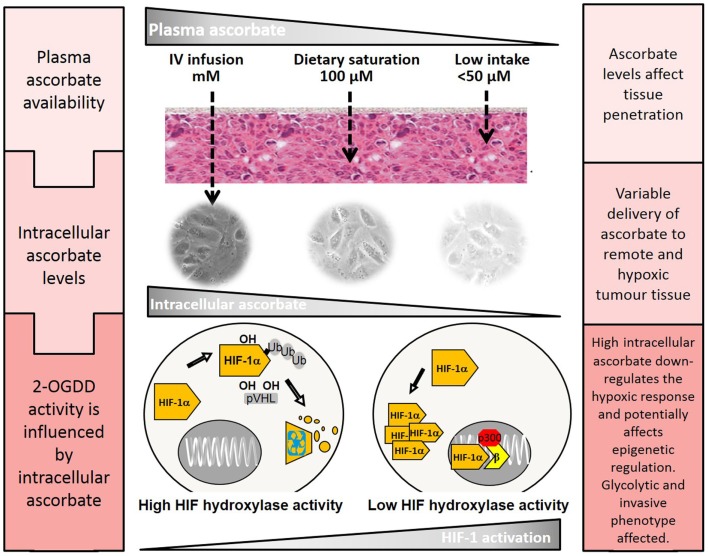
Ascorbate is a specific co-factor for a large family of enzymes known as the Fe- and 2-oxoglutarate-dependent dioxygenases. These enzymes are found throughout biology and catalyze the addition of a hydroxyl group to various substrates. The proline hydroxylase that is involved in collagen maturation is well known, but in recent times many new enzymes and functions have been uncovered, including those involved in epigenetic control and hypoxia-inducible factor (HIF) regulation. These discoveries have provided crucial mechanistic insights into how ascorbate may affect tumor biology. In particular, there is growing evidence that HIF-1-dependent tumor progression may be inhibited by increasing tumor ascorbate levels. However, rigorous clinical intervention studies are lacking. This review will explore the physiological role of ascorbate as an enzyme co-factor and how this mechanism relates to cancer biology and treatment. The use of ascorbate in cancer should be informed by clinical studies based on such mechanistic hypotheses.
抗坏血酸是一大类被称为铁和 2-氧代戊二酸依赖性双加氧酶的酶的特定辅助因子。这些酶存在于整个生物学中,催化各种底物羟基的添加。参与胶原成熟的脯氨酸羟化酶是众所周知的,但最近发现了许多新的酶和功能,包括参与表观遗传控制和缺氧诱导因子 (HIF) 调节的酶。这些发现为了解抗坏血酸如何影响肿瘤生物学提供了关键的机制见解。特别是,越来越多的证据表明,通过增加肿瘤抗坏血酸水平可以抑制 HIF-1 依赖性肿瘤进展。然而,严格的临床干预研究仍然缺乏。这篇综述将探讨抗坏血酸作为酶辅助因子的生理作用,以及这种机制与癌症生物学和治疗的关系。基于这些机制假设,癌症中抗坏血酸的使用应该通过临床研究来确定。