Lechner Suzanne C, Ennis-Whitehead Nicole, Robertson Belinda Ryan, Annane Debra W, Vargas Sara, Carver Charles S, Antoni Michael H
University of Miami, Miller School of Medicine and Sylvester Comprehensive Cancer Center, Miami, FL, USA.
University of Florida, Gainesville, FL, USA.
Couns Psychol. 2012 Feb;41(2):286-312. doi: 10.1177/0011000012459971.
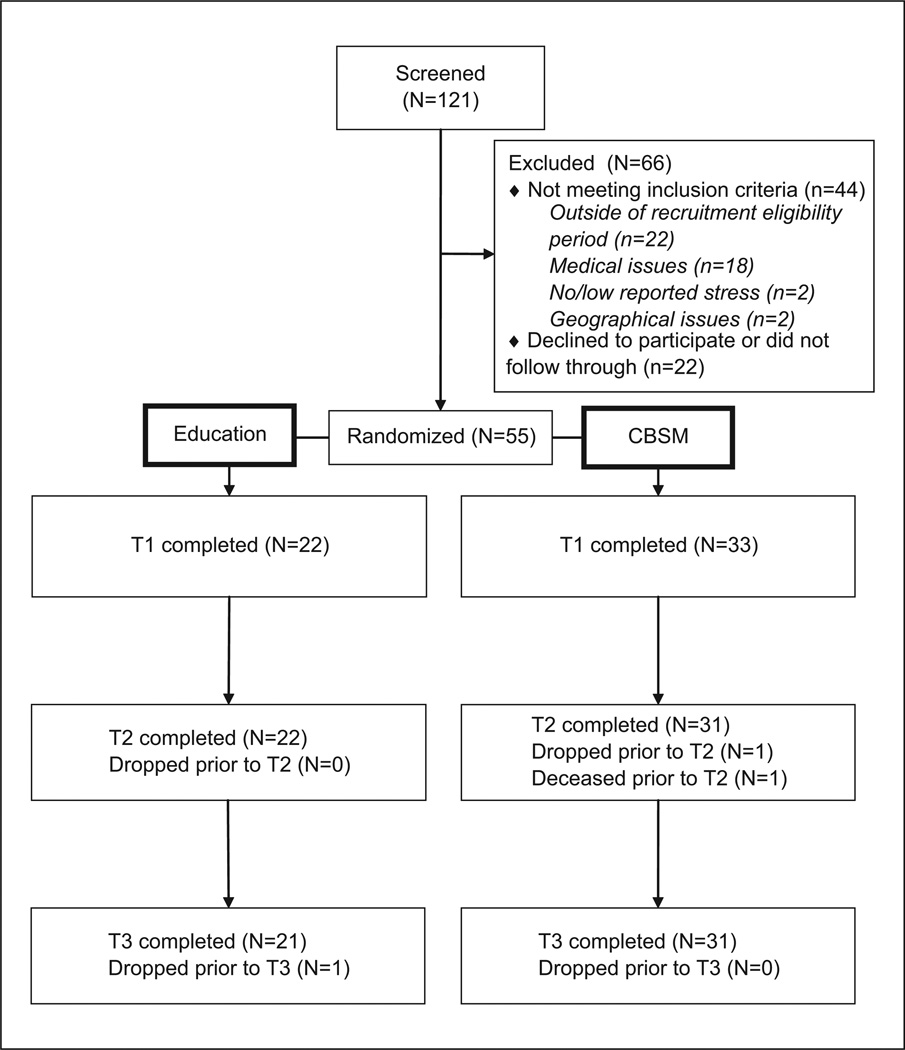
Black women are traditionally underserved in all aspects of cancer care. This disparity is particularly evident in the area of psychosocial interventions where there are few programs designed to specifically meet the needs of Black breast cancer survivors. Cognitive-behavioral stress management intervention (CBSM) has been shown to facilitate adjustment to cancer. Recently, this intervention model has been adapted for Black women who have recently completed treatment for breast cancer. We outline the components of the CBSM intervention, the steps we took to adapt the intervention to meet the needs of Black women (Project CARE) and discuss the preliminary findings regarding acceptability and retention of participants in this novel study.
传统上,黑人女性在癌症护理的各个方面都未得到充分服务。这种差异在心理社会干预领域尤为明显,专门针对黑人乳腺癌幸存者需求设计的项目很少。认知行为压力管理干预(CBSM)已被证明有助于适应癌症。最近,这种干预模式已针对刚完成乳腺癌治疗的黑人女性进行了调整。我们概述了CBSM干预的组成部分、为使干预适应黑人女性需求所采取的步骤(关爱项目),并讨论了关于这一新颖研究中参与者的可接受性和留存率的初步结果。