Department of Internal Medicine I, Faculty of Medicine, Cologne University Hospital, University of Cologne, Cologne, Germany.
Department of Clinical Psychology and Psychotherapy, Faculty of Human Sciences, University of Cologne, Cologne, Germany.
BMC Health Serv Res. 2022 Apr 22;22(1):543. doi: 10.1186/s12913-022-07782-0.
The annual incidence of new cancer cases has been increasing worldwide for many years, and is likely to continue to rise. In Germany, the number of new cancer cases is expected to increase by 20% until 2030. Half of all cancer patients experience significant emotional and psychosocial distress along the continuum of their disease, treatment, and aftercare, and also as long-term survivors. Consequently, in many countries, psycho-oncological programs have been developed to address this added burden at both the individual and population level. These programs promote the active engagement of patients in their cancer therapy, aftercare and survivorship planning and aim to improve the patients' quality of life. In Germany, the "new form of care isPO" ("nFC-isPO"; integrated, cross-sectoral psycho-oncology/integrierte, sektorenübergreifende Psycho-Onkologie) is currently being developed, implemented and evaluated. This approach strives to accomplish the goals devised in the National Cancer Plan by providing psycho-oncological care to all cancer patients according to their individual healthcare needs. The term "new form of care" is defined by the Innovation Fund (IF) of Germany's Federal Joint Committee as "a structured and legally binding cooperation between different professional groups and/or institutions in medical and non-medical care". The nFC-isPO is part of the isPO project funded by the IF. It is implemented in four local cancer centres and is currently undergoing a continuous quality improvement process. As part of the isPO project the nFC-isPO is being evaluated by an independent institution: the Institute for Medical Sociology, Health Services Research, and Rehabilitation Science (IMVR), University of Cologne, Germany. The four-year isPO project was selected by the IF to be eligible for funding because it meets the requirements of the federal government's National Cancer Plan (NCP), in particular, the "further development of the oncological care structures and quality assurance" in the psycho-oncological domain. An independent evaluation is required by the IF to verify if the new form of care leads to an improvement in cross-sectoral care and to explore its potential for permanent integration into the German health care system.
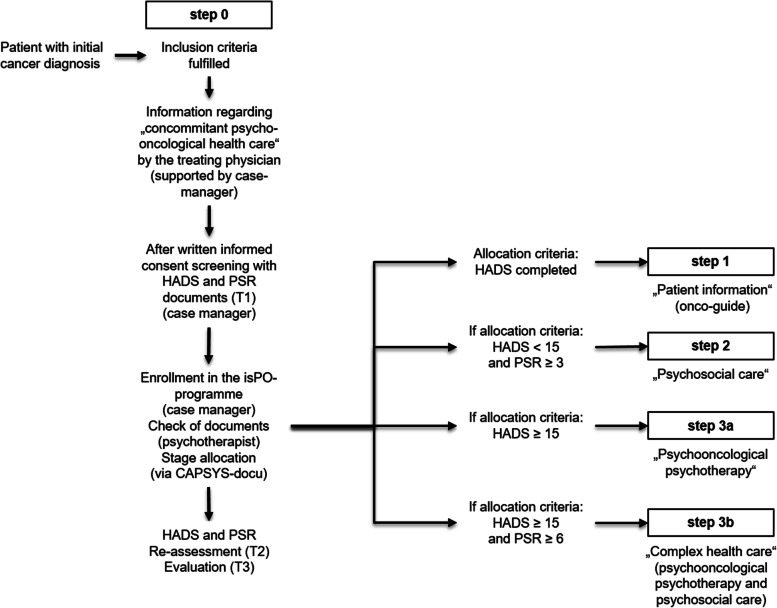
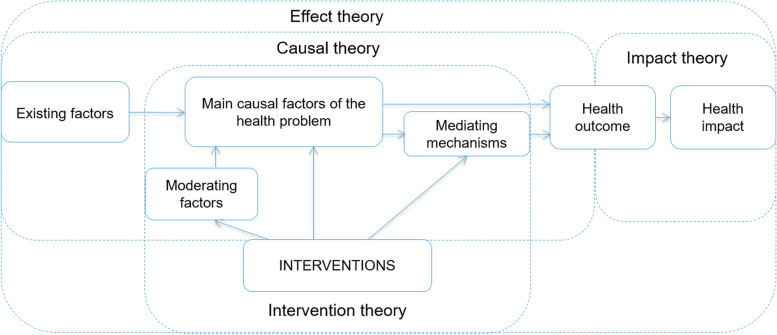
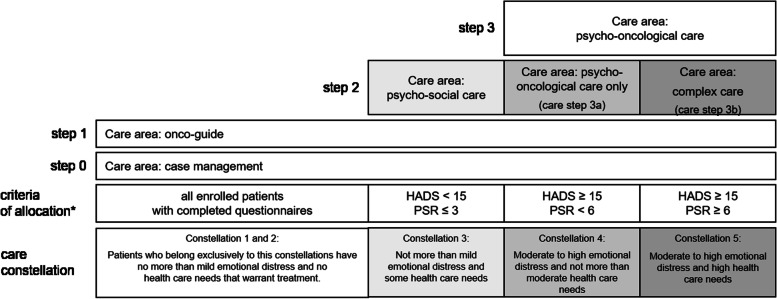
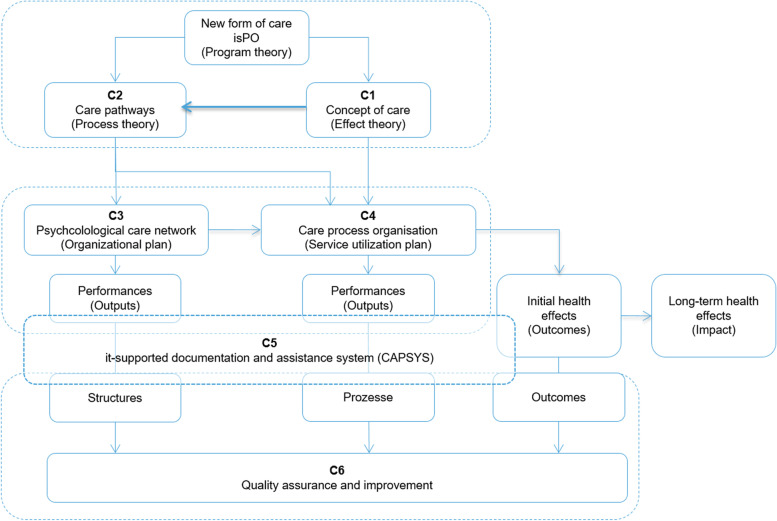
The nFC-isPO consists of six components: a concept of care (C1), care pathways (C2), a psycho-oncological care network (C3), a care process organization plan (C4), an IT-supported documentation and assistance system (C5) and a quality management system (C6). The two components concept of care (C1) and care pathways (C2) represent the isPO clinical care program, according to which the individual cancer patients are offered psycho-oncological services within a period of 12 months after program enrolment following the diagnosis of cancer. The remaining components (C3-C6) represent the formal-administrative aspects of the nFC-isPO that are intended to meet the legally binding requirements of patient care in the German health care system. With the aim of systematic development of the nFC-isPO while at the same time enabling the external evaluators to examine its quality, effectiveness and efficiency under conditions of routine care, the project partners took into consideration approaches from translational psycho-oncology, practice-based health care research and program theory. In order to develop a structured, population-based isPO care program, reference was made to a specific program theory, to the stepped-care approach, and also to evidence-based guideline recommendations.
The basic version, nFC-isPO, was created over the first year after the start of the isPO project in October 2017, and has since been subject to a continuous quality improvement process. In 2019, the nFC-isPO was implemented at four local psycho-oncological care networks in the federal state North Rhine-Westphalia, in Germany. The legal basis of the implementation is a contract for "special care" with the German statutory health insurance funds according to state law (§ 140a SCB V; Social Code Book V for the statutory health insurance funds). Besides the accompanying external evaluation by the IMVR, the nFC-isPO is subjected to quarterly internal and cross-network quality assurance and improvement measures (internal evaluation) in order to ensure continuous quality improvement process. These quality management measures are developed and tested in the isPO project and are to be retained in order to ensure the sustainability of the quality of nFC-isPO for later dissemination into the German health care system.
Demands on quality, effectiveness and cost-effectiveness of in the German health care system are increasing, whereas financial resources are declining, especially for psychosocial services. At the same time, knowledge about evidence-based screening, assessment and intervention in cancer patients and about the provision of psychosocial oncological services is growing continuously. Due to the legal framework of the statutory health insurance in Germany, it has taken years to put sound psycho-oncological findings from research into practice. Ensuring the adequate and sustainable financing of a needs-oriented, psycho-oncological care approach for all newly diagnosed cancer patients, as required by the NCP, may still require many additional years. The aim of the isPO project is to develop a new form of psycho-oncological care for the individual and the population suffering from cancer, and to provide those responsible for German health policy with a sound basis for decision-making on the timely dissemination of psycho-oncological services in the German health care system.
The study was pre-registered at the German Clinical Trials Register (https://www.drks.de/DRKS00015326) under the following trial registration number: DRKS00015326 ; Date of registration: October 30, 2018.
多年来,全球范围内新癌症病例的发病率一直在增加,预计还会继续上升。在德国,预计到 2030 年新癌症病例将增加 20%。一半的癌症患者在疾病、治疗和康复期间以及作为长期幸存者会经历明显的情绪和心理社会困扰。因此,在许多国家,已经开发了心理肿瘤学计划,以在个人和人群层面解决这种额外的负担。这些计划促进患者积极参与癌症治疗、康复和生存规划,并旨在提高患者的生活质量。在德国,目前正在开发、实施和评估“新形式的关怀 isPO”(“nFC-isPO”;综合、跨部门心理肿瘤学/integrierte, sektorenübergreifende Psycho-Onkologie)。这种方法旨在通过根据患者的个人医疗需求为所有癌症患者提供心理肿瘤学护理来实现国家癌症计划中制定的目标。术语“新形式的关怀”由德国联邦联合委员会的创新基金(IF)定义为“医疗和非医疗保健领域不同专业群体和/或机构之间的结构化和具有法律约束力的合作”。nFC-isPO 是由 IF 资助的 isPO 项目的一部分。它在四个当地癌症中心实施,并正在进行持续的质量改进过程。作为 isPO 项目的一部分,nFC-isPO 由一个独立机构进行评估:德国科隆大学医学社会学、卫生服务研究和康复科学研究所(IMVR)。该为期四年的 isPO 项目被 IF 选中有资格获得资金,因为它符合联邦政府国家癌症计划(NCP)的要求,特别是在心理肿瘤学领域“进一步发展肿瘤学护理结构和质量保证”。IF 需要进行独立评估,以验证新形式的关怀是否会改善跨部门护理,并探索其永久纳入德国医疗保健系统的潜力。
nFC-isPO 由六个部分组成:关怀概念(C1)、关怀途径(C2)、心理肿瘤学关怀网络(C3)、关怀过程组织计划(C4)、支持文件和协助的 IT 系统(C5)和质量管理系统(C6)。关怀概念(C1)和关怀途径(C2)这两个部分代表了 isPO 临床关怀计划,根据该计划,在癌症诊断后 12 个月内,个体癌症患者将获得心理肿瘤学服务。其余部分(C3-C6)代表 nFC-isPO 的正式管理方面,旨在满足德国医疗保健系统中患者护理的法律约束要求。为了在常规护理条件下系统地发展 nFC-isPO,同时使外部评估者能够检查其质量、效果和效率,项目合作伙伴借鉴了转化心理肿瘤学、基于实践的医疗保健研究和计划理论的方法。为了制定一个结构化的、基于人群的 isPO 关怀计划,参考了特定的计划理论、逐步护理方法和循证指南建议。
基本版本的 nFC-isPO 是在 2017 年 10 月 isPO 项目开始后的第一年创建的,此后一直在进行持续的质量改进过程。2019 年,nFC-isPO 在德国北莱茵-威斯特法伦州的四个当地心理肿瘤学关怀网络中实施。实施的法律依据是根据州法律与德国法定健康保险基金签订的“特殊护理”合同(§ 140a SCB V;法定健康保险基金的社会法典书 V)。除了由 IMVR 进行的伴随的外部评估外,nFC-isPO 还每季度进行内部和网络间的质量保证和改进措施(内部评估),以确保持续的质量改进过程。这些质量管理措施是在 isPO 项目中开发和测试的,并将保留下来,以确保 nFC-isPO 的质量在以后传播到德国医疗保健系统中时能够持续。
德国医疗保健系统对质量、效果和成本效益的要求不断提高,而财政资源却在下降,尤其是对于社会心理服务。与此同时,关于癌症患者的基于证据的筛查、评估和干预以及提供心理肿瘤学服务的知识不断增长。由于德国法定健康保险的法律框架,将研究中的合理心理肿瘤学发现付诸实践需要数年时间。确保按照国家癌症计划的要求,为所有新诊断的癌症患者提供以需求为导向的、心理肿瘤学的关怀方法,并为其提供足够和可持续的资金,可能还需要更多年的时间。isPO 项目的目的是为患有癌症的个人和人群开发一种新的心理肿瘤学关怀方法,并为德国卫生政策制定者提供一个合理的基础,以便及时在德国卫生保健系统中传播心理肿瘤学服务。
该研究在德国临床试验注册中心(https://www.drks.de/DRKS00015326)进行了预先注册,注册号为:DRKS00015326;注册日期:2018 年 10 月 30 日。