Hoang Van T, Buss Eike C, Wang Wenwen, Hoffmann Isabel, Raffel Simon, Zepeda-Moreno Abraham, Baran Natalia, Wuchter Patrick, Eckstein Volker, Trumpp Andreas, Jauch Anna, Ho Anthony D, Lutz Christoph
Department of Medicine V, University of Heidelberg, Heidelberg, Germany.
Heidelberg Institute for Stem Cell Technology and Experimental Medicine (HI-STEM gGMBH), Heidelberg, Germany.
Int J Cancer. 2015 Aug 1;137(3):525-36. doi: 10.1002/ijc.29410. Epub 2015 Jan 14.
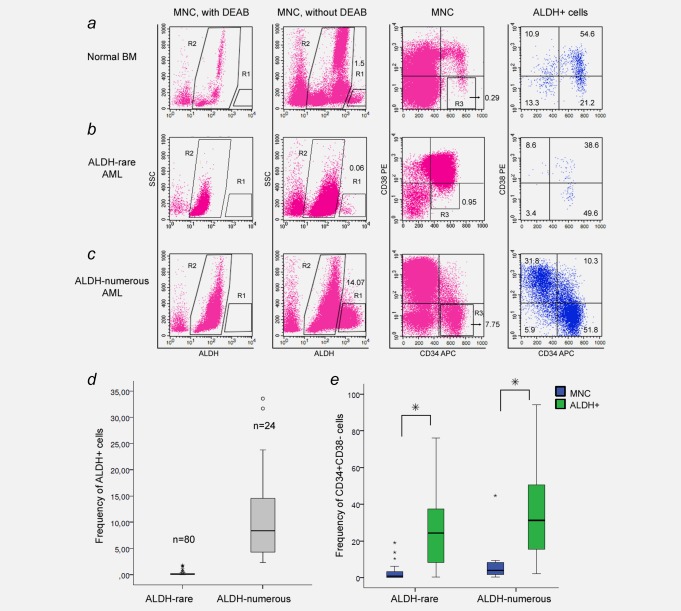
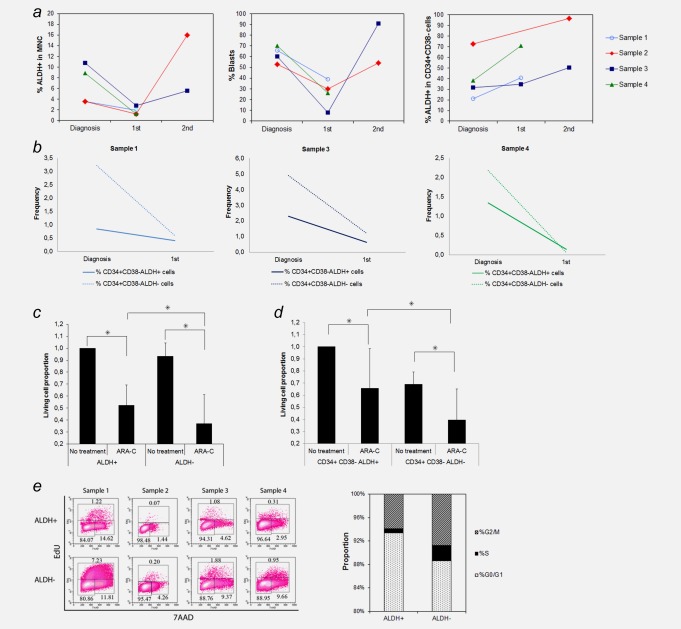
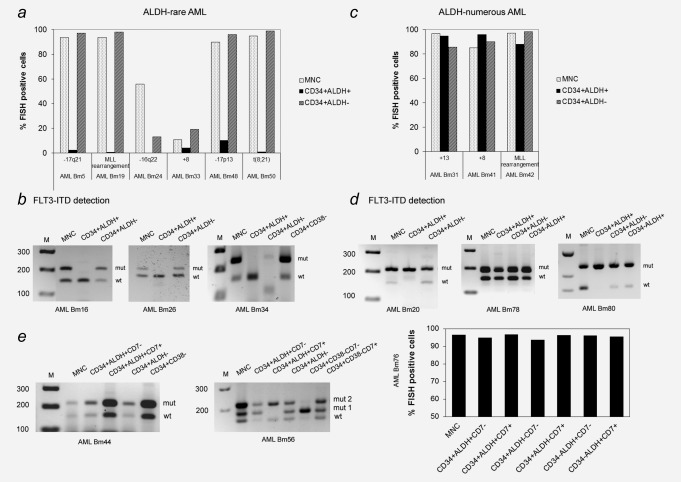
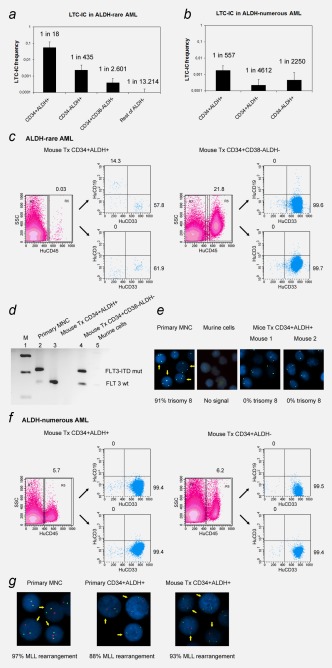
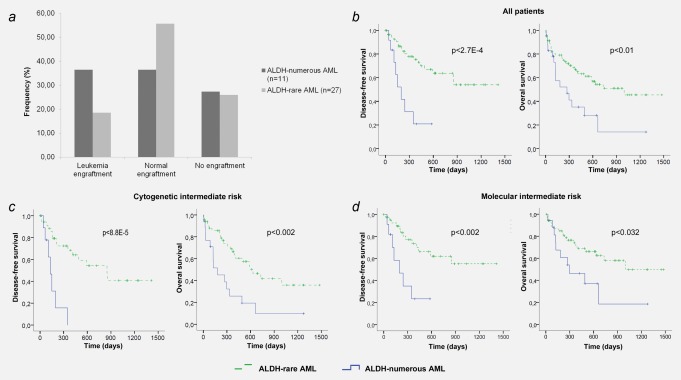
To understand the precise disease driving mechanisms in acute myeloid leukemia (AML), comparison of patient matched hematopoietic stem cells (HSC) and leukemia stem cells (LSC) is essential. In this analysis, we have examined the value of aldehyde dehydrogenase (ALDH) activity in combination with CD34 expression for the separation of HSC from LSC in 104 patients with de novo AML. The majority of AML patients (80 out of 104) had low percentages of cells with high ALDH activity (ALDH(+) cells; <1.9%; ALDH-rare AML), whereas 24 patients had relatively numerous ALDH(+) cells (≥1.9%; ALDH-numerous AML). In patients with ALDH-rare AML, normal HSC could be separated by their CD34(+) ALDH(+) phenotype, whereas LSC were exclusively detected among CD34(+) ALDH(-) cells. For patients with ALDH-numerous AML, the CD34(+) ALDH(+) subset consisted mainly of LSC and separation from HSC was not feasible. Functional analyses further showed that ALDH(+) cells from ALDH-numerous AML were quiescent, refractory to ARA-C treatment and capable of leukemic engraftment in a xenogenic mouse transplantation model. Clinically, resistance to chemotherapy and poor long-term outcome were also characteristic for patients with ALDH-numerous AML providing an additional risk-stratification tool. The difference in spectrum and relevance of ALDH activity in the putative LSC populations demonstrates, in addition to phenotypic and genetic, also functional heterogeneity of leukemic cells and suggests divergent roles for ALDH activity in normal HSC versus LSC. By acknowledging these differences our study provides a new and useful tool for prospective identification of AML cases in which separation of HSC from LSC is possible.
为了解急性髓系白血病(AML)的确切疾病驱动机制,对患者匹配的造血干细胞(HSC)和白血病干细胞(LSC)进行比较至关重要。在本分析中,我们检测了醛脱氢酶(ALDH)活性结合CD34表达在104例初发AML患者中从LSC分离HSC的价值。大多数AML患者(104例中的80例)具有高ALDH活性的细胞百分比低(ALDH(+)细胞;<1.9%;ALDH罕见AML),而24例患者具有相对较多的ALDH(+)细胞(≥1.9%;ALDH众多AML)。在ALDH罕见AML患者中,正常HSC可通过其CD34(+)ALDH(+)表型分离,而LSC仅在CD34(+)ALDH(-)细胞中检测到。对于ALDH众多AML患者,CD34(+)ALDH(+)亚群主要由LSC组成,从HSC分离不可行。功能分析进一步表明,来自ALDH众多AML的ALDH(+)细胞静止,对阿糖胞苷治疗耐药,并且能够在异种小鼠移植模型中发生白血病植入。临床上,对化疗耐药和长期预后不良也是ALDH众多AML患者的特征,提供了一种额外的风险分层工具。假定的LSC群体中ALDH活性的谱和相关性差异表明,除了表型和遗传方面,白血病细胞还存在功能异质性,并提示ALDH活性在正常HSC与LSC中的作用不同。通过认识到这些差异,我们的研究为前瞻性识别可将HSC与LSC分离的AML病例提供了一种新的有用工具。