Department of Medicine, Washington University, St. Louis, MO 63110, USA.
Cell. 2012 Jul 20;150(2):264-78. doi: 10.1016/j.cell.2012.06.023.
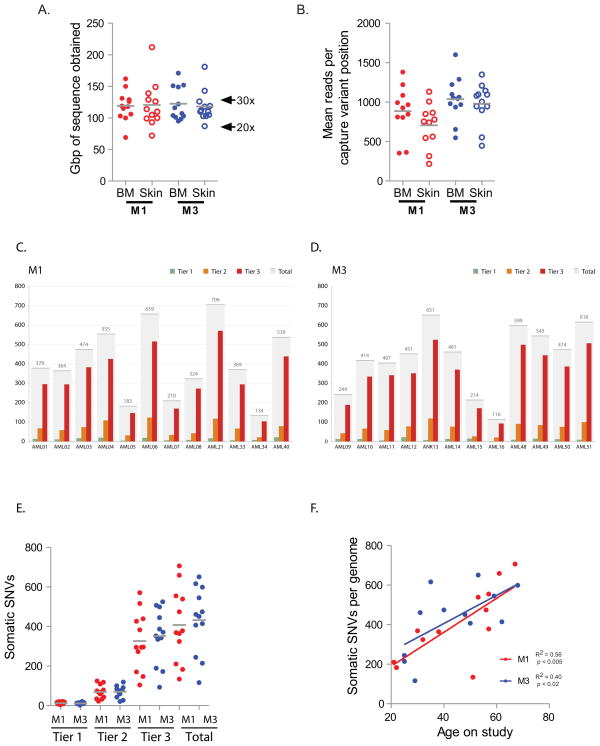
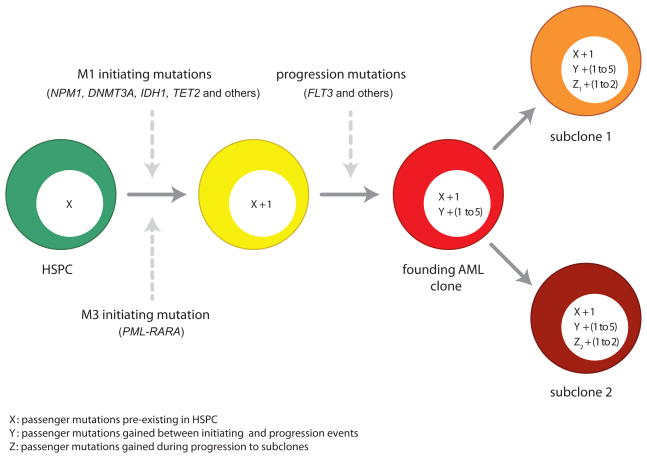
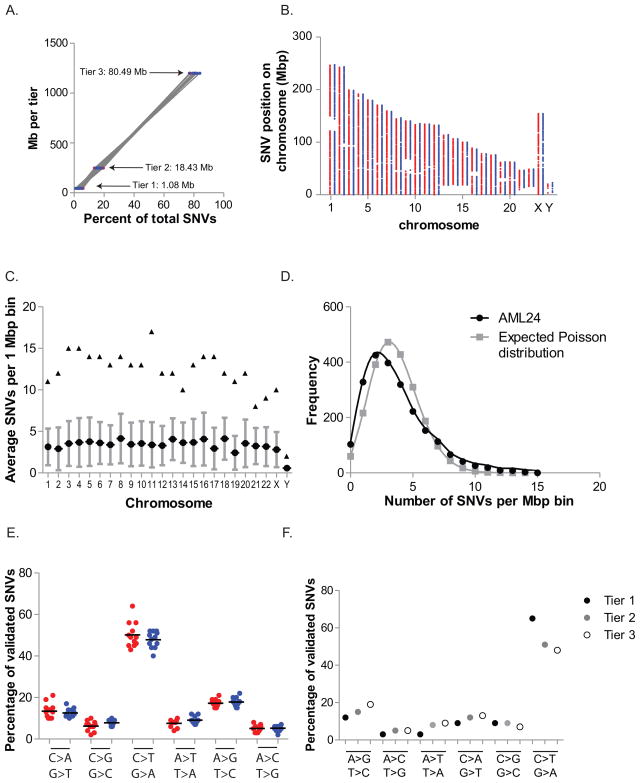
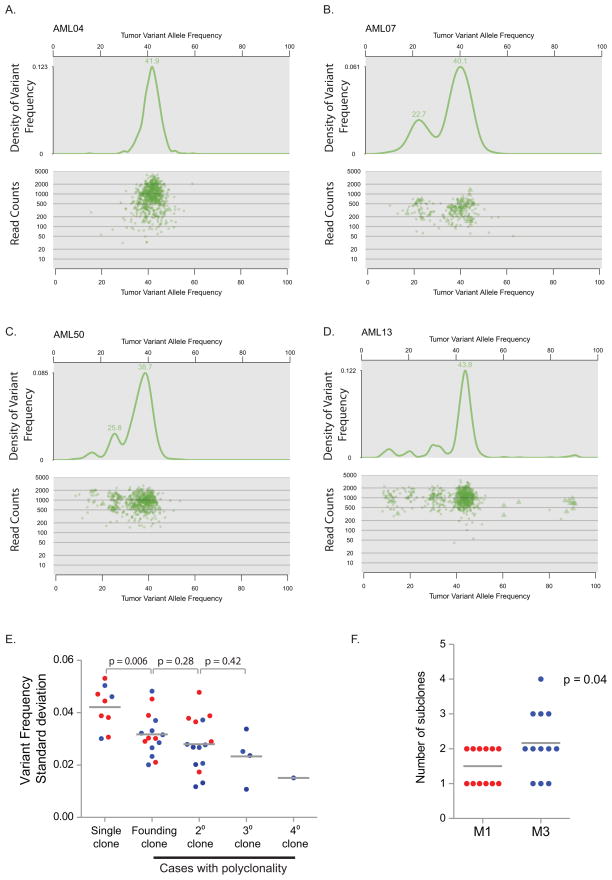
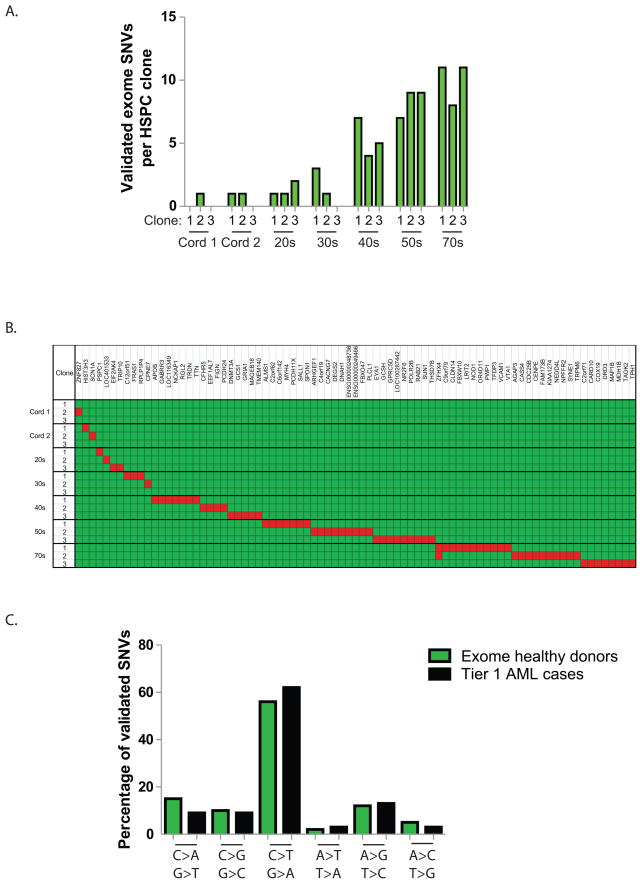
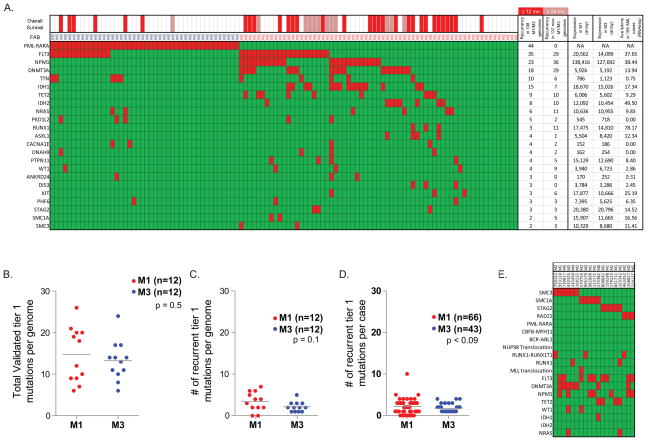
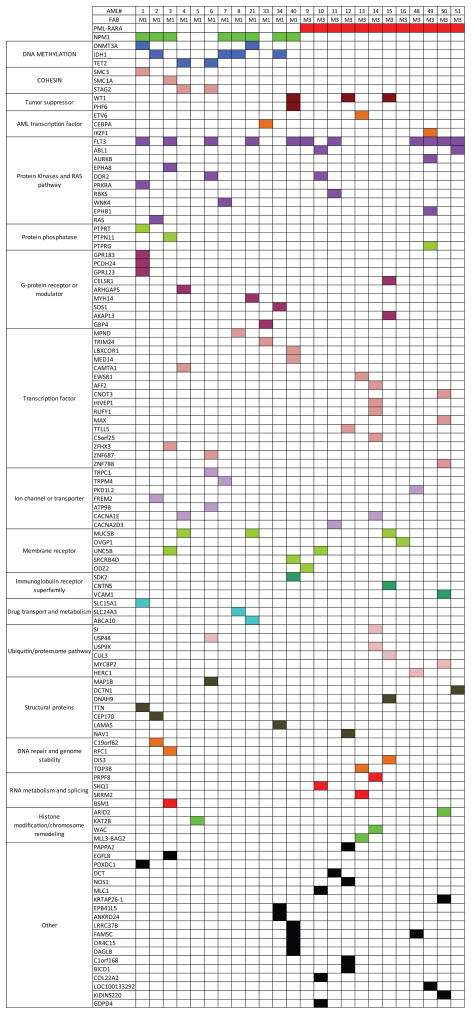
Most mutations in cancer genomes are thought to be acquired after the initiating event, which may cause genomic instability and drive clonal evolution. However, for acute myeloid leukemia (AML), normal karyotypes are common, and genomic instability is unusual. To better understand clonal evolution in AML, we sequenced the genomes of M3-AML samples with a known initiating event (PML-RARA) versus the genomes of normal karyotype M1-AML samples and the exomes of hematopoietic stem/progenitor cells (HSPCs) from healthy people. Collectively, the data suggest that most of the mutations found in AML genomes are actually random events that occurred in HSPCs before they acquired the initiating mutation; the mutational history of that cell is "captured" as the clone expands. In many cases, only one or two additional, cooperating mutations are needed to generate the malignant founding clone. Cells from the founding clone can acquire additional cooperating mutations, yielding subclones that can contribute to disease progression and/or relapse.
大多数癌症基因组中的突变被认为是在起始事件之后获得的,这可能导致基因组不稳定并驱动克隆进化。然而,对于急性髓细胞白血病 (AML),正常核型很常见,基因组不稳定并不常见。为了更好地理解 AML 中的克隆进化,我们对具有已知起始事件(PML-RARA)的 M3-AML 样本的基因组与正常核型 M1-AML 样本的基因组以及来自健康人的造血干/祖细胞 (HSPC) 的外显子组进行了测序。总的来说,这些数据表明,AML 基因组中发现的大多数突变实际上是在获得起始突变之前发生在 HSPC 中的随机事件;该细胞的突变历史在克隆扩增时被“捕获”。在许多情况下,只需要一个或两个额外的协同突变就可以产生恶性起始克隆。来自起始克隆的细胞可以获得额外的协同突变,产生有助于疾病进展和/或复发的亚克隆。